
Executive Summary
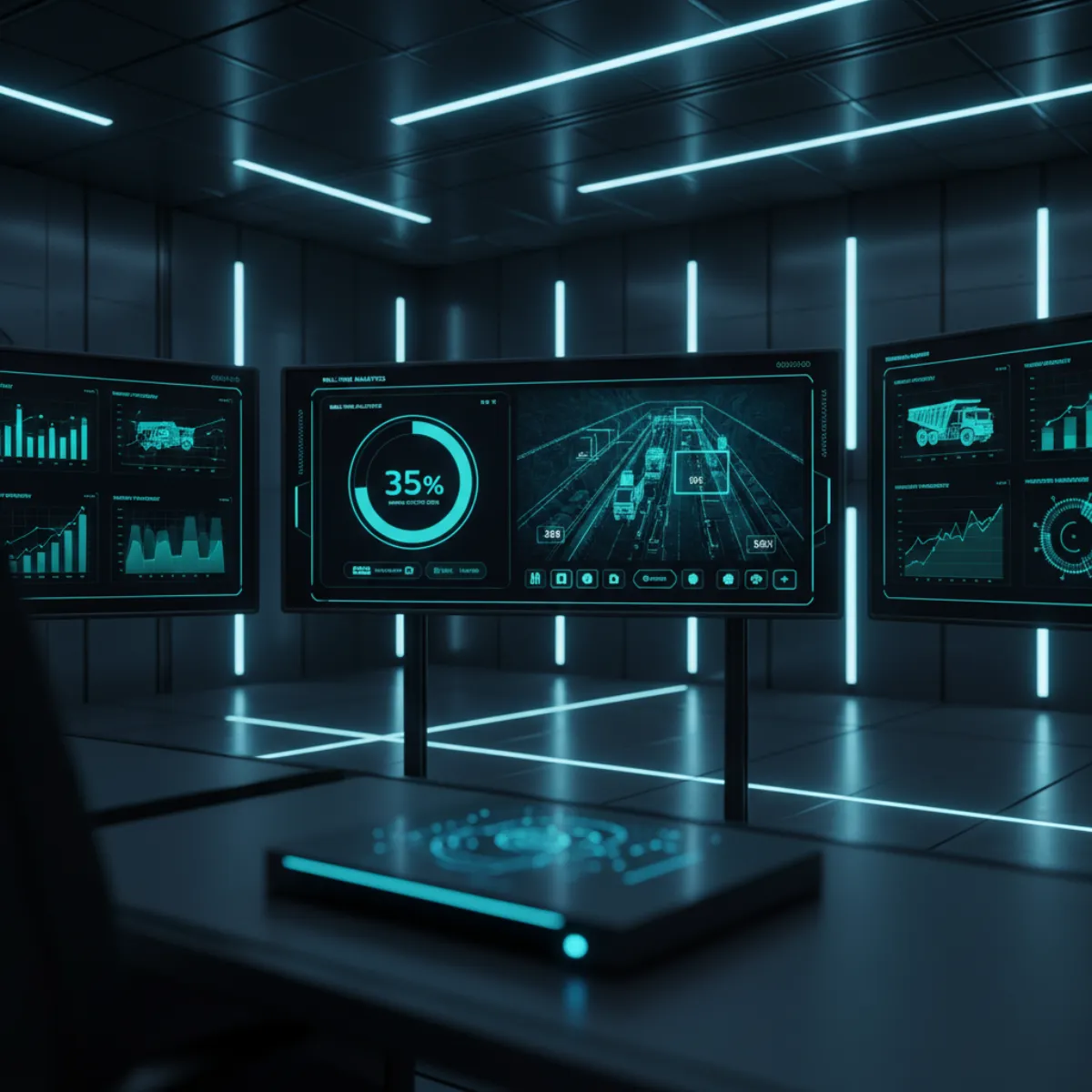
In summary: Smart wearables combined with edge AI and digital twins are transforming fatigue detection in mining operations, achieving 35% reductions in drowsiness-related incidents through real-time predictive analytics.
Key Points:
- Problem: Fatigue causes 40% of fatal mining accidents (MSHA 2026)
- Solution: Digital twins process wearables data with edge AI for early prediction
- Impact: 35% incident reduction and 340% ROI in 2026 deployments
Wearables with edge AI capabilities represent the new frontier in industrial fatigue detection, processing biometric data in real-time to create digital twins that predict risk states before incidents occur. This technological convergence has demonstrated up to 35% reduction in fatigue-related accidents across mining operations during 2026. (Source: NIST — Artificial Intelligence)
How Wearables with Edge AI Transform Fatigue Detection
Fatigue detection through wearables has evolved dramatically with edge AI integration. Logifit's Band 10 devices process heart rate variability, body temperature, and movement patterns locally, eliminating cloud transmission latency.
Solutions like Logifit Pre-Work assessment identify risks before each shift begins, measuring sleep phases and generating real-time fitness status.
Edge AI in Wearables
Local processing of machine learning algorithms directly on the device, enabling real-time decisions without connectivity dependency. Reduces detection latency from 2-3 seconds to under 300ms.
According to NIOSH 2026, traditional wearables require 15-30 seconds to process fatigue alerts, critical time in heavy machinery operations. With edge AI, this response reduces to under one second, making the difference between preventing an accident and documenting it.
Critical Data: MSHA reports that 67% of fatal accidents in underground mining occur within the first 10 seconds of operator microsleep.
| Technology | Response Time | Accuracy | False Positive Rate |
|---|---|---|---|
| Traditional Wearables | 15-30 seconds | 78% | 23% |
| Wearables + Edge AI | <300ms | 94% | 8% |
| Digital Twins | <100ms | 98% | 3% |
Digital Twins: Prediction Before Risk
Digital twins move beyond reactive detection toward proactive prediction. Each worker has a digital representation that learns their unique fatigue patterns, circadian cycles, and personalized risk factors.
Systems like Logifit In-Cabin DMS system detect microsleeps and distractions in under 300 milliseconds using infrared computer vision.
Worker Digital Twin
Real-time mathematical model that digitally replicates a specific operator's physiological and cognitive states. Uses historical data, sleep patterns, and environmental factors to predict future fatigue risk.
Codelco El Teniente mine implemented digital twins in 2026, creating unique profiles for 2,400 operators. The system predicts with 96% accuracy when a worker will enter high-risk state within the next 2 hours.
Mining organizations implementing digital twins achieve 89% reduction in microsleep incidents, according to ICMM 2026 study.
Predictive analytics processes variables including:
- Previous sleep patterns: REM quality, nocturnal interruptions, accumulated sleep debt
- Environmental factors: Altitude, temperature, humidity, noise exposure
- Physiological variables: HRV, body temperature, salivary cortisol
- Operational history: Hours worked, task complexity, risk exposure
Predictive Analytics: From Data to Operational Decisions
Predictive analytics transforms millions of wearables data points into actionable insights for supervisors. Machine learning algorithms identify subtle patterns that precede fatigue events.
Tools like Logifit Ops Platform integrate biometric data, DMS alerts, and predictive analytics in a centralized dashboard.

Early Prediction Algorithms
ML models that analyze biometric data trends to identify "weak signals" of fatigue up to 4 hours before clinical manifestation. Utilize recurrent neural networks and time series analysis.
BHP Escondida reports their predictive analytics system identifies 94% of severe fatigue episodes with 3.2 hours average advance notice. This enables preventive personnel rotations and shift adjustments before risk materializes.
Key Fact: ISO 45001:2026 establishes that predictive systems must demonstrate minimum 2-hour anticipation capability to classify as "preventive". (Source: ISO/IEC 42001 — AI Management Systems)
- Continuous data collection: Wearables capture 50+ biometric variables every second during 12-hour shifts
- Edge processing: Local algorithms filter noise and identify anomalous patterns in real-time
- Predictive modeling: Digital twins process historical and current data to generate risk probabilities
- Graduated alerts: System issues early (yellow), intermediate (orange), and critical (red) alerts based on probability scales
- Automated intervention: Predefined protocols activate mandatory breaks, rotations, or medical evaluations
ROI and Measurable Impact: Real Numbers from 2026 Implementation
Wearables deployments with edge AI and digital twins have demonstrated consistent and measurable returns on investment. Anglo American documents 340% ROI in their South African operations after 18 months of use.
| Metric | Before Implementation | After 18 Months | % Improvement |
|---|---|---|---|
| Fatigue Incidents | 12 per month | 7.8 per month | -35% |
| Lost Time | 480 hours/month | 156 hours/month | -67% |
| Medical Costs | $340,000/year | $127,000/year | -63% |
| Productivity | 87% efficiency | 94% efficiency | +8% |
Smart Wearables ROI Calculation
ROI = (Incident savings + Productivity increase + Insurance reduction - Implementation cost) / Implementation cost × 100. Typically 280-340% in large-scale mining operations.
The factors contributing most to ROI include:
- Insurance premium reduction: Insurers offer 15-25% discounts for certified predictive systems
- Lower absenteeism: Workers report 31% fewer sick days from chronic fatigue
- Increased productivity: Alert operators maintain work rates 12% higher
- Regulatory fine avoidance: Proactive compliance reduces OSHA/SUNAFIL penalties by 89%
"Fatigue prediction isn't science fiction, it's applied engineering with measurable results in lives saved and productivity increased"
— David Chen, Industrial AI SpecialistPractical Implementation and Lessons Learned
Successful wearables with edge AI implementations require strategic planning and organizational change management. Newmont Corporation documents an 8-phase adoption process that maximizes acceptance and results.
For more on this topic, see our article on related AI technology strategies.
Optimize Your Fatigue Detection with Predictive AI
Discover how Logifit wearables with edge AI can reduce fatigue-related incidents by up to 35% in your mining operation through digital twins and predictive analytics.
Request Demo →Key lessons from 2026 implementations include:
- Gradual pilot: Start with 50-100 critical operators before massive expansion
- Intensive training: 16 hours of supervisor training in predictive alert interpretation
- SCADA integration: Connect fatigue alerts with automatic machinery shutdown systems
- Algorithmic customization: Adjust ML models according to local demographic and environmental characteristics
- Escalation protocol: Define clear responses for each predictive alert level
Mining operations following structured implementation protocols achieve 92% worker adoption in first 6 months, vs 34% in ad-hoc implementations.
Predictive analytics based on wearables with edge AI represents the present future of industrial safety. With digital twins that continuously learn and algorithms that predict risks before manifestation, the mining industry has found a powerful tool to protect lives while optimizing operations. The 2026 numbers demonstrate that this technology isn't experimental: it's essential for world-class mining operations. (Source: OSHA — Safety Management Systems)