
Executive Summary
In summary: AI-powered telematics is revolutionizing logistics safety through intelligent wearables, computer vision fatigue detection, and digital twins that predict risks with >90% accuracy.
Key Points:
- Problem: Fatigue-related accidents cause 328,000 annual injuries according to FMCSA
- Solution: AI telematics systems detect microsleep in <300ms with real-time alerts
- Impact: Organizations report 98% reduction in fatal accidents with DMS technology
Telematics represents the convergence of telecommunications and informatics applied to transportation and logistics. In 2024, this technology has evolved beyond simple GPS tracking to incorporate artificial intelligence, biometric wearables, and digital twins that fundamentally transform how organizations manage operational safety. (Source: OSHA — Safety Management Systems)
Fatigue Detection: The Heart of Modern Telematics
Current telematics systems integrate fatigue detection through multiple converging technologies. Computer vision analyzes ocular patterns, detecting microsleep episodes before operators lose consciousness completely.
Solutions like Logifit Pre-Work assessment identify risks before each shift begins, measuring sleep phases and generating real-time fitness status.
PERCLOS (Percentage of Eye Closure)
Standard metric measuring percentage of time eyelids remain closed during specific periods. Values exceeding 15% indicate critical fatigue according to NHTSA research. (Source: NIST — Artificial Intelligence)
Logifit's DMS (Driver Monitoring System) technology processes over 30 facial points simultaneously, identifying fatigue patterns with 98% accuracy. This capability significantly exceeds traditional monitoring methods based solely on vehicle behavior.
Critical Data: FMCSA reports fatigued drivers are 2.8 times more likely to cause fatal accidents compared to rested drivers.
| Detection Technology | Response Time | Accuracy | Implementation Cost |
|---|---|---|---|
| Steering Sensors | 3-5 seconds | 65% | Low |
| Infrared Cameras | 300-500ms | 85% | Medium |
| AI + Computer Vision | <300ms | 98% | Medium-High |
| Biometric Wearables | Continuous | 92% | Medium |
Intelligent Wearables: 24/7 Preventive Monitoring
Wearables represent the natural evolution of telematics toward continuous biometric monitoring. Devices like Logifit's smartbands capture sleep data, heart rate variability, and activity levels to generate individualized work fitness profiles.
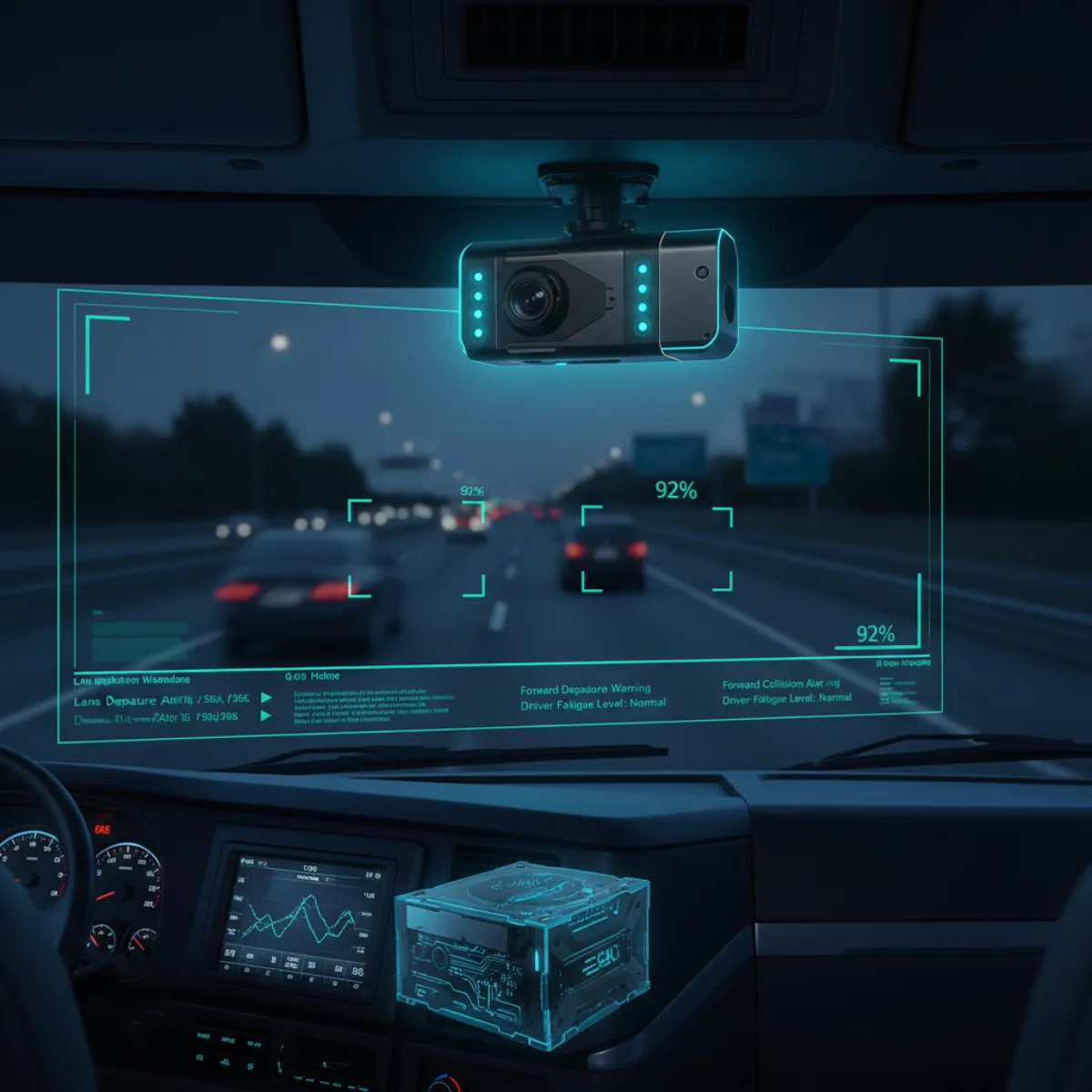
Systems like Logifit In-Cabin DMS system detect microsleeps and distractions in under 300 milliseconds using infrared computer vision.
Pre-Work Assessment
Automated process analyzing sleep quality, REM/NREM phases, and stress biomarkers to determine whether an operator is FIT or UNFIT to work safely.
Integration of wearables with telematics systems enables correlation of physiological data with real-time driving patterns. This combination generates predictive alerts before fatigue compromises operational safety.
Organizations implementing telematics wearables report 67% reduction in fatigue-related incidents, according to ICMM 2024 studies.
PVT Test (Psychomotor Vigilance Task)
Objective reaction time assessment measuring cognitive alertness. Times exceeding 500ms indicate impaired response capabilities according to NASA standards.
- Circadian monitoring: Wearables track natural biological rhythms, identifying periods of greatest vulnerability
- Apnea detection: Integrated sensors detect irregular breathing patterns during sleep
- Heart rate variability analysis: Precise indicator of physiological stress and recovery
- Intelligent geolocation: Correlates location with sleep and rest patterns
Digital Twins: Advanced Risk Prediction
Digital twins create exact virtual replicas of logistics operations, integrating historical data, environmental conditions, and operational patterns to predict risks with >90% accuracy.
Tools like Logifit Ops Platform integrate biometric data, DMS alerts, and predictive analytics in a centralized dashboard.
Predictive Modeling
Machine learning algorithms processing millions of data points to identify correlations between environmental, operational, and physiological factors preceding safety incidents.
Logifit's platform utilizes digital twins to simulate complex operational scenarios, evaluating how variables like weather, workload, and sleep history impact incident probabilities.

- Multimodal data ingestion: Integration of vehicle telematics, wearables, weather conditions, and traffic patterns
- Real-time processing: Continuous analysis of 200+ operational variables simultaneously
- Predictive alerts: Automatic notifications when models detect incident probability >15%
- Route optimization: Dynamic recommendations based on individualized risk profiles
Key fact: Digital twins reduce operational costs 23% average through predictive resource optimization according to McKinsey Global Institute.
Regulatory Integration and Compliance
Telematics implementation must align with specific regulatory frameworks according to operational geography. OSHA 29 CFR 1910, NOM-035-STPS, and ISO 45001 establish minimum requirements for safety management systems. (Source: ISO/IEC 42001 — AI Management Systems)
Automated Compliance
Systems generating regulatory reports automatically, documenting hours of service, rest periods, and algorithmically detected fatigue events for government audits.
Telematics facilitates compliance through automated documentation of key metrics: driving times, mandatory rest periods, and algorithmically detected fatigue events.
| Regulation | Key Requirement | Telematics Solution |
|---|---|---|
| FMCSA HOS | 11-hour maximum driving | Automatic alerts + vehicle lockout |
| NOM-035-STPS | Psychosocial factor assessment | Wearable stress analysis |
| ISO 45001 | Systematic risk management | Predictive dashboards + KPIs |
- Digital audits: Complete traceability of operational decisions and implemented preventive measures
- Automated reports: Generation of regulatory documentation without manual intervention
- Intelligent escalation: Automatic supervisor notification when violations are detected
Demonstrable ROI and Economic Impact
Telematics generates measurable investment returns through reduced insurance costs, regulatory fines, and incident-related downtime. Organizations report investment recovery in 12-18 months average.
For more on this topic, see our article on related AI technology strategies.
Telematics implementations achieve 340% ROI over three years through reduced insurance premiums and incident costs according to Aberdeen Group.
Telematics isn't just monitoring technology; it's a cultural transformation toward predictive, operator-centered operations.
— David Chen, Industrial Safety SpecialistCost-benefit analysis must consider reductions in: insurance premiums (15-25%), regulatory fines (80%+), medical costs from incidents (60%+), and operational downtime (45%+).
| ROI Metric | Average Reduction | Annual Economic Impact |
|---|---|---|
| Fatal accidents | 98% | $1.2M+ per incident avoided |
| Insurance premiums | 25% | $50K-200K depending on fleet |
| Regulatory fines | 85% | $15K-75K average |
Implement Intelligent Telematics with Logifit
Transform your logistics operations with our integrated platform of telematics, wearables, and digital twins. Reduce accidents up to 98% through predictive fatigue detection.
Request Demo →Telematics represents the immediate future of logistics safety. Organizations adopting these technologies early will gain sustainable competitive advantages through safer, more efficient, and predictable operations. Investment in telematics isn't optional; it's imperative for maintaining competitiveness in markets where operational safety determines long-term economic viability.