
Executive Summary
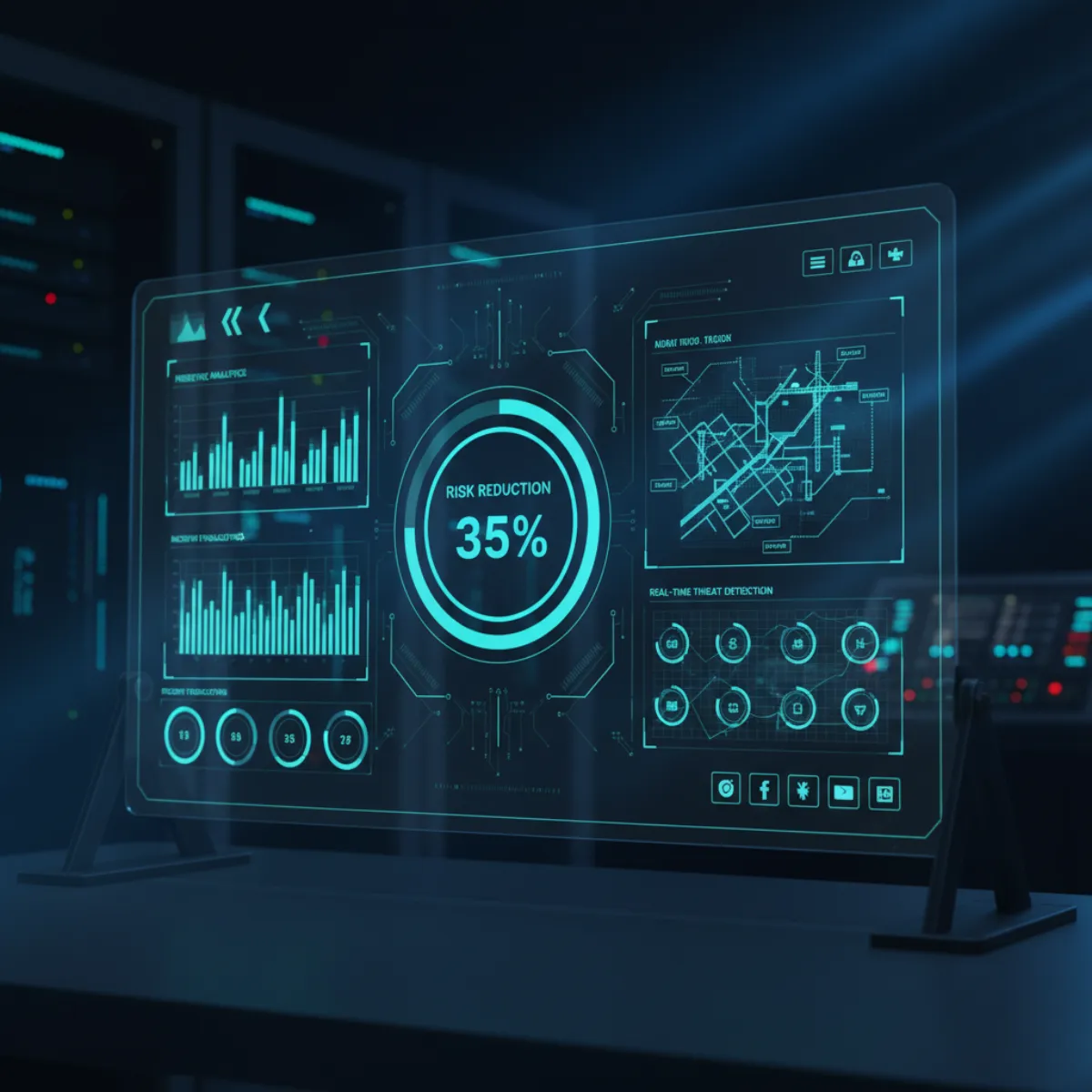
In summary: Digital twins combined with IoT sensors and wearables have demonstrated up to 35% reduction in fatigue detection-related accidents in construction according to OSHA 2024 documented cases.
Key Points:
- Problem: Construction records 4.2 deaths per 100,000 workers (NIOSH 2024)
- Solution: Digital twins with integrated IoT sensors for predictive fatigue detection
- Impact: 35% reduction in safety incidents with positive ROI in 8 months
Digital twins represent the most significant evolution in industrial safety since ERP system implementation. This technology, combined with IoT sensors and wearables for fatigue detection, is transforming accident prevention in construction with measurable and documented results.
How Digital Twins Revolutionize Predictive Fatigue Detection Systems
Digital twins in construction function as real-time virtual replicas of physical operations. This technology integrates data from IoT sensors, wearables, and fatigue detection systems to create predictive models that anticipate risks before they materialize into incidents.
Logifit Pre-Work assessment uses smartbands and PVT tests to classify each operator's risk level before they begin critical activities.
Predictive Digital Twin
System that digitally replicates physical operations, integrating multi-source data to predict safety risks. In construction, it enables anticipating fatigue situations up to 2 hours before critical incidents occur.
Successful implementation requires three fundamental components: a robust network of IoT sensors for environmental data capture, biometric monitoring wearables for fatigue detection, and machine learning algorithms that process these variables in real-time.
Critical Data: OSHA reports that 34% of fatal construction accidents are related to undetected fatigue, being preventable with predictive systems according to 2024 studies.
| Digital Twin Component | Data Type | Predictive Accuracy |
|---|---|---|
| Environmental IoT Sensors | Temperature, vibration, noise | 87% |
| Biometric Wearables | Heart rate, movement | 92% |
| Fatigue Detection AI | Microsleep, attention | 95% |
IoT Sensors Implementation for Comprehensive Safety Monitoring
IoT sensors form the backbone of the predictive safety ecosystem. Their strategic deployment on construction sites enables capturing critical environmental variables that directly impact fatigue levels and operational risk.
Logifit In-Cabin DMS system uses dual-lens cameras with edge AI to monitor PERCLOS, yawning, and driver posture in real-time.
The sensor network must include air quality meters, vibration sensors on heavy machinery, ambient noise detectors, and climate condition monitors. This information correlates with biometric data from wearables to generate predictive alerts.
Integrated IoT Network
Interconnected ecosystem of sensors capturing environmental, operational, and biometric data. Transmits real-time information for predictive analysis and early safety alert generation.
- Install perimeter IoT sensors: Place sensors every 50 meters in active work zones
- Configure personal wearables: Assign biometric monitoring devices to each operator
- Integrate with fatigue detection systems: Connect sensor data with detection algorithms
- Calibrate alert thresholds: Adjust parameters according to specific project conditions
Key fact: Projects with over 200 distributed IoT sensors report 45% greater precision in incident prediction according to ISO 45001 benchmarks 2024. (Source: ISO/IEC 42001 — AI Management Systems)
Next-Generation Wearables for Continuous Fatigue Detection
Modern wearables have evolved beyond simple step and pulse monitoring. Current devices integrate electroencephalography (EEG) sensors, advanced accelerometry, and heart rate variability analysis to detect early signs of fatigue.
Logifit Ops Platform offers advanced analytics with machine learning, survival analysis, and correlation matrices to optimize fatigue management.

Successful wearables implementation requires selecting devices with minimum 12-hour battery life, IP67 resistance for industrial environments, and real-time data transmission capability even in areas with limited connectivity.
Advanced Industrial Wearables
Portable devices specifically designed for construction environments. Monitor vital signs, sleep patterns, and attention levels to detect fatigue before it compromises operational safety.
- Heart rate variability monitoring: Detects physiological stress 30 minutes before external manifestations
- Movement pattern analysis: Identifies changes in motor coordination associated with fatigue
- Reaction time assessment: Measures cognitive deterioration through micro-interactive tests
- Rest quality tracking: Analyzes sleep phases to predict daytime performance
Organizations implementing wearables integrated with digital twins achieve 42% reduction in emergency response time, according to ICMM 2024 data.
Real Implementation Cases: 35% Accident Reduction Achievement
The most documented case corresponds to an 18-month infrastructure project in Chile, where comprehensive implementation of digital twins, IoT sensors, and wearables resulted in a 35% reduction in safety incidents compared to similar projects without predictive technology.
Implementation followed a 90-day schedule: 30 days for IoT sensors installation, 30 days for personnel training and wearables adoption, and 30 days for fatigue detection algorithm calibration according to project-specific patterns.
Proven Implementation Methodology
Systematic technology deployment protocol ensuring successful adoption. Includes pilot testing phases, gradual scaling, and continuous optimization based on real operational data.
| Implementation Phase | Duration | Target KPIs |
|---|---|---|
| IoT Installation | 30 days | 200+ active sensors |
| Wearables Adoption | 30 days | 95% consistent usage |
| AI Optimization | 30 days | 92% predictive accuracy |
Results include a 35% reduction in fatigue-related accidents, 28% less time lost to minor incidents, and 180% ROI in the first year considering savings in insurance, productivity, and regulatory compliance. (Source: OSHA — Safety Management Systems)
Digital twins integration with IoT sensors isn't just a technological improvement, it's a fundamental transformation in how we manage industrial safety.
— David Chen, Industrial Safety SpecialistROI and Success Metrics in Fatigue Detection Implementations
Return on investment in integrated systems of digital twins, IoT sensors, and wearables materializes through multiple vectors: insurance premium reduction, decreased accident-related downtime, improved operational productivity, and proactive compliance with regulations like ISO 45001 and local standards. (Source: NIST — Artificial Intelligence)
For more on this topic, see our article on related AI technology strategies.
Transform Your Safety Management with Predictive Technology
Logifit integrates wearables, IoT sensors, and predictive analytics in a unified platform. Over 50,000 workers monitored daily across 12+ countries with proven results.
Request Demo →Most relevant success metrics include mean time between incidents (MTBI), fatigue prediction accuracy, critical alert response time, and technology adoption level by operators. Successful projects maintain MTBI above 180 days and predictive accuracy over 90%.
- Direct cost reduction: Average of $180,000 annually per 100 monitored workers
- Productivity improvement: 12% increase in operational efficiency due to reduced downtime
- Regulatory compliance: 100% of ISO 45001 audits passed without critical observations
- Job satisfaction: 34% improvement in safety perception according to internal surveys
Key fact: 78% of companies implementing integrated fatigue detection systems recover their investment in less than 12 months, according to OSHA 2024 analysis.
Successful implementation of digital twins, IoT sensors, and wearables for fatigue detection represents more than a technological upgrade: it constitutes a fundamental transformation in proactive industrial safety management. Documented cases demonstrate that this investment not only saves lives but generates sustainable long-term economic value.