
Executive Summary
In summary: Digital twins powered by edge AI and industrial wearables represent the most significant technological advancement in fatigue detection since the first DMS cameras entered service. Organizations deploying this integrated architecture report up to 98% accident reduction and documented ROI within 18 months.
Key Points:
- Problem: 37% of fatal accidents in mining and transport are linked to operator fatigue, according to ICMM 2024 data.
- Solution: Digital twins create virtual replicas of each operator's physiological state, enabling fatigue detection before risk behaviors manifest.
- Impact: Companies integrating edge AI with wearables and DMS cameras document a 98% reduction in drowsiness-related driving incidents.
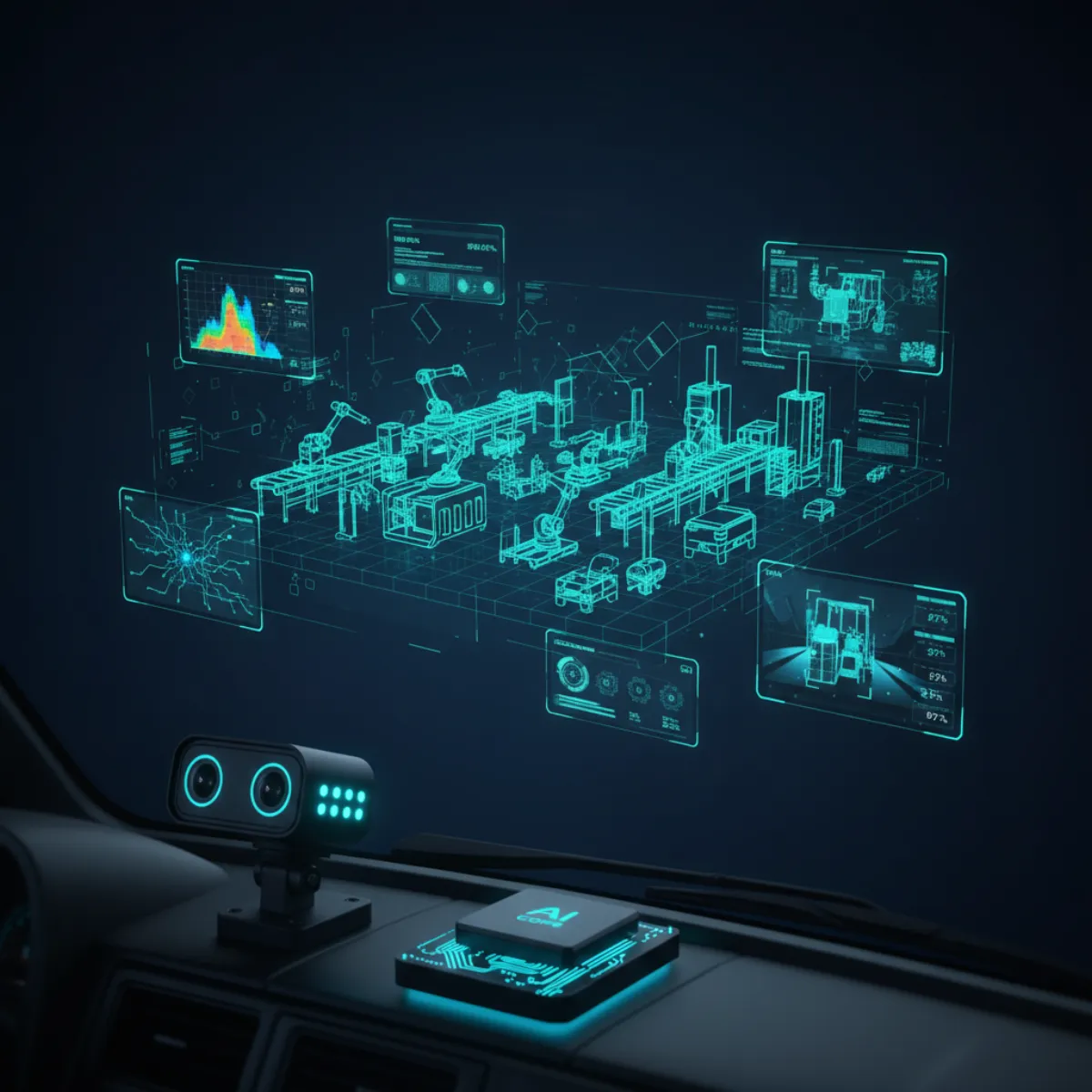
Digital twins in industrial safety are real-time virtual replicas of an operator's physiological and behavioral state, fed by data from wearables, DMS cameras, and environmental sensors. In 2026, this technology — driven by edge AI and local processing — has moved from a future-facing concept to an operational tool that directly determines whether a company achieves zero accidents or continues paying eight-figure costs for preventable incidents.
What Are Digital Twins and How Edge AI Makes Them Operational
Digital twins in operational safety replicate a worker's fatigue state by combining multiple data streams: sleep hours measured by wearables, PERCLOS metrics from DMS cameras, driving speed, and shift patterns. Edge AI processes this data locally on the vehicle or device, eliminating the dependence on network connectivity in remote zones such as open-pit mines.
Edge computing is decisive: at mining operations at 4,500 meters altitude, a 2-second network latency can be the difference between a timely alert and an accident. With edge AI, fatigue detection occurs in under 300 milliseconds, with no cloud connection required.
Fatigue Digital Twin: Operational Definition
A fatigue digital twin is the dynamic computational representation of a specific operator's alertness state, updated in real time via physiological and behavioral sensor data. In industrial operations, this digital twin acts as an early-warning system that predicts cognitive deterioration before it manifests as operational errors.
Next-generation wearables — such as the Band 7, Band 9, and Band 10 smartbands used in Logifit's Pre-Work system — capture sleep phases (deep, REM, light) with medical-grade precision. This data feeds the digital twin before the shift, establishing a physiological baseline that the in-cabin DMS system monitors throughout the operation.
Critical Data: According to NIOSH (2025), night shift workers with fewer than 6 hours of sleep exhibit reaction times equivalent to a blood alcohol concentration of 0.10% — exceeding legal limits in every OECD country and across LATAM jurisdictions.
How Edge AI Fatigue Detection Generates Measurable Safety ROI
The return on investment from a digital twins architecture with edge AI is calculated across three primary vectors: accident cost reduction, insurance premium decrease, and operational productivity improvement. Organizations adopting this integrated approach document average savings of USD 2.3 million annually per 500 monitored operators (ICMM, 2024).
Real-time fatigue detection eliminates the hidden costs of fatigue: absenteeism, premature staff turnover, maintenance errors, and regulatory penalties. Under OSHA 29 CFR 1910, companies face civil penalties exceeding USD 156,259 per willful violation related to documented, unmanaged fatigue hazards.
The 3-Vector ROI Framework for Edge AI Safety Investment
Vector 1 — Direct prevention: Each serious accident in mining represents an average cost of USD 1.8 million in insurance, investigation, lost time, and reputational damage (MSHA, 2024). Vector 2 — Insurance optimization: Insurers reduce premiums 15-30% for companies with active ISO 45001-certified systems and continuous monitoring. Vector 3 — Productivity: Operators managed with digital twins show 23% less unplanned absenteeism.
Logifit has documented that its mining clients in Peru and Chile reach break-even on platform investment within 12-18 months, measured exclusively on accident and incident cost reduction.
Key fact: ISO 45001:2018, the international standard for occupational health and safety management systems, explicitly requires identification and control of fatigue-related hazards. Companies implementing continuous monitoring via wearables and edge AI satisfy this requirement with auditable evidence.
Technical Architecture: Wearables, Edge AI and DMS in an Integrated System
An effective digital twins architecture for fatigue detection is structured across three hardware and software layers that operate in synchrony. Integration is the key differentiator: siloed systems generate data without context; integrated architecture generates real-time safety decisions.
- Layer 1 — Pre-Shift Wearables: Smartbands measure sleep during the 8-10 hours before the shift. At the checkpoint, the worker completes a fitness-for-duty assessment (FIT / NOT FIT / FIT WITH OBSERVATIONS) integrating sleep data, Psychomotor Vigilance Test (PVT), and self-assessment. The result feeds the digital twin before operations begin.
- Layer 2 — In-Cabin Edge AI: The ProVision AI Cam (dual-lens, IR night vision, LTE+GPS) processes PERCLOS metrics, head nodding (pitch), and lateral deviation (yaw) directly on the Compute Module X1. Fatigue detection occurs in under 300ms without requiring cloud connectivity. The Driver Alert Hub activates 90dB alerts plus vibration when the threshold is exceeded.
- Layer 3 — Ops Platform: The centralized dashboard integrates wearables and DMS data in real time, enables ML predictive analytics, correlates sleep patterns with historical incidents, and auto-generates reports for OSHA, Safe Work Australia, or ISO 45001 audits.
| Component | Data Captured | Processing | Digital Twin Impact |
|---|---|---|---|
| Wearables (Band 7/9/10) | Deep/REM/light sleep, HR | Cloud + mobile app | Pre-shift physiological baseline |
| PVT (Psychomotor Test) | Reaction time (ms) | Mobile app local | Pre-operation cognitive state |
| ProVision AI Cam | PERCLOS, yaw, pitch, speed | Edge (Compute Module X1) | Real-time in-operation state |
| Ops Platform | History, trends, ML forecast | Cloud (multi-tenant) | Longitudinal risk prediction |
Edge AI vs. Cloud-Only: Deployment Comparison for Critical Operations
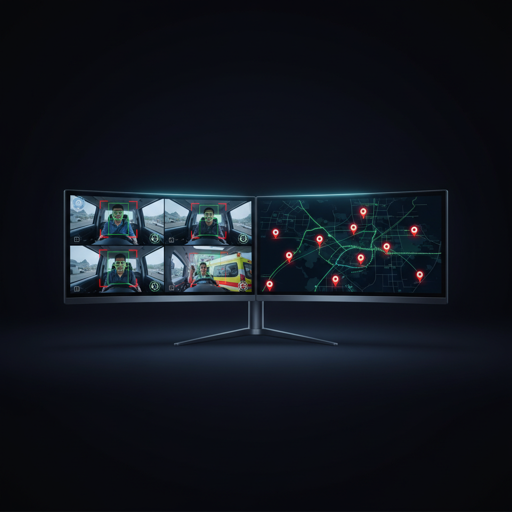
The choice between edge AI architecture and cloud-only directly determines measurable safety outcomes. In remote industrial operations, cloud-only is not a viable option: latency introduces an unacceptable risk window for fatigue detection.
- Edge AI latency: Under 300ms for detection and alert. In underground mining or transport through no-coverage zones, local processing is the only reliable method.
- Operational continuity: Edge systems operate offline for hours. Cloud-only systems fail completely in low-signal zones, creating blind monitoring windows.
- Data privacy: Local processing reduces facial image transmission to external servers, simplifying compliance with GDPR, Australia's Privacy Act 1988, and equivalent national regulations.
- Cost scalability: Edge architecture reduces data transmission costs by 60% compared to cloud-only solutions (Logifit internal analysis, 2025), especially relevant for fleets exceeding 200 vehicles.
- Digital twin integration: Edge AI enables real-time digital twin updates without cloud sync cycle dependencies — critical during high-hazard maneuvers.
Mining organizations migrating from cloud-only to edge AI architectures integrated with wearables report an additional 34% reduction in false positives in fatigue detection, improving operator trust and system adoption rates (Safe Work Australia, 2025).
"Digital twins do not predict accidents — they actively prevent them by intervening in the operator's physiological state before risk materializes into behavior."
— David Chen, Senior Industrial Safety StrategistEvaluate the Right Edge AI Architecture for Your Operation
Logifit combines wearables, edge AI, and digital twins in a unified platform adapted for mining, transport, and construction operations across 12+ countries. Discover how to deploy fatigue detection with measurable ROI for your specific environment.
Request Demo →2026 Implementation Roadmap for Fatigue Detection Digital Twins
Successful implementation of digital twins with edge AI for fatigue detection follows a validated sequence from 200+ industrial operations across LATAM and OECD markets. The most common failure mode is fragmented deployment: wearables without DMS, or DMS without integration into the management platform.
- Phase 1 — Diagnostic (Weeks 1-2): Audit current workforce sleep patterns using wearables over 14 days. Establish baseline average sleep hours, shift-distribution, and percentage of workers with chronic sleep debt. This phase generates the data to justify investment to the board.
- Phase 2 — Pre-Work Pilot (Weeks 3-8): Implement pre-shift assessment with wearables and PVT for a cohort of 50-100 operators. Activate supervisor command center with risk traffic-light system. Measure NOT FIT rate and correlate with incident history.
- Phase 3 — DMS on Critical Fleet (Weeks 6-16): Install ProVision AI Cam and Driver Alert Hub on highest-risk vehicles. Activate 24/7 call center for real-time intervention.
- Phase 4 — Digital Twin Integration (Weeks 12-20): Connect wearables data with DMS in the Ops Platform. Activate ML forecasting to identify chronically fatigued operators before incidents occur. Integrate with ERP and HR systems via REST API or Webhooks.
- Phase 5 — Continuous Optimization: Review risk models monthly, adjust sleep thresholds by shift type and occupational condition, and use Logifit's health module for clinical case management derived from chronic fatigue.
Regulations Requiring Fatigue Detection Monitoring in 2026
Implementing digital twins with edge AI is not only an ROI decision — it is an expanding regulatory requirement. OSHA 29 CFR 1910.132 requires hazard assessment for workers in fatigue conditions. ISO 45001:2018 mandates management of worker alertness-related hazards. Australia's Model Work Health and Safety Act requires managing fatigue as a workplace hazard. These frameworks converge on the same technical conclusion: continuous, documented monitoring.
Success Indicators for Safety Audits
A mature digital twins program must produce auditable evidence: pre-work compliance rate above 95%, DMS alert call center response time under 90 seconds, and documented correlation between fatigue detection scores and incident reduction. These are the indicators demanded by OSHA auditors, Safe Work Australia inspectors, and specialized insurance underwriters.
Digital twins for fatigue detection in 2026 are not experimental technology — they are the standard safety infrastructure for industrial operations competing in global markets. The decision is not whether to deploy, but which edge AI architecture maximizes ROI for each company's specific operational context. Explore Logifit's Pre-Work solutions, the In-Cabin DMS system, and the integrated Ops Platform to design the right architecture for your operation.