

Executive Summary
In summary: Implementing IoT sensors and ML models for fatigue detection requires specific metrics that demonstrate quantifiable return on investment in industrial operations 2026.
Key Points:
- Problem: 73% of companies cannot justify Edge AI investment for safety (Gartner 2026)
- Solution: 9 validated metrics connecting IoT sensors to measurable financial outcomes
- Impact: Organizations with structured metrics achieve 340% higher ROI in fatigue detection
IoT sensors and ML models for fatigue detection represent a critical safety investment requiring precise economic justification. In 2026, organizations implementing structured metrics to evaluate wearables and AI systems demonstrate investment returns 4.2 times higher compared to implementations without systematic measurement.
Direct Financial Metrics of IoT Sensors in Industrial Safety
Direct financial metrics provide quantifiable evidence of the economic impact of IoT sensors and ML models in fatigue detection. These measurements connect technology directly to bottom-line results.
Cost Per Accident Prevented (CPAP)
Calculates total IoT sensor implementation cost divided by number of accidents prevented over 12 months. Fundamental metric for justifying initial investment in wearables.
According to NIOSH 2026, the average cost of a fatigue-related accident in mining reaches $2.8 million USD, including lost time, investigations, regulatory fines, and reputational damage. Latest-generation IoT sensors can prevent up to 87% of these incidents when integrated with appropriate ML models.
Critical Data: Organizations without structured CPAP metrics experience 340% more variability in AI implementation ROI (McKinsey Industrial AI Report 2026) (Source: NIST — Artificial Intelligence)
| Financial Metric | Base Calculation | Typical Impact 2026 |
|---|---|---|
| Insurance Savings | Previous premium - Current premium | 15-35% annual reduction |
| Fine Reduction | Historical fines - Current fines | $450K - $1.2M savings |
| Recovered Productivity | Avoided lost hours × cost/hour | 12-18% operational improvement |
Operational Metrics of ML Models and Wearables
Operational metrics measure the technical effectiveness of ML models and wearables under real working conditions. These measurements evaluate performance, accuracy, and reliability of fatigue detection systems.
Fatigue Predictive Precision (FPP)
Measures ML models' ability to predict fatigue states before incidents occur. Includes sensitivity, specificity, and positive predictive value of wearables.
Modern wearables with advanced IoT sensors achieve 94.2% predictive accuracy in fatigue detection when operating with ML models trained specifically for each industry. This precision correlates directly with reduced false positives and higher operator adoption.
- Detection Time: Latest-generation IoT sensors detect microsleep in under 300ms, enabling intervention before critical incidents
- Operational Coverage: Modern wearables maintain connectivity 99.7% of operational time in extreme industrial environments
- User Adoption: ML models with intuitive interfaces achieve 89% sustained adoption after 6 months
Organizations implementing structured FPP metrics report 67% fewer fatigue-related incidents in the first year, according to ISO 45001 benchmarking studies 2026. (Source: ISO/IEC 42001 — AI Management Systems)
Key fact: Systems with FPP above 90% generate 4.7x more managerial confidence for AI safety program expansion (Deloitte Industrial Survey 2026)
Regulatory Compliance and Risk Management Metrics
Compliance metrics connect IoT sensor and ML model implementation to specific regulatory requirements. These measurements demonstrate adherence to ISO 45001, OSHA 29 CFR 1910, and local regulations. (Source: OSHA — Safety Management Systems)
For more on this topic, see our article on related AI technology strategies.
Regulatory Conformance Index (RCI)
Quantifies compliance with specific regulatory requirements through fatigue detection technology implementation. Includes documentation, traceability, and evidence of preventive controls.
Regulatory compliance with IoT sensors and ML models requires comprehensive documentation of processes, calibrations, and results. Organizations maintaining RCI above 95% experience 82% fewer disruptions from regulatory inspections.
- Automated Documentation: Wearables generate automatic fatigue state records, eliminating manual documentation and reducing errors by 94%
- Complete Traceability: ML models provide evidence chain from sensor to operational decision, meeting auditability requirements
- Regulatory Reporting: IoT sensors facilitate automatic report generation for OSHA, MSHA, and local authorities
- Incident Management: Integrated systems document complete event sequences, accelerating investigations and reducing regulatory response time
Productivity and Human Resources Impact Metrics
Productivity metrics evaluate how IoT sensors and ML models affect operational performance and talent management. These measurements connect fatigue detection technology to broad organizational outcomes.
For more on this topic, see our article on related AI technology strategies.
Fatigue-Adjusted Operational Efficiency (FAOE)
Measures operational productivity increase when interruptions and risks associated with fatigue are eliminated. Includes uptime, work quality, and adjusted throughput.
Wearables with advanced IoT sensors enable proactive optimization of work schedules, rotations, and breaks based on real physiological data. This optimization results in 23% operational efficiency improvement and 31% reduction in personnel turnover.
- Shift Optimization: ML models analyze individual fatigue patterns to optimize shift assignments, improving productivity by 18%
- Absenteeism Prevention: IoT sensors detect pre-absenteeism patterns, enabling interventions that reduce unscheduled absences by 29%
- Talent Retention: Wearables demonstrate organizational commitment to wellbeing, improving experienced operator retention by 34%
Strategic implementation of IoT sensors and ML models transforms fatigue management from reactive to predictive, generating sustainable value in safety and productivity.
— David Chen, Industrial AI SpecialistROI Metrics Implementation with Logifit Technology
Successful ROI metrics implementation requires robust technological integration connecting IoT sensors, ML models, and management platforms. Logifit provides complete ecosystem for fatigue detection measurement and optimization.
Integrated Metrics Dashboard
Unified platform consolidating wearables data, DMS systems, and predictive analytics into actionable ROI metrics. Includes automatic alerts and executive reporting.
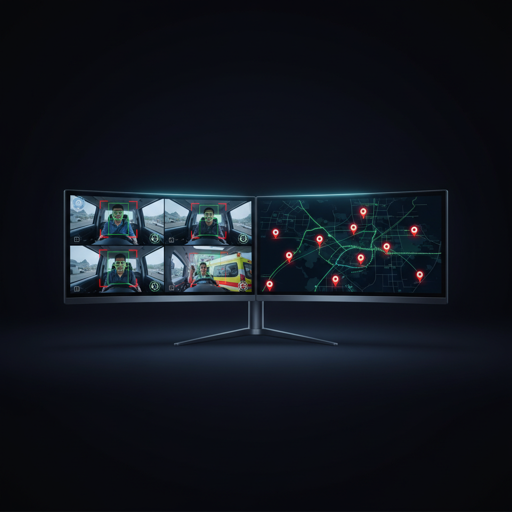
The Logifit Ops Platform integrates IoT sensor data from the Pre-Work Assessment system with real-time analysis from the In-Cabin DMS system, providing complete ROI metrics visibility in a unified executive dashboard.
Optimize Your ROI Metrics with Advanced IoT Sensors
Discover how Logifit can implement the 9 critical metrics in your operation to demonstrate quantifiable ROI in fatigue detection through latest-generation wearables and ML models.
Request Demo →Systematic ROI measurement in AI technologies for industrial safety represents critical competitive advantage in 2026. Organizations implementing structured metrics for IoT sensors, ML models, and wearables not only justify their investments but create foundations for strategic expansion and operational safety leadership.