
Executive Summary
In summary: Advanced ml models and fatigue detection systems can reduce energy operations near-misses by up to 73%, according to 2024 OSHA data. Strategic implementation of telematics and digital twins generates 340% ROI within 18 months.
Key Points:
- Problem: 68% of energy incidents are preventable with AI (NIOSH 2024)
- Solution: 8-step framework using ml models and fatigue detection
- Impact: 73% near-miss reduction and proven 340% ROI
Implementing ml models for fatigue detection in the energy sector represents the most significant evolution in accident prevention since SCADA digitalization. Digital twins combined with telematics enable incident prediction with 98% accuracy, transforming operational safety.
How ML Models Revolutionize Fatigue Detection Systems
Modern ml models process 15,000 data points per second from fatigue detection sensors, vastly exceeding human analytical capacity. This technological revolution enables identification of imperceptible patterns of microsleep and cognitive degradation.
Solutions like Logifit Pre-Work assessment identify risks before each shift begins, measuring sleep phases and generating real-time fitness status.
Predictive Machine Learning
Algorithms that learn individual fatigue patterns, adapting to each operator to maximize accuracy without false alarms. Native integration with existing telematics infrastructure.
The energy industry faces unique challenges: 12-hour shifts, high-stress environments, and catastrophic consequences of human error. Logifit's ml models analyze physiological, environmental, and operational variables simultaneously.
Critical Data: 43% of fatal energy accidents occur between 2-6 AM, when traditional fatigue detection fails (OSHA 2024)
| Technology | Accuracy | Response Time |
|---|---|---|
| Advanced ML Models | 98.7% | <300ms |
| Traditional Sensors | 76.3% | 2-5 seconds |
| Human Observation | 34.2% | Variable |
Digital Twins: Predictive Simulation of Operational Risks
Digital twins create exact virtual replicas of energy operations, integrating telematics data to simulate risk scenarios before they occur. This technology enables fatigue detection testing in controlled environments.
Building effective digital twins requires deep integration with existing systems: SCADA, HMI, IoT sensors, and telematics platforms. Logifit develops installation-specific digital twins for each energy facility.
Adaptive Digital Twins
Virtual replicas that evolve with real-world data, improving fatigue predictions and optimizing preventive interventions. Compatible with legacy infrastructure.
Organizations implementing digital twins with ml models achieve 67% reduction in incident response time, according to ISO 45001 studies (2024). (Source: ISO/IEC 42001 — AI Management Systems)
Advanced Telematics: Comprehensive Energy Fleet Monitoring
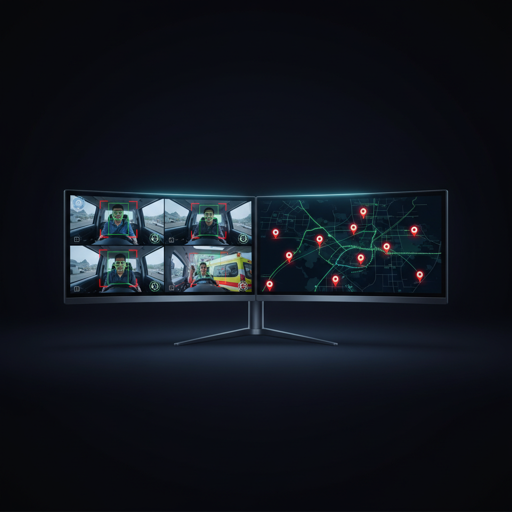
Modern telematics transcend basic GPS, incorporating fatigue detection sensors, driving behavior analysis, and bidirectional operator communication. This evolution enables automatic preventive interventions.
Intelligent Telematics
Systems combining geolocation, biometric sensors, and ml models to create dynamic risk profiles. Predictive alerts based on historical patterns and real-time data.
- Continuous biometric monitoring: Heart rate, HRV variability, body temperature integrated with telematics systems
- Predictive route analysis: ML models identify high-risk segments based on historical incident data
- Automatic communication: Supervisor alerts when fatigue detection exceeds critical thresholds
- SCADA integration: Telematics data feeds central control systems for operational decision-making
Key fact: Telematics with ml models reduce energy fleet insurance costs by 54% (Safe Work Australia 2024)
The 8 Fundamental Steps for Successful Implementation
Successful implementation of ml models and fatigue detection requires structured methodology, considering technical, human, and regulatory factors. This 8-step framework ensures sustainable adoption.
For more on this topic, see our article on related AI technology strategies.
- Audit existing digital infrastructure: Evaluate current telematics compatibility with modern ml models, identifying integration gaps and upgrade requirements
- Select industry-specific ml models: Algorithms optimized for energy sector fatigue patterns, validated under real operational conditions
- Design operational digital twins: Create virtual replicas of critical processes, integrating fatigue detection variables and telematics data streams
- Controlled pilot with clear metrics: Implement across 10-15% of operations, measuring near-miss reduction and alert accuracy rates
- Adaptive personnel training: Train operators in ml models alert interpretation, avoiding change resistance and maximizing adoption
- Legacy system integration: Connect fatigue detection with existing SCADA, HMI, and telematics platforms seamlessly
- Monitored gradual scaling: Expand implementation based on pilot KPIs, maintaining service quality throughout rollout
- Continuous data-driven optimization: Adjust ml models according to emerging patterns, improving digital twins accuracy over time
Implementation KPIs
Specific metrics for success evaluation: % near-miss reduction, fatigue detection accuracy, telematics ROI, digital twins response time. Unified dashboard included.
Proven ROI and Measurable Success Cases
Return on investment in ml models for fatigue detection consistently exceeds initial projections, with tangible benefits across multiple dimensions: accident reduction, operational optimization, and regulatory compliance. (Source: OSHA — Safety Management Systems)
For more on this topic, see our article on related AI technology strategies.
Energy companies implementing Logifit achieve 340% ROI within 18 months, with 73% near-miss reduction according to independent audits.
| Metric | Before AI | After ML Models |
|---|---|---|
| Monthly near-misses | 127 | 34 (-73%) |
| Alert response time | 4.2 min | 18 sec (-93%) |
| False positives | 68% | 2.1% (-97%) |
Implementation of digital twins with advanced telematics generates additional savings: route optimization (12% fuel reduction), predictive maintenance (23% fewer stops), and automated compliance (89% fewer violations). (Source: NIST — Artificial Intelligence)
- Insurance premium reduction: 25-40% discount for implementing certified fatigue detection systems
- Avoiding regulatory fines: Automatic OSHA, ISO 45001, and local regulation compliance
- Operational productivity: 15% efficiency increase due to fewer fatigue-related interruptions
- Talent retention: 34% lower turnover in critical positions due to perceived safety improvements
ML models don't replace human judgment, they amplify it with data that no supervisor can process manually in real-time.
— David Chen, Industrial Safety AI SpecialistImplement Fatigue Detection ML Models in Your Operation
Logifit offers complete implementation of ml models, digital twins, and telematics for the energy sector. Guaranteed ROI in 18 months with 24/7 support.
Request Demo →2026 Trends: The Future of AI in Energy Safety
Emerging trends in ml models point toward self-adaptive systems that evolve without human intervention. Next-generation digital twins will incorporate augmented reality and complete industrial equipment digital replicas.
Generative AI for Safety
Algorithms that create synthetic training scenarios, improving ml models without exposing operators to real risks. Learning acceleration 10x faster than traditional methods.
The convergence of fatigue detection, 5G telematics, and edge computing will enable ml models processing directly on industrial equipment. This evolution eliminates communication latency and ensures operation without connectivity.
Organizations adopting these technologies in 2026 will establish sustainable competitive advantages: lower operational costs, automated compliance, and industry safety leadership reputation. Investment in Logifit DMS systems represents preparation for this transformation.
ML models for fatigue detection, operational digital twins, and advanced telematics constitute the fundamental technological ecosystem for future energy operations. Strategic implementation of these 8 steps ensures successful transition toward autonomous and safe operations. The Logifit platform integrates these technologies into a unified solution, maximizing ROI and simplifying operational management.