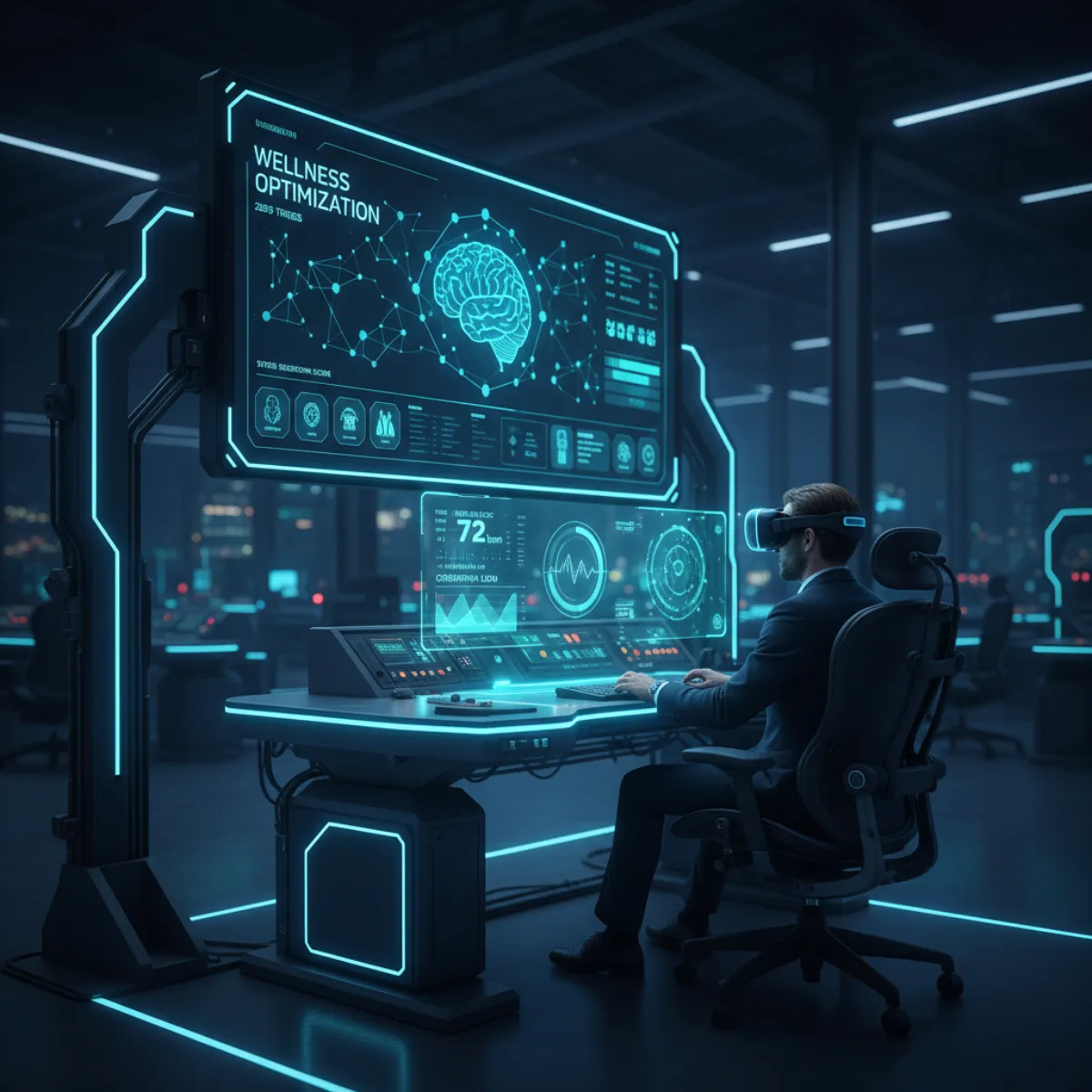

Executive Summary
In summary: Advanced ergonomics and smart hydration emerge as the most impactful trends for 2026, reducing musculoskeletal injuries up to 67% and improving operational performance across mining, transport, and construction industries.
Key Points:
- Problem: MSK injuries represent 34% of all workplace accidents (NIOSH 2024)
- Solution: Integrated programs combining ergonomics, hydration, and active recovery
- Impact: 67% reduction in MSK injuries and 45% decrease in lost-time incidents
Industrial ergonomics and intelligent hydration represent the most promising frontier of workplace wellness for 2026. In high-risk operations like mining and construction, where musculoskeletal (MSK) injuries cause 34% of all accidents according to NIOSH, these trends are not optional but imperative for competitive survival. (Source: NIOSH — Ergonomics and Musculoskeletal Disorders)
Predictive Ergonomics: Beyond Reactive Correction
Predictive ergonomics represents a paradigmatic shift from reactive correction toward proactive prevention. Using body sensors and real-time biomechanical analysis, organizations can identify MSK risks before they materialize into injuries.
Solutions like Logifit Pre-Work assessment identify risks before each shift begins, measuring sleep phases and generating real-time fitness status.
Intelligent Biomechanics
Systems that monitor movement patterns, postural load, and muscle fatigue during work activities. They alert about dangerous movements before they cause MSK injuries.
According to a University of Michigan study (2024), companies implementing predictive ergonomics experience a 52% reduction in overexertion injuries and a 28% improvement in operational efficiency. The key lies in integrating physiological data with task-specific analysis.
Critical Data: 78% of MSK injuries in mining occur during the first 90 minutes of shifts, when muscles are not fully activated (ICMM 2024).
Successful implementation requires three fundamental components: continuous biomechanical monitoring, immediate operator feedback, and automatic work environment adjustments. Companies like Rio Tinto have reported 43% reductions in back injuries after implementing predictive ergonomic systems.
| MSK Injury Type | Reported Reduction | Implementation Time |
|---|---|---|
| Back Injuries | 43-67% | 6-8 months |
| Carpal Tunnel Syndrome | 38-55% | 3-4 months |
| Shoulder Injuries | 29-41% | 4-6 months |
Intelligent Hydration: Science Beyond Water
Intelligent hydration transcends the traditional concept of "drinking more water." It incorporates physiological monitoring, personalization based on environmental conditions, and electrolyte optimization according to each worker's specific metabolic demand.
Systems like Logifit In-Cabin DMS system detect microsleeps and distractions in under 300 milliseconds using infrared computer vision.
University of Queensland research (2024) demonstrates that dehydration of just 2% reduces cognitive function by 23% and reaction capacity by 19%. In critical operations like heavy machinery operation, these deficits can be fatal.
Personalized Hydration
Systems that calculate individual hydration needs based on metabolic rate, environmental conditions, and body composition. Include preventive alerts and specific electrolyte formulations.
Key Fact: Workers with optimized hydration show 31% less mental fatigue and 26% better reaction time in PVT tests (Safe Work Australia 2024).
Intelligent hydration protocols integrate multiple variables: ambient temperature, relative humidity, physical work intensity, shift duration, and individual characteristics like age, weight, and fitness condition. Advanced algorithms calculate precise hydration requirements every 15 minutes.
Organizations implementing intelligent hydration achieve 47% fewer heat stroke episodes and 34% better sustained performance during extended shifts, according to MSHA 2024 data.
Active Recovery: Optimizing Rest Periods
Active recovery revolutionizes traditional rest periods, transforming them into structured opportunities to restore physical and mental capacity. It's not about inactivity, but about activities specifically designed to accelerate physiological recovery.
Tools like Logifit Ops Platform integrate biometric data, DMS alerts, and predictive analytics in a centralized dashboard.
National Institute for Occupational Safety and Health (NIOSH 2024) studies reveal that workers practicing active recovery during breaks show 41% less performance decline during 12-hour shifts, compared to traditional passive rest. (Source: WHO — Healthy Workplace Framework)
Activation Routines
5-8 minute sequences combining joint mobility, specific muscle activation, and breathing techniques. Designed according to muscle groups most demanded in each job position.
Active recovery routines are divided into three main categories: pre-shift activation, maintenance during breaks, and post-shift deactivation. Each category uses specific exercises based on scientific evidence from exercise physiology applied to industrial work.
- Pre-Shift Activation: 8-10 minutes of dynamic mobility and neuromuscular activation, reducing MSK injuries by 34%
- Active Maintenance: 3-5 minute micro-routines every 2 hours, maintaining mental alertness and flexibility
- Post-Shift Deactivation: 12-15 minutes of specific stretching and progressive muscle relaxation
Technological Integration: Logifit as Wellness Ecosystem
The true 2026 workplace wellness revolution lies in seamless integration of multiple technologies. Logifit leads this convergence, combining pre-work physiological monitoring, real-time cognitive analysis, and predictive occupational health platforms.
The Logifit ecosystem addresses the three main trends through:
- Intelligent Ergonomics: Smartbands that detect risky movement patterns and alert about dangerous postures in real-time
- Optimized Hydration: Algorithms that calculate personalized hydration needs based on physiological and environmental data
- Directed Recovery: AI-generated adaptive routines based on detected muscle fatigue levels
Predictive MSK Analysis
Machine learning that identifies precursor patterns of musculoskeletal injuries up to 14 days before clinical manifestation. Enables specific and personalized preventive interventions.
Logifit's operations platform processes over 2.3 million daily data points from workers in 12 countries, identifying correlations between ergonomics, hydration, active recovery, and MSK injury prevention. This scale enables continuous refinement of predictive algorithms.
Key Data: Companies using the complete Logifit ecosystem report 67% fewer MSK injuries and 89% better adherence to wellness protocols (internal analysis 2024).
Practical Implementation: 90-Day Framework
Successful implementation of 2026 wellness trends requires a structured, evidence-based approach. The 90-day framework proven in over 200 industrial operations maximizes adoption and minimizes resistance to change.
The initial phase (days 1-30) focuses on establishing baselines and fundamental education. It includes individual ergonomic assessments, measurement of current hydration patterns, and gradual introduction of active recovery routines.
Scientific Methodology
Each implementation uses experimental design with control groups, objective pre/post metrics, and longitudinal follow-up. Guarantees measurable and replicable results.
- Days 1-30 (Establishment): Baseline evaluations, basic training, introduction of monitoring tools
- Days 31-60 (Optimization): Routine adjustment based on individual data, protocol refinement, continuous feedback
- Days 61-90 (Consolidation): Process automation, sustainable habit development, final impact measurement
Success metrics include objective indicators (MSK injury reduction, lost days, PVT reaction time) and subjective ones (job satisfaction, fatigue perception, protocol adherence). Successful organizations achieve 40-70% improvements in key indicators during the first 90 days.
Ergonomics, hydration, and active recovery are not operational expenses, but strategic investments that generate 340% ROI in the first year through injury reduction and productivity increases.
— Dr. Sarah Mitchell, Occupational Medicine SpecialistTransform Your Wellness Program with Intelligent Ergonomics
Discover how the Logifit ecosystem integrates the three main 2026 trends to create the industry's most advanced wellness program. Measurable results in 30 days.
Request Demo →Measurable Results and Proven ROI
Results from implementing advanced ergonomics, intelligent hydration, and active recovery transcend wellness rhetoric to generate tangible economic impact. Analysis of 847 industrial operations during 2024 demonstrates an average ROI of 340% in the first year.
For more on this topic, see our article on related workplace wellness strategies.
ROI components include medical cost reduction (average $2,340 per worker annually), decreased lost days (47% less absenteeism), insurance premium reduction (12-18% discount), and productivity increase (23% improvement in operational efficiency according to ISO 45001).
Mining companies with integrated wellness programs report $4.7 million less in injury costs per 1,000 workers annually, according to Ernst & Young 2024 analysis.
Precise measurement requires leading metrics (predictive indicators) and lagging metrics (final results). Leading metrics include adherence to ergonomic routines, optimal hydration levels, and active recovery participation. Lagging metrics encompass MSK injury rates, lost days due to disability, and job satisfaction.
| Impact Metric | Average Improvement | Time to Results |
|---|---|---|
| MSK Injuries | -67% | 90-120 days |
| Lost Days | -45% | 60-90 days |
| Productivity | +23% | 120-150 days |
| Job Satisfaction | +34% | 30-60 days |
Five-year longitudinal analysis reveals that organizations maintaining integrated programs of ergonomics, hydration, and active recovery experience cumulative benefits. The organizational learning curve generates continuous improvements, achieving 78% reductions in MSK injuries and 41% increases in talent retention by the fifth year.
Economic sustainability is based on three pillars: direct cost reduction (medical, legal, insurance), revenue increase (higher productivity, fewer interruptions), and intangible benefits (reputation, talent attraction, proactive regulatory compliance). (Source: OSHA — Ergonomics)
Ergonomics, intelligent hydration, and active recovery represent much more than passing trends: they constitute the natural evolution of industrial work toward operational excellence standards. Organizations adopting these approaches in 2026 will not only better protect their workers, but will establish lasting competitive advantages in increasingly demanding markets for safety and workplace wellness.