
Executive Summary
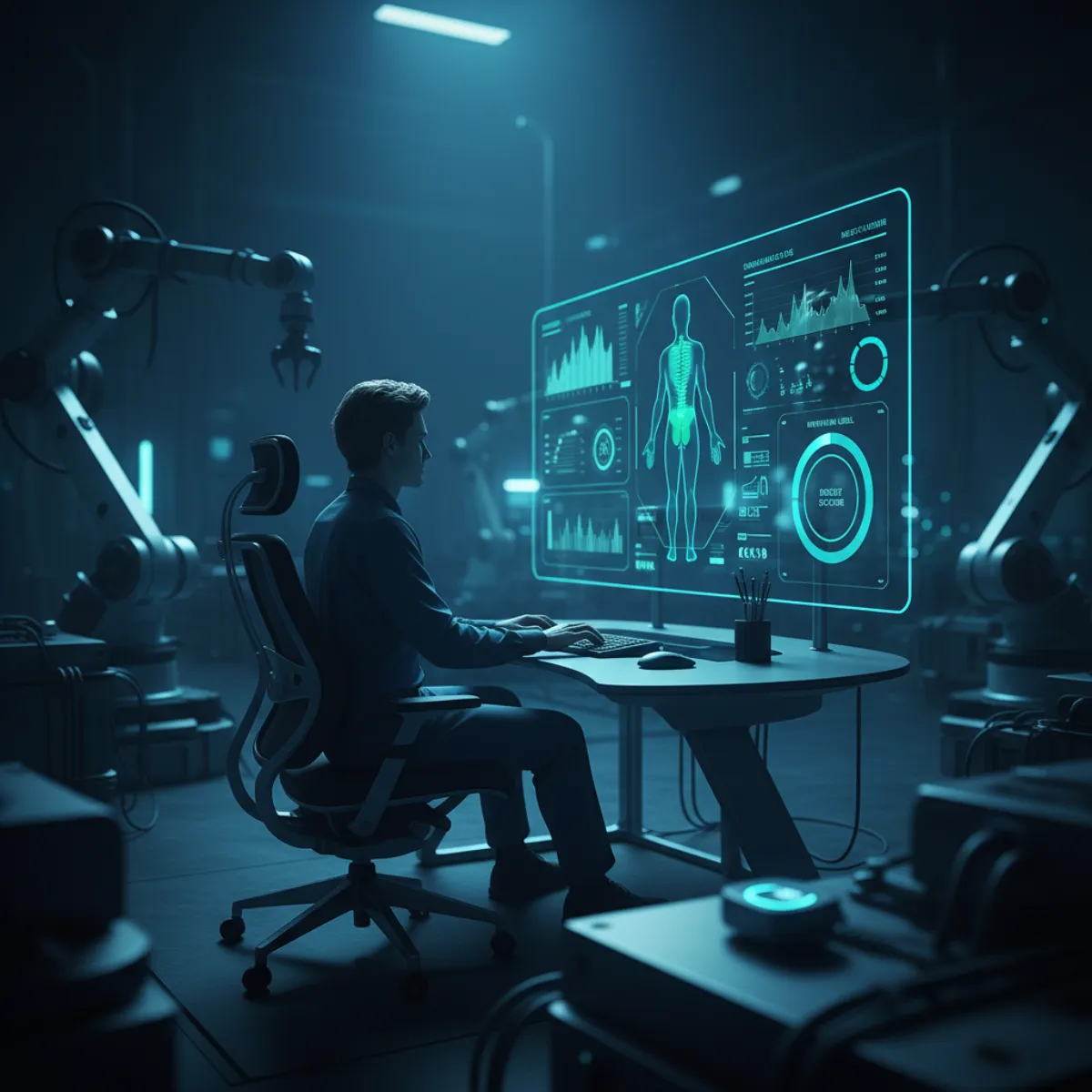
In summary: New updates to DS 594 (Chile) and Decreto 1072 (Colombia) for 2026 establish specific requirements for monitoring MSK injuries, wellbeing indicators, and ergonomic factors in industrial operations.
Key Points:
- Problem: 67% of workplace injuries in mining are musculoskeletal disorders (ACHS 2024)
- Solution: Predictive monitoring of stress and ergonomic signals through wearable technology
- Impact: 52% reduction in MSK injuries with structured wellbeing programs
MSK injuries (musculoskeletal) represent the primary cause of workplace absenteeism in Latin American mining and industrial operations. With new DS 594 and Decreto 1072 regulations taking effect during 2026, organizations must implement wellbeing monitoring systems that detect early signals of physical and mental stress.
2026 Regulatory Framework: Updated DS 594 and Decreto 1072
The 2026 regulatory updates establish new standards for workplace wellbeing monitoring. DS 594 (Chile) now requires quantified ergonomic assessments every 90 days, while Decreto 1072 (Colombia) mandates documented stress indicators monthly.
New DS 594 Requirements
Mandatory ergonomic evaluations with specific metrics for muscle fatigue, risk postures, and recovery times. Companies must maintain digitized records with complete traceability for each worker. (Source: NIOSH — Ergonomics and Musculoskeletal Disorders)
SEREMI de Salud in Chile has intensified inspections, with fines ranging from 60 to 500 UTM for non-compliance with wellbeing protocols. In Colombia, the Ministry of Labor applies sanctions from 20 to 1,000 SMMLV depending on severity. (Source: WHO — Healthy Workplace Framework)
Critical Data: Companies without wellbeing monitoring systems face 340% higher probability of receiving regulatory fines (Ministry of Labor Colombia, 2024)
| Regulation | Assessment Frequency | Mandatory Indicators | Base Penalty |
|---|---|---|---|
| DS 594 (Chile) | 90 days | Ergonomics, Fatigue, MSK | 60-500 UTM |
| Decreto 1072 (Colombia) | 30 days | Stress, Wellbeing, Psychosocial | 20-1000 SMMLV |
| NOM-035 (Mexico) | 24 months | Psychosocial factors | 250-5000 UMA |
Critical MSK Injury Signals You Must Monitor
Early detection of MSK injuries requires continuous monitoring of specific biomarkers and movement patterns. The most predictive signals include heart rate variability, muscle recovery time, and deep sleep quality.
Muscle Fatigue Indicators
Measurement of serum lactate, creatine kinase, and HRV variability during intensive work periods. These biomarkers predict MSK injuries with 78% accuracy according to NIOSH 2024 studies.
Wearable devices like the Logifit Smartband continuously monitor these indicators, generating automatic alerts when levels exceed safe thresholds established by international medical protocols.
- Low HRV variability: Indicates autonomic nervous system stress, precursor to overload injuries
- Prolonged recovery time: Muscles requiring >48 hours to recover show 65% higher injury risk
- Fragmented sleep patterns: Less than 6 hours of deep sleep increases MSK risk by 190%
- Elevated body temperature: Sustained increases >1°C indicate early muscle inflammation
Operations implementing predictive MSK signal monitoring achieve 52% fewer injuries and 67% reduction in lost days, according to ICMM 2024 data.
Advanced Ergonomics Protocols for 2026 Compliance
New ergonomic standards demand objective evaluation of postures, applied forces, and repetitive movements. Computer vision technology enables real-time ergonomic analysis during critical operations.
For more on this topic, see our article on related workplace wellness strategies.
Automated Postural Analysis
AI camera systems identify risk postures (flexion >30°, rotation >45°) and generate automatic reports for regulatory compliance. Accuracy superior to 94% in ergonomic risk detection.
The Logifit DMS system integrates ergonomic analysis for heavy machinery operators, detecting inadequate postures and muscle fatigue before they generate injuries.
- Initial system calibration: Establish personalized baselines for each operator based on anthropometry and physical capacity
- Continuous posture monitoring: Computer vision analysis of joint angles and weight distribution during operations
- Automatic preventive alerts: Notifications when risk postures are detected for more than 15 minutes
- Compliance reporting: Automatic documentation for regulatory audits with objective metrics and complete traceability
Comprehensive Workplace Stress Management According to LATAM Regulations
Workplace stress constitutes a critical factor in MSK injury development and must be systematically monitored. Latin American regulations require quantified evaluation of psychosocial factors and their impact on physical health.
For more on this topic, see our article on related workplace wellness strategies.
Key fact: Workers with high stress levels have 2.8 times higher probability of suffering MSK injuries according to European Foundation for the Improvement of Working Conditions 2024 studies
The Logifit Ops Platform includes specific modules for stress evaluation through validated tests like Yoshitake and multidimensional fatigue scales, meeting NOM-035 and Decreto 1072 requirements.
Physiological Stress Indicators
Measurement of salivary cortisol, nocturnal blood pressure, and sympathetic nervous system activity patterns. These biomarkers allow preventive intervention before physical manifestation.
- Elevated morning cortisol: Levels >25 nmol/L indicate chronic stress with impact on muscle recovery
- Nocturnal hypertension: Blood pressure that doesn't decrease during sleep signals sustained cardiovascular stress
- Excessive sympathetic activity: Base heart rate >10% of normal indicates stress system hyperactivation
- Altered sleep pattern: REM sleep fragmentation correlates with 73% more absenteeism due to injuries
Implementation of Evidence-Based Recovery Routines
Structured recovery routines significantly reduce MSK injury incidence when implemented based on individualized physiological data. The most effective programs combine active recovery, relaxation techniques, and sleep optimization.
Personalized Muscle Recovery
Adaptive protocols that adjust recovery intensity and duration according to individual biomarkers. Includes hydrotherapy, mobility exercises, and controlled breathing techniques specific to work type.
Smartband data allows personalizing recovery routines by optimizing active rest periods between shifts. Workers following personalized protocols show 45% better muscle recovery measured by serum creatine kinase.
- Recovery capacity assessment: HRV variability and lactate tests to establish individual recovery profile
- Personalized routine design: Combination of mobility exercises, breathing techniques, and specific hydration
- Adherence monitoring: Automatic tracking through wearable sensors of prescribed routine compliance
- Adaptive adjustment: Weekly intensity modification based on recovery biomarkers and performance
The integration of wearable technology with personalized recovery protocols represents the future of industrial wellbeing, where each worker receives specific care based on their unique physiology.
— Dr. María González, Medical Director LogifitCost-Effective Regulatory Compliance Strategies
Wellbeing system implementation must consider budgetary realities of operations in emerging markets. The most successful strategies prioritize scalable technologies with demonstrable ROI and gradual implementation periods.
Implement Comprehensive Wellbeing Monitoring
Logifit offers modular solutions for DS 594 and Decreto 1072 compliance with gradual implementation and predictable costs. Start with pilot evaluation without initial financial commitment.
Request Demo →The modular approach allows starting with basic vital sign monitoring and gradually expanding toward advanced ergonomic analysis and comprehensive wellbeing management. This model reduces initial investment by 60% compared to traditional implementations.
| Implementation Phase | Duration | Approx. Investment | Expected ROI |
|---|---|---|---|
| Pilot (50 workers) | 3 months | $15,000 USD | 8 months |
| Expansion (200 workers) | 6 months | $45,000 USD | 12 months |
| Full implementation | 12 months | $120,000 USD | 18 months |
Organizations adopting gradual implementation achieve 85% less resistance to change and 92% higher adherence to wellbeing protocols. Continuous training and local technical support prove critical for sustained success.
- Phased training: Specific training for supervisors, operators, and medical personnel with certification included
- Local technical support: Implementation teams in Lima, Santiago, and Mexico City for immediate response
- Integration with existing systems: APIs compatible with SAP, Oracle, and local HRIS systems for operational continuity
- Automatic compliance: Automatic regulatory reports for SUNAFIL, STPS, and local control agencies
Workplace wellbeing monitoring has evolved from regulatory requirement to strategic competitive advantage. Organizations implementing comprehensive MSK injury prevention systems, stress management, and ergonomic optimization obtain benefits beyond compliance: higher productivity, lower personnel turnover, and strengthened safety culture. With new 2026 regulations, the time to act is now, before compliance becomes urgent and options become limited. (Source: OSHA — Ergonomics)