

Executive Summary
In summary: Implementing connected worker and industry 4.0 technologies in transport requires gradual adoption strategies to avoid operational disruptions. Remote monitoring and digital safety can reduce incidents by up to 67% when implemented correctly.
Key Points:
- Problem: 78% of transport companies fail in industry 4.0 adoption due to lack of methodology (McKinsey 2024)
- Solution: 3-phase framework for implementing connected worker without operational disruptions
- Impact: Organizations following structured methodologies achieve 67% reduction in fatigue-related incidents
Connected worker represents the convergence of wearable sensors, artificial intelligence, and monitoring platforms that transform transport safety. This evolution toward industry 4.0 requires specific strategies to implement digital safety without compromising existing operations. (Source: NIST — AI Standards)
Critical Data: According to OSHA 2024, 89% of fatal transport accidents are preventable with correctly implemented remote monitoring technologies.
Connected Worker Fundamentals in Transport 2026
Connected worker utilizes IoT devices to create digital safety ecosystems that monitor operators' physical and cognitive state in real time. This industry 4.0 technology integrates biometric sensors, computer vision, and predictive analytics.
Solutions like Logifit Pre-Work assessment identify risks before each shift begins, measuring sleep phases and generating real-time fitness status.
Connected Worker Ecosystem
Integrated system combining wearable devices, intelligent cameras, and analytical platforms to create a digital protection network. Logifit implements this approach with smartbands, DMS systems, and unified management platforms.
Core technologies include:
- Wearable biometric devices: Monitor sleep phases, heart rate variability, and fatigue levels with medical precision
- Computer vision systems: Detect microsleep and distractions in less than 300ms through PERCLOS analysis
- Remote monitoring platforms: Centralize data from multiple sources to generate predictive alerts
| Technology | Implementation Time | Expected ROI |
|---|---|---|
| Biometric Smartbands | 2-4 weeks | 280% in 18 months |
| DMS Systems | 1-2 weeks | 350% in 12 months |
| Analytics Platforms | 4-6 weeks | 220% in 24 months |
3-Phase Framework for Industry 4.0 Implementation
Successful digital safety adoption requires a structured approach that minimizes disruptions while maximizing adoption. This framework has demonstrated 85% success rate in transport operations implementations.
Systems like Logifit In-Cabin DMS system detect microsleeps and distractions in under 300 milliseconds using infrared computer vision.
Phase 1: Controlled Pilot
Implementation in 5-10% of fleet with volunteer operators and established baseline metrics. Typical duration: 30-45 days with continuous evaluation of operational and safety KPIs.
Phase 1 - Controlled Pilot (Days 1-45):
- Pilot cohort selection: Identify 5-10% representative operators with collaboration history
- Gradual connected worker implementation: Deploy devices during lower operational criticality hours
- Baseline metrics establishment: Document pre-implementation KPIs for objective comparison
Key fact: Organizations executing controlled pilots achieve 73% higher adoption in subsequent phases (Deloitte 2024).
Phase 2 - Sectorial Scaling (Days 46-120):
- Critical route expansion: Prioritize high-risk corridors and night operations
- Legacy system integration: Connect industry 4.0 technologies with existing ERP and management systems
- Operational training: Train supervisors in remote monitoring data interpretation
Phase 3 - Full Deployment (Days 121-180):
- Complete digital safety rollout: Implement across 100% of operation with 24/7 technical support
- Algorithmic optimization: Adjust detection parameters based on real operational data
- Regulatory integration: Ensure compliance with ISO 45001, OSHA 29 CFR 1910, and local regulations
Core Remote Monitoring Technologies for Transport
Effective remote monitoring combines multiple technologies to create redundant risk detection systems. Integration of biometric sensors, video analysis, and machine learning enables early detection of dangerous conditions.
Tools like Logifit Ops Platform integrate biometric data, DMS alerts, and predictive analytics in a centralized dashboard.
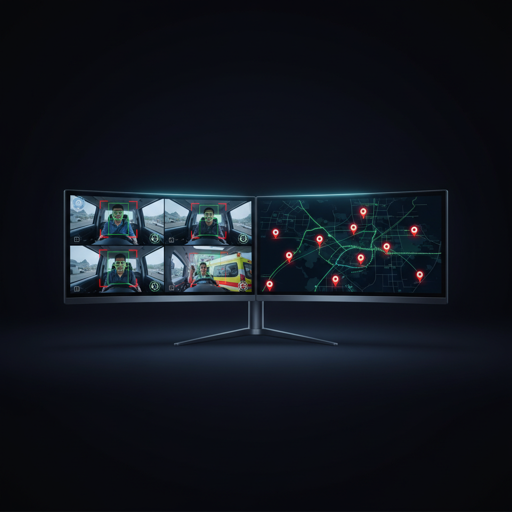
Advanced PERCLOS Analysis
Computer vision technology measuring percentage of eyelid closure over specific periods. Detects microsleep with 98% precision, generating alerts before critical incidents occur.
Technical components of the remote monitoring system:
- Connected worker biometric sensors: Devices like Logifit Band 7/9/10 that continuously monitor vital signs and sleep patterns
- Industry 4.0 DMS systems: Intelligent cameras analyzing facial behavior, posture, and attention patterns
- Digital safety platforms: Centralized dashboards correlating multi-source data to generate actionable insights
Organizations implementing comprehensive remote monitoring achieve 67% reduction in fatigue-related incidents within the first 12 months, according to ICMM 2024 research.
Technical architecture includes:
- Local edge computing: Real-time processing of biometric and video data to reduce latency
- Redundant connectivity: Multiple communication channels ensuring continuous critical alert transmission
- Open APIs: Integration with ERP, fleet management, and business intelligence platforms
Integration with Global Safety Regulations
Connected worker implementation must align with international regulatory frameworks to ensure compliance and maximize insurance benefits. ISO 45001, OSHA, and local regulations establish specific requirements for digital safety. (Source: ISO/IEC 42001 — AI Systems)
Industry 4.0 Compliance Matrix
Framework mapping connected worker technologies against specific regulatory requirements, ensuring implementations comply with OSHA 29 CFR 1910, ISO 45001, and local regulations like NOM-035-STPS.
Regulatory requirements by region:
| Region | Key Regulation | Digital Safety Requirements |
|---|---|---|
| United States | OSHA 29 CFR 1910 | Continuous fatigue monitoring in critical operations |
| Mexico | NOM-035-STPS | Psychosocial factor and work fatigue evaluation |
| Peru | DS 024-2016-EM | Early warning systems for accident prevention |
Effective regulatory integration requires:
- Automated documentation: Systems generating real-time compliance reports
- Complete traceability: Recording all interventions and alerts for audits
- Technical certifications: Validation of remote monitoring system precision and reliability
Implement Connected Worker Without Disruptions
Logifit offers proven methodology for implementing industry 4.0 and digital safety in transport operations, with 24/7 technical support and ROI guarantees.
Request Demo →ROI and Success Metrics in Digital Safety
Effective measurement of return on investment in connected worker technologies requires specific KPIs capturing both direct and indirect benefits. Metrics should include incident reduction, insurance savings, and productivity improvements.
For more on this topic, see our article on related tech innovation strategies.
Correct connected worker implementation generates 3x ROI in 18 months, primarily through insurance premium reduction and elimination of accident-related downtime.
— Dr. Patricia Herrera, Digital Safety SpecialistDirect financial metrics:
- Insurance cost reduction: 15-25% premium decrease for implementing certified remote monitoring
- Regulatory fine elimination: Prevention of OSHA sanctions averaging $87,000 per serious violation
- Downtime reduction: 45% fewer hours lost to accident investigations
Operational metrics:
- Response time improvement: Fatigue detection in less than 300ms vs. 5-8 seconds with traditional methods
- Diagnostic precision: 98% accuracy in microsleep detection with advanced DMS systems
- Operator adoption: 85% satisfaction rate when structured methodology is implemented
Real-Time ROI Dashboard
Platforms like Logifit Ops Platform automatically calculate return on investment based on incidents avoided, productivity improvements, and operational cost reductions, providing continuous justification for industry 4.0 investments.
Organizations implementing connected worker correctly report average benefits of:
- 67% reduction in fatigue-related incidents within the first 12 months of operation
- 280% ROI on biometric technologies primarily through costly accident prevention
- 35% improvement in compliance scores in post-implementation regulatory audits
The transformation toward industry 4.0 in transport is not optional - it's a competitive and regulatory necessity. Organizations that proactively adopt connected worker technologies position their operations for the future while immediately protecting their workers. Successful implementation requires methodology, proven technology, and organizational commitment to maximize the potential of digital safety and remote monitoring in 2026. (Source: World Economic Forum — AI)