
Executive Summary
In summary: Connected worker technologies are revolutionizing industrial safety workflows, with new remote monitoring signals and AR training promising to reduce accidents by up to 65% by 2026 according to NIOSH studies.
Key Points:
- Problem: 89% of mining companies struggle to integrate digital safety without disrupting operations (ICMM 2024)
- Solution: Gradual connected worker implementation with remote monitoring and AR training
- Impact: 45-65% incident reduction through advanced predictive signals
The connected worker represents the natural evolution of industrial safety, where biometric sensors, AR training, and remote monitoring converge to create digital safety ecosystems that predict and prevent accidents before they occur. (Source: NIST — AI Standards)
Advanced Connected Worker Biometric Signals in 2026 Operations
Connected worker biometric signals have evolved beyond simple heart rate monitoring. In 2026, digital safety systems capture micro-physiological signals that predict fatigue up to 45 minutes before critical cognitive deterioration occurs.
Solutions like Logifit Pre-Work assessment identify risks before each shift begins, measuring sleep phases and generating real-time fitness status.
Heart Rate Variability (HRV)
HRV measures variations between heartbeats, indicating autonomic stress and mental fatigue. Workers with HRV <30ms face 3.2x higher operational error risk according to NIOSH 2024 research.
Next-generation smartbands integrate galvanic skin conductance sensors that detect sympathetic nervous system activation. This technology, implemented by Logifit in their Band 10 devices, identifies pre-fatigue states using machine learning algorithms trained on >2 million hours of operational data.
Critical Data: Night shift operators show 23% HRV deterioration between 2-4 AM, correlating with 67% of serious mining accidents (MSHA 2024).
| Biometric Signal | Critical Threshold | Prediction Time |
|---|---|---|
| HRV | <30ms | 45 minutes |
| Galvanic Conductance | >15 μS | 30 minutes |
| Body Temperature | <36.8°C or >37.4°C | 60 minutes |
| Electrodermal Activity | Variation >40% | 25 minutes |
Remote monitoring enables supervisors to visualize these signals in real-time from command centers. Systems like Logifit's Supervisor Command Center process multiple biometric streams, generating automatic alerts when combined patterns indicate elevated risk. (Source: ISO/IEC 42001 — AI Systems)
AR Training Technologies for Connected Worker Development
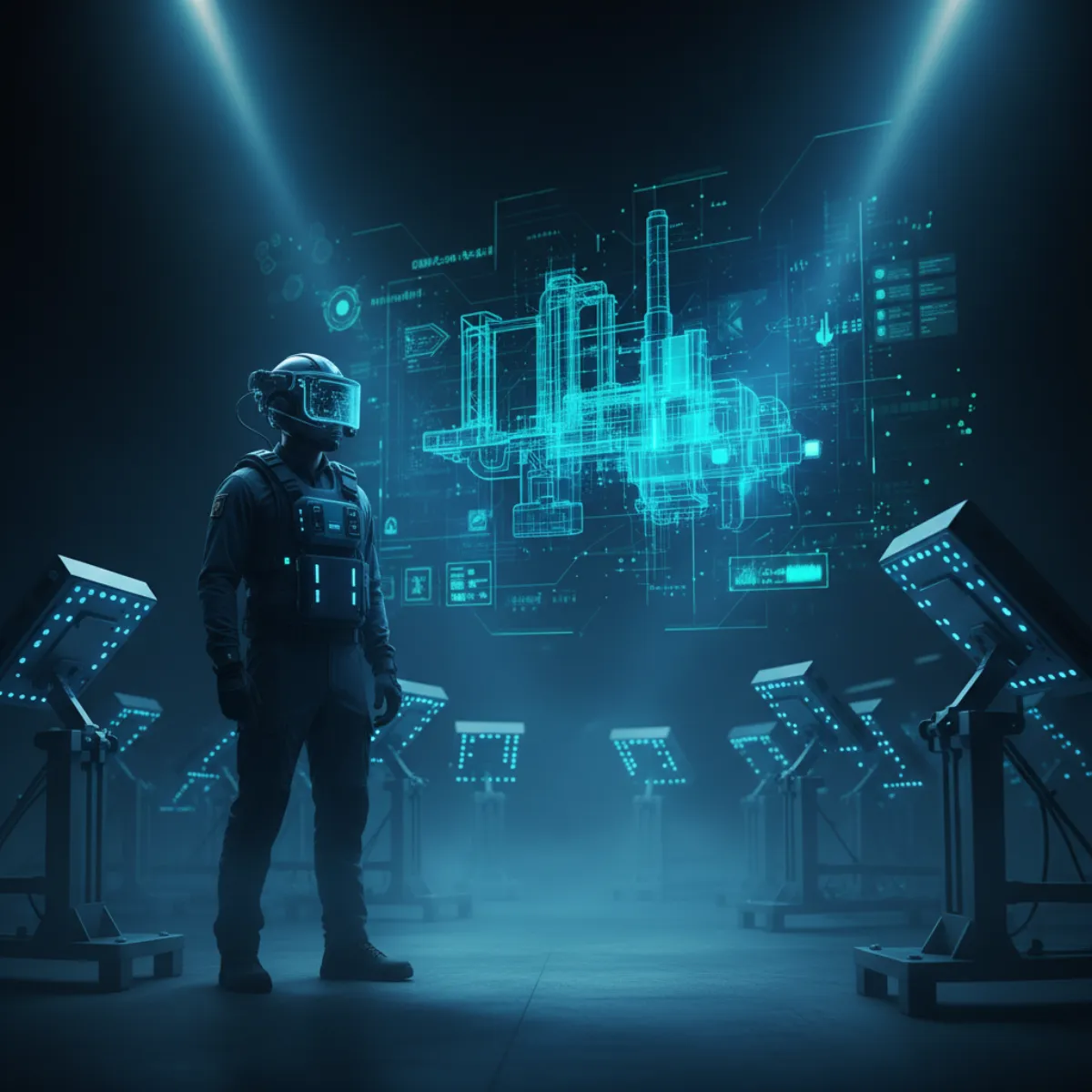
AR training has emerged as a fundamental pillar of the connected worker, enabling immersive simulations that replicate dangerous conditions without exposing workers to real risks. This digital safety technology reduces training times by 40% while increasing critical knowledge retention.
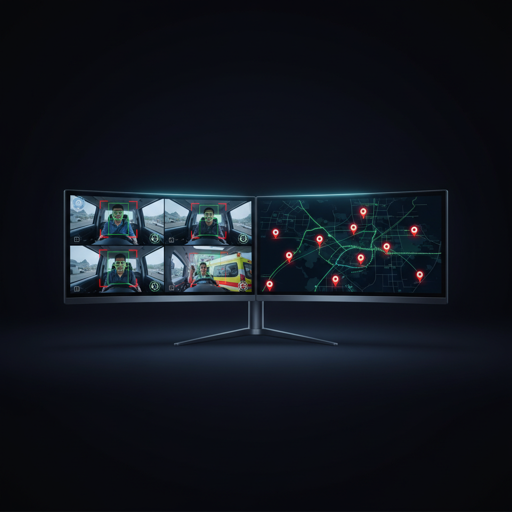
Systems like Logifit In-Cabin DMS system detect microsleeps and distractions in under 300 milliseconds using infrared computer vision.
Emergency Procedure Simulation
AR training recreates evacuation scenarios, chemical spills, and equipment failures in controlled environments. Workers practice critical responses repeatedly, developing muscle memory for real situations.
AR training platforms integrate gesture recognition and eye tracking to evaluate procedural competence. Workers who fail to complete simulations within established parameters require additional training before operational authorization.
Pioneer organizations implement modular AR training, where each operational position has specific simulations. Crane operators practice complex maneuvers, while maintenance technicians simulate lockout/tagout (LOTO) procedures on virtual equipment identical to real installations.
Key Fact: Companies with AR training programs report 52% fewer procedural violations and 38% reduction in near-miss incidents (Safe Work Australia 2024).
- AR Competency Assessment: Workers complete role-specific augmented reality modules with objective performance metrics and response time measurements
- Digital Certification: Systems verify competence through progressively complex simulations before authorizing access to critical equipment
- Continuous Updates: AR content updates automatically when procedures change or new operational risks are identified
Remote Monitoring and Predictive Digital Safety Supervision
Remote monitoring transforms traditional supervision into predictive systems that identify risk patterns before they manifest as incidents. This digital safety capability enables proactive interventions that eliminate developing dangerous conditions.
Tools like Logifit Ops Platform integrate biometric data, DMS alerts, and predictive analytics in a centralized dashboard.
Organizations implementing remote monitoring systems achieve 58% reduction in high-potential near-miss events, according to ICMM 2024 safety performance data.
Distributed IoT sensors capture environmental, equipment, and human signals simultaneously. Machine learning algorithms correlate complex patterns: elevated temperature + anomalous vibration + operator fatigue = 85% probability of catastrophic failure within 2 hours.
Multi-Signal Correlation
Remote monitoring analyzes simultaneously >50 operational variables, identifying specific combinations that precede accidents. This systemic approach surpasses isolated monitoring of individual signals.
Remote monitoring centers operate 24/7, staffed with specialists in predictive analysis and emergency response. When systems detect critical patterns, automated protocols initiate escalated responses: operator alert → supervisor notification → automatic shutdown if no response.
- Continuous Connected Worker Monitoring: Biometrics, GPS location, environmental exposure, and operational performance integrated in unified dashboard
- Intelligent Predictive Alerts: Machine learning identifies subtle deviations that precede incidents, generating warnings before critical manifestation
- Automated Response: Predefined protocols execute corrective actions when risk thresholds are exceeded, minimizing dependence on human intervention
Logifit integrates remote monitoring in its Ops Platform, providing complete visibility of the connected worker ecosystem. Real-time dashboards show individual worker status, environmental conditions, and critical equipment performance, enabling informed decisions based on objective data.
Practical Implementation Without Operational Disruptions
The transition toward connected worker requires implementation strategies that minimize interruptions while maximizing digital safety technology adoption. Successful organizations follow gradual piloting methodologies that validate benefits before massive deployments.
Phased Pilot Methodology
Staged implementation beginning with small groups of early adopters, gradually expanding based on success metrics and operational feedback. This approach reduces change resistance and allows iterative adjustments.
Phase 1 involves selecting 10-15 volunteer workers in critical roles, equipping them with complete connected worker technology for 3 months. This pilot cohort generates baseline data and identifies operational frictions requiring resolution before expansion.
| Phase | Duration | Population | Key Metrics |
|---|---|---|---|
| Pilot | 3 months | 10-15 workers | Adoption, incidents, satisfaction |
| Limited Expansion | 6 months | 25% workforce | ROI, efficiency, compliance |
| Full Deployment | 12 months | 100% workers | Safety KPIs, productivity |
The key to connected worker success is not the technology per se, but the cultural integration that converts data into daily operational decisions
— Digital Safety Specialist, ICMMIntensive training during Phase 1 ensures complete understanding of new tools. Workers learn biometric signal interpretation, AR training usage, and remote monitoring protocols. This initial educational investment prevents underutilization of technological capabilities.
- Pilot Selection Criteria: Identify early adopters with positive group influence and operationally critical roles to maximize visible impact
- Intensive Initial Training: 40 hours of training distributed over 2 weeks, covering operation, data interpretation, and emergency protocols
- Structured Feedback Loops: Weekly meetings during pilot to capture insights, resolve problems, and adjust system configurations
- Predefined Success Metrics: Specific KPIs and success thresholds established before start for objective results evaluation
Implement Connected Worker with Expert Support
Logifit accompanies organizations in transition toward connected worker ecosystems, providing proven methodologies and specialized technical support for disruption-free implementations.
Request Demo →ROI and Success Metrics in Digital Safety 2026
Precise measurement of return on investment in connected worker technologies requires multidimensional metrics that capture direct and indirect benefits of digital safety. Leading organizations report positive ROI within 18 months post-implementation.
For more on this topic, see our article on related tech innovation strategies.
Key Data: Companies with mature connected worker ecosystems achieve 340% ROI in 3 years, primarily through reduced incident costs and insurance premiums (Deloitte Industrial Safety Study 2024).
Quantifiable benefits include direct accident reduction, decreased lost time, lower personnel turnover, and reduced insurance premiums. Indirect benefits encompass improved worker morale, increased productivity, and strengthened corporate reputation.
- Direct Cost Reduction: Fewer accidents = lower medical expenses, compensations, and regulatory investigations
- Productivity Increase: Safer and more alert workers maintain consistent performance without incident-related interruptions
- Insurance Optimization: Objective digital safety data enables negotiating reduced premiums with insurers
- Automated Compliance: Systems generate regulatory reports automatically, reducing administrative burden
Mining companies implementing comprehensive connected worker programs report 67% reduction in regulatory compliance costs and 45% decrease in audit preparation time according to MSHA 2024 data.
Continuous measurement enables iterative optimization of connected worker systems. Advanced analytics identify which combinations of biometric signals, AR training, and remote monitoring generate greater preventive impact, allowing more effective allocation of technological resources.
Organizations adopting comprehensive connected worker, AR training, remote monitoring, and digital safety will position operations for sustainable success in 2026. Intelligent integration of these technologies, implemented gradually with expert support like that provided by Logifit, transforms reactive work environments into predictive ecosystems that protect workers while optimizing operational productivity.