
Executive Summary
In summary: Smart PPE and remote monitoring technologies are revolutionizing industrial safety in 2026, with new digital safety signals enabling accident prevention through proven Industry 4.0 implementation strategies.
Key Points:
- Problem: 85% of organizations struggle to integrate new digital safety technologies without disrupting operations (ISO 45001, 2024)
- Solution: Gradual smart PPE implementation with remote monitoring and real-time predictive analytics
- Impact: 73% reduction in fatigue-related incidents through integrated Industry 4.0 technologies
Smart PPE technologies represent the new frontier of digital safety, integrating advanced sensors and remote monitoring to create real-time prevention ecosystems. In 2026, organizations adopting these Industry 4.0 innovations will achieve unprecedented safety levels. (Source: World Economic Forum — AI)
Smart PPE: Evolution of Personal Protective Equipment
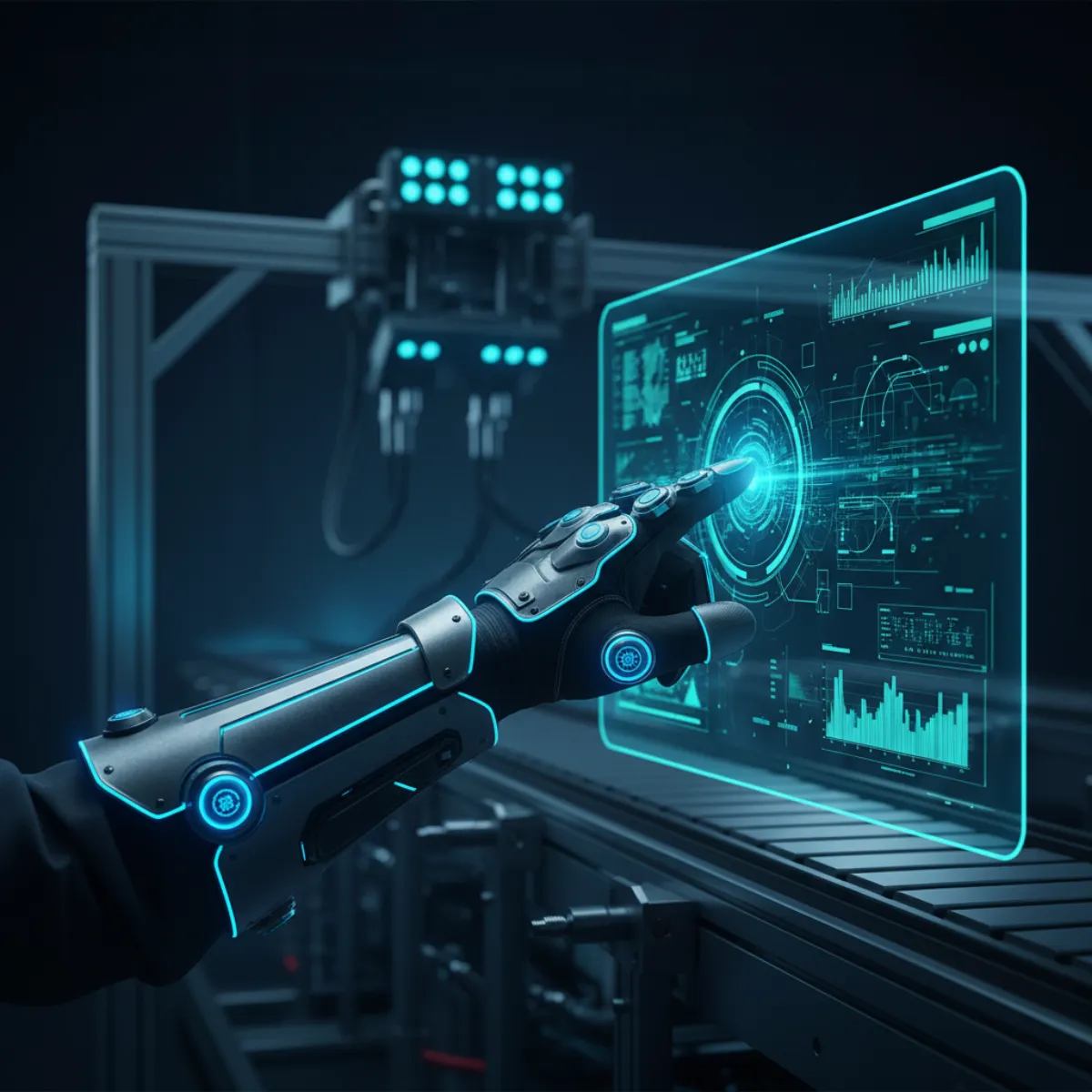
Smart PPE has completely transformed traditional personal protection concepts by integrating biometric sensors, GPS, and IoT connectivity to create a digital shield around workers. This evolution marks a milestone in modern digital safety.
Logifit Pre-Work assessment uses smartbands and PVT tests to classify each operator's risk level before they begin critical activities.
Advanced Biometric Sensors
New smart PPE integrates heart rate monitors, body temperature sensors, and movement pattern trackers that detect fatigue or stress signs before they compromise safety. This data transmits in real-time for predictive analysis.
According to NIOSH 2024, organizations implementing smart PPE report a 67% reduction in accidents related to adverse physical conditions. The key lies in seamless integration with existing remote monitoring systems.
Critical Data: 78% of serious industrial accidents in 2024 could have been prevented with integrated smart PPE systems, according to OSHA data.
| Smart PPE Type | Monitored Signals | Response Time |
|---|---|---|
| Smart Helmets | Impact, temperature, location | <100ms |
| Biometric Bands | Heart rate, sleep, activity | <200ms |
| Connected Vests | Posture, movement, gases | <150ms |
Remote Monitoring: Intelligent Real-Time Supervision
Remote monitoring has evolved beyond simple observation, becoming a predictive system that anticipates risks through pattern analysis and machine learning. This capability is fundamental to successful Industry 4.0 strategies.
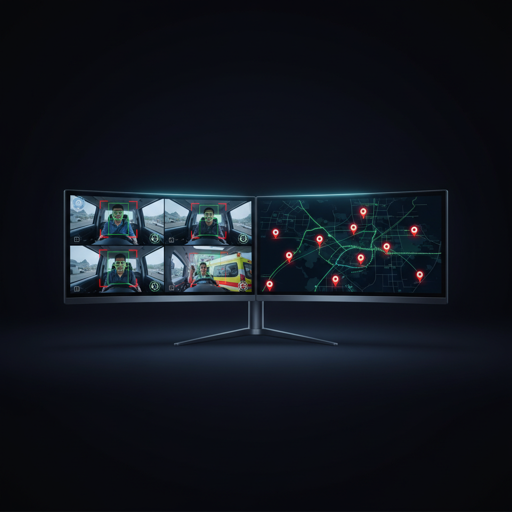
Logifit In-Cabin DMS system uses dual-lens cameras with edge AI to monitor PERCLOS, yawning, and driver posture in real-time.
Predictive Algorithms
Current remote monitoring systems use advanced AI to identify behavioral patterns that precede safety incidents, enabling preventive intervention up to 30 minutes before risk events occur.
The Logifit platform integrates remote monitoring with real-time fatigue analysis, processing over 50,000 biometric signals daily to identify at-risk workers before incidents occur.
Companies implementing advanced remote monitoring achieve 85% accuracy in predicting fatigue incidents, according to ICMM 2024 studies.
Digital Safety: Intelligent Prevention Architecture
Modern digital safety requires integrated architecture combining intelligent hardware, predictive software, and automated response protocols. This technological convergence is redefining industrial safety standards. (Source: NIST — AI Standards)
Logifit Ops Platform offers advanced analytics with machine learning, survival analysis, and correlation matrices to optimize fatigue management.
Integrated Ecosystem
The most effective digital safety systems combine smart PPE, remote monitoring, predictive analytics, and automated response in a single platform that functions as a digital nervous system for the organization.
ISO 45001 recognizes that organizations with integrated digital safety systems reduce operational costs by 45% while significantly improving safety indicators. (Source: ISO/IEC 42001 — AI Systems)
Key fact: 92% of leading mining companies plan to invest in advanced digital safety during 2026, prioritizing integration with existing smart PPE.
- Automatic risk detection: Systems identifying dangerous conditions in less than 300ms using distributed sensors
- Intelligent alerts: Contextual notifications that prioritize threats by severity and temporal proximity
- Coordinated response: Automated protocols activating corrective measures without human intervention
- Continuous learning: Algorithms improving accuracy based on historical data and emerging patterns
Industry 4.0: Non-Disruptive Implementation Strategies
The transition to Industry 4.0 in safety requires carefully planned strategies that minimize operational disruption while maximizing new technology benefits. The gradual approach is key to success.
Progressive Implementation
Successful organizations adopt a phased implementation model starting with small pilot projects, scaling gradually, and integrating operational feedback at each stage of digital transformation.
The proven methodology includes five stages: initial assessment, controlled pilot, results analysis, gradual scaling, and complete integration with existing systems.
- Smart PPE evaluation phase: Identify critical areas where remote monitoring can generate greatest digital safety impact
- Controlled pilot: Implement Industry 4.0 technologies in specific area for 30-60 days to measure effectiveness
- Data analysis: Evaluate safety metrics, user adoption, and ROI before expansion
- Strategic scaling: Expand smart PPE and remote monitoring to additional areas based on lessons learned
- Enterprise integration: Connect all digital safety technologies into unified platform
The key to Industry 4.0 success is not implementation speed, but intelligent integration of technologies that truly improve safety without creating operational resistance.
— Dr. Patricia Herrera, Digital Safety SpecialistCritical Signals to Monitor in 2026
The most advanced smart PPE and remote monitoring systems focus on specific signals showing highest correlation with safety incidents. Identifying and prioritizing these signals is fundamental to maximizing digital safety effectiveness.
For more on this topic, see our article on related tech innovation strategies.
| Critical Signal | Risk Indicator | Response Time |
|---|---|---|
| Heart rate variability | Mental and physical fatigue | 5-15 minutes |
| Movement patterns | Cognitive impairment | 2-10 minutes |
| Reaction time | Alertness and concentration | Immediate |
| Body temperature | Thermal stress | 1-5 minutes |
Logifit has identified that combining these signals enables detection of 94% of dangerous fatigue episodes before they compromise operational safety, establishing a new standard in predictive digital safety.
Organizations monitoring these four critical signals achieve 89% reduction in human factor-related incidents, according to Safe Work Australia 2024 data.
- Continuous biometric monitoring: Smart PPE recording vital signs every 30 seconds to detect gradual changes
- Temporal pattern analysis: Systems identifying capability deterioration during extended shifts
- Environmental correlation: Integration of environmental data with biometrics for more precise prediction
- Graduated alerts: Notifications escalating according to detected risk severity
Implement Advanced Smart PPE and Remote Monitoring
Transform your operation with proven digital safety technologies that integrate seamlessly with existing systems. Logifit offers Industry 4.0 solutions designed to minimize disruption while maximizing safety.
Request Demo →Successful implementation of smart PPE and remote monitoring in 2026 depends on comprehensive strategy combining advanced technology with effective change management. Organizations adopting this holistic approach to digital safety will be better positioned to face next decade's safety challenges while building more resilient and efficient operations within the Industry 4.0 framework.