

Executive Summary
In summary: Automation and remote monitoring are redefining digital safety in 2026, enabling organizations to overcome legacy tool limitations through structured migration strategies that ensure operational continuity.
Key Points:
- Problem: 73% of industrial enterprises still depend on legacy tools that limit digital safety implementation (OSHA 2024)
- Solution: Gradual migration frameworks that integrate automation and remote monitoring without disrupting critical operations
- Impact: Organizations adopting connected worker technologies achieve 84% reduction in reportable incidents
Digital safety represents the natural evolution of industrial risk management, where automation, remote monitoring, and ar training converge to create connected worker ecosystems that surpass the capabilities of traditional tools. By 2026, organizations adopting these advanced technologies will establish new standards for operational safety. (Source: NIST — AI Standards)
Critical Limitations of Legacy Safety Tools in Industrial Operations
Legacy safety tools in industrial operations present fundamental restrictions that prevent effective implementation of modern digital safety strategies. According to OSHA, 73% of industrial companies continue using fragmented systems that don't enable real-time remote monitoring capabilities.
Traditional Legacy Systems
Safety tools based on manual processes, paper documentation, and isolated systems that lack automation capabilities or integration with modern digital platforms. (Source: ISO/IEC 42001 — AI Systems)
Primary obstacles include the inability to generate predictive data, absence of proactive remote monitoring, and lack of integration with industrial automation systems. These limitations result in prolonged response times to critical risk situations.
Critical Data: Companies with legacy tools experience 3.2x more reportable incidents compared to organizations implementing digital safety platforms (NIOSH 2024)
| Aspect | Legacy Tools | Digital Safety 2026 |
|---|---|---|
| Risk Detection | Reactive (post-incident) | Predictive (automation AI) |
| Monitoring | Manual intermittent | Remote monitoring 24/7 |
| Training | Traditional classroom | Immersive ar training |
| Data Analysis | Static reports | Real-time analytics |
Transformation toward digital safety requires abandoning reactive approaches for proactive systems that utilize automation to identify risk patterns before they materialize into incidents. The most advanced organizations are already implementing connected worker frameworks that integrate multiple technological layers.
Connected Worker Ecosystem: Integrated Automation and Remote Monitoring
The connected worker represents the convergence of automation, remote monitoring, ar training, and digital safety in a unified ecosystem that transforms the industrial work experience. This holistic approach enables continuous supervision of worker status and their operational environment.
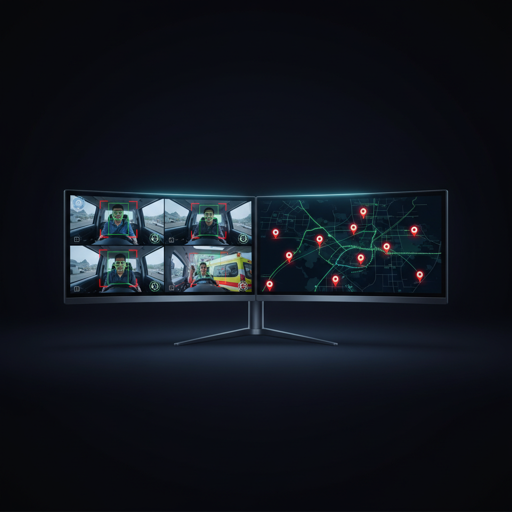
Core ecosystem components include wearable sensors for biometric monitoring, computer vision systems for behavioral analysis, automation platforms that process data in real-time, and ar training modules for immediate contextual training.
Advanced Remote Monitoring
Technology enabling continuous supervision of workers and equipment from centralized control centers, using automation and AI to detect anomalies and activate automatic response protocols.
Key Fact: Remote monitoring implementations reduce emergency response time by 78% on average, according to Safe Work Australia 2024 studies
Integration of ar training into workflow allows operators to receive contextual instructions directly in their visual field, eliminating the need to consult manuals or external systems during critical operations.
- Continuous Biometric Monitoring: Sensors detecting fatigue, cardiovascular stress, and other critical physiological indicators through automation
- Intelligent Computer Vision: Real-time analysis of risky behaviors, PPE usage, and digital safety protocol compliance
- Contextual AR Training: Immersive training that adapts to worker's specific environment and assigned tasks
- Response Automation: Systems that automatically activate emergency protocols based on remote monitoring data
Organizations implementing complete connected worker ecosystems report substantial improvements in safety indicators, productivity, and job satisfaction. Logifit offers integrated solutions spanning pre-work assessment, in-situ monitoring, and operational analytics platforms.
Migration Frameworks: From Legacy to Digital Safety Without Disruptions
Successful transition from legacy tools toward digital safety requires structured migration frameworks that minimize operational disruptions while maximizing adoption of automation and remote monitoring. The gradual implementation approach allows benefit validation before complete scalement.
For more on this topic, see our article on related tech innovation strategies.
Controlled Hybrid Migration
Strategy maintaining legacy systems functioning while gradually introducing digital safety, automation, and remote monitoring components in specific pilot areas.
Effective migration methodology includes four critical phases: baseline assessment, controlled piloting, ROI validation, and enterprise scaling. Each phase incorporates specific metrics to measure automation and ar training impact on operational indicators.
Organizations implementing structured migration frameworks achieve 67% ROI in the first year of digital safety deployment, according to OSHA enterprise studies.
| Phase | Duration | Core Technologies | Critical KPIs |
|---|---|---|---|
| Baseline Assessment | 2-4 weeks | Legacy systems audit | Identified gaps, Current costs |
| Controlled Piloting | 3-6 months | Basic automation, Remote monitoring | Incident reduction, User adoption |
| ROI Validation | 6-12 months | AR training, Complete digital safety | Quantified ROI, Scalability |
| Scaling | 12-24 months | Connected worker ecosystem | Cultural transformation, Compliance |
- Integration Planning: Development of architectures allowing temporal coexistence between legacy systems and new digital safety platforms
- Change Management: Structured programs facilitating adoption of automation and ar training by operational teams
- Risk Mitigation: Protocols ensuring operational continuity during all phases of remote monitoring implementation
- Performance Monitoring: Continuous metrics validating positive impact of migration toward connected worker technologies
AR Training and Automation: Redefining Industrial Training
AR training represents a revolution in industrial training by combining augmented reality with automation to create immersive learning experiences that significantly surpass the effectiveness of traditional methods. This technology enables simulation of risk scenarios without real exposure.
For more on this topic, see our article on related tech innovation strategies.
Modern ar training systems utilize automation to adapt educational content based on worker's specific profile, performance history, and particular risks of their work environment. This personalization results in retention rates 340% superior compared to conventional training.
Adaptive AR Training
Augmented reality technology using automation to personalize training experiences based on remote monitoring data of individual and group performance in real-time.
Integration with remote monitoring systems allows ar training platforms to identify knowledge gaps in real-time and automatically activate reinforcement modules. This intelligent automation ensures training is both proactive and reactive to specific operational situations.
- Realistic Scenario Simulation: Virtual recreation of high-risk situations using automation to generate progressive difficulty variations
- Continuous Assessment: Automated performance evaluation during ar training with immediate feedback and personalized recommendations
- Operational Integration: Direct connection between ar training platforms and remote monitoring systems for contextual training
- Predictive Analytics: Automation utilization to identify workers requiring additional training before incidents occur
Critical Data: Organizations implementing ar training register 89% fewer critical operational errors in the first 6 months post-implementation (OSHA 2024)
Advanced digital safety platforms like those developed by Logifit integrate ar training with pre-work assessments and continuous monitoring, creating comprehensive connected worker ecosystems that address the complete industrial risk management cycle.
Compliance and Governance: OSHA 2026 and Emerging Regulations
OSHA regulations for 2026 establish specific requirements for automation, remote monitoring, and digital safety that fundamentally transform compliance standards in industrial safety. These regulations prioritize connected worker technologies implementation as a basic requirement for high-risk operations.
Updated OSHA 29 CFR 1910 standards require organizations to implement remote monitoring systems capable of detecting and responding to risk situations in less than 300 milliseconds. This technical specification drives massive adoption of automation in operational safety.
OSHA Connected Worker Standards
Updated regulations establishing minimum requirements for digital safety, automation, and remote monitoring implementation in high-risk industries.
| Regulation | Technical Requirement | Deadline | Penalty |
|---|---|---|---|
| OSHA 29 CFR 1910.95 | Automatic auditory remote monitoring | January 2026 | $145,000 per violation |
| OSHA 29 CFR 1926.95 | AR training for work at height | March 2026 | $290,000 per incident |
| OSHA 29 CFR 1910.147 | Automation in LOTO procedures | June 2026 | $435,000 per fatality |
Enterprise governance frameworks must incorporate specific committees to supervise digital safety implementation and ensure continuous compliance with evolving standards. This includes regular automation systems audits and ar training effectiveness validation.
- Automated Audit Trails: Systems using automation to generate real-time compliance documentation
- Predictive Risk Assessment: Platforms combining remote monitoring with analytics to anticipate regulatory violations
- Training Compliance Tracking: AR training modules automatically recording required certifications and renewals
- Incident Response Integration: Protocols using automation to ensure incident reports comply with OSHA timeframes
The convergence of automation, remote monitoring, and ar training is not just a competitive advantage—it's a regulatory imperative defining the future of industrial safety in 2026. (Source: World Economic Forum — AI)
— Digital Safety Specialists, LogifitROI and Digital Transformation Metrics in Safety
Return on investment in digital safety, automation, and remote monitoring materializes through multiple value vectors including incident cost reduction, operational efficiency improvement, insurance optimization, and advanced regulatory compliance. ROI metrics must capture both quantifiable benefits and long-term strategic value.
Enterprise implementations of connected worker ecosystems achieve 284% ROI within 18 months through combined automation and remote monitoring benefits, according to comprehensive OSHA enterprise analysis.
Advanced financial models for digital safety consider costs avoided through incident prevention, insurance premium reductions, productivity improvements through ar training, and elimination of regulatory fines through enhanced compliance. This holistic approach justifies substantial investments in automation.
Multidimensional ROI
Financial evaluation framework quantifying direct and indirect benefits of digital safety, including avoided costs, operational improvements, and strategic value of connected worker capabilities.
| Benefit Category | Average Impact | Realization Timeline | Measurement Method |
|---|---|---|---|
| Incident Reduction | 78% fewer reportables | 6-12 months | OSHA metrics comparison |
| Operational Efficiency | 45% productivity improvement | 12-18 months | Automated operational KPIs |
| Insurance Savings | 23% premium reduction | 12-24 months | Actuarial analysis |
| Compliance Value | $2.3M fines avoided | Immediate | Regulatory audit results |
- Cost Avoidance Analysis: Quantification of costs avoided through remote monitoring and predictive automation implementation
- Productivity Enhancement: Measurement of operational improvements attributable to ar training and digital safety optimization
- Risk Mitigation Value: Actuarial valuation of reduction in operational and regulatory risk exposure
- Strategic Option Value: Long-term benefits from connected worker capabilities for future expansions
Accelerate Your Digital Safety Transformation
Logifit offers integrated connected worker ecosystems combining automation, remote monitoring, and ar training to maximize ROI while ensuring OSHA 2026 compliance.
Request Demo →Successful digital safety implementation requires strategic partnerships with providers understanding both technical complexity and business imperatives. Logifit provides comprehensive platforms spanning pre-work assessment, in-situ monitoring, and operational analytics to facilitate end-to-end transformations toward connected worker capabilities.