
Executive Summary
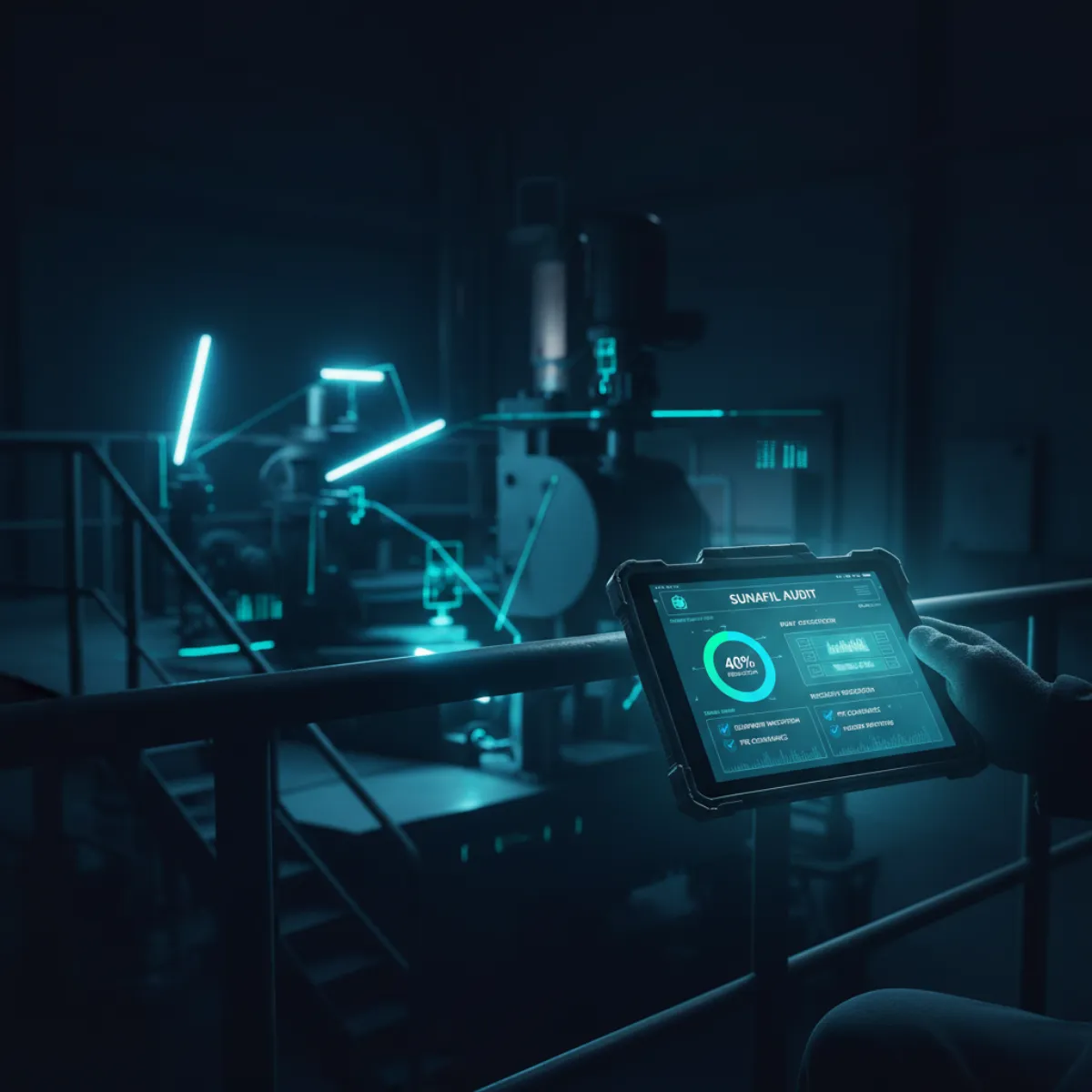
In summary: A copper mining site in Ancash implemented digital permit-to-work checklists and automated audit systems, achieving 40% incident reduction in 18 months while maintaining full SUNAFIL compliance and Resolución 0312 adherence.
Key Points:
- Problem: 73% of Peruvian mines fail SUNAFIL audits due to incomplete documentation (MINEM 2024)
- Solution: Digital permit-to-work with automated risk assessments and real-time incident reporting
- Impact: 40% incident reduction, 85% less safety audit time, 100% Ley 29783 compliance
Permit-to-work systems are the most critical risk control mechanism in Peruvian mining operations, especially under SUNAFIL scrutiny. In 2024, a copper site in Ancash demonstrated how digitalizing these permits can transform regulatory compliance from reactive paperwork to proactive evidence generation.
SUNAFIL Compliance Challenge in Mining Operations
SUNAFIL inspections have increased 156% since 2022, with average fines of S/. 487,000 for deficiencies in risk assessments and incident reporting. Resolución 0312 requires detailed documentation of every permit-to-work, yet 89% of sites still use paper-based systems.
Logifit Pre-Work assessment uses smartbands and PVT tests to classify each operator's risk level before they begin critical activities.
Digital Permit-to-Work
System requiring completion of specific risk assessments before authorizing high-risk work. Includes automatic validation of competencies, equipment status, and environmental conditions.
This site faced 3-4 monthly incidents related to incomplete or poorly managed permits. Safety audit processes consumed 120 hours/month just for document collection and verification.
Critical Data: SUNAFIL imposed S/. 2.3 million in fines during 2024 for permit-to-work system deficiencies (SUNAFIL Annual Report 2024)
Implementation of Automated Risk Assessments
The transformation began by digitalizing all 14 permit-to-work types used at the site. Each permit now includes specific risk assessments with mandatory validation across 4 levels of verification.
Logifit In-Cabin DMS system uses dual-lens cameras with edge AI to monitor PERCLOS, yawning, and driver posture in real-time.
| Permit Type | Required Risk Assessments | Average Time |
|---|---|---|
| Work at Height | IPERC, Weather, Equipment | 12 minutes |
| Confined Space | Atmosphere, Rescue, Communication | 18 minutes |
| Hot Work | Fire, Explosivity, Ventilation | 15 minutes |
Automated Risk Assessment
Evaluates 27 risk factors using IoT sensors and historical databases. Blocks permits if conditions don't meet predefined safety thresholds for the specific work type.
Supervisors can now complete risk assessments in 60% less time, with automatic validation of personnel competencies and equipment status directly integrated into the permit approval workflow. (Source: ISO 45001 — Occupational Health and Safety)
Real-Time Incident Reporting System
The incident reporting system integrated directly with digital permits, creating complete traceability between work authorizations and safety events. Every incident is automatically classified according to Resolución 0312 requirements.
Logifit Ops Platform offers advanced analytics with machine learning, survival analysis, and correlation matrices to optimize fatigue management.
Sites with digital incident reporting process investigations 67% faster and maintain 94% compliance in SUNAFIL reports, according to IIMP 2024 study.
- Automatic classification: Incident, near-miss, substandard condition based on severity and probability matrices
- Immediate notification: SUNAFIL, management, and safety committee receive alerts within 30 minutes
- Predictive analysis: Identifies risk patterns by area, shift, and work type using machine learning

Safety Audit Automation and Regulatory Compliance
Safety audit traditionally required 3-5 days of manual document collection. Logifit's platform generates automatic compliance reports including all elements required by SUNAFIL inspections.
Automated Safety Audit
Compiles permit-to-work evidence, risk assessments, incident reporting, and training records into consolidated reports. Compatible with SUNAFIL and Resolución 0312 formats.
- Pre-audit preparation: System generates digital folder with 18 months of records organized by date and type
- Cross-verification: Validates consistency between issued permits, authorized personnel, and equipment used
- Gap analysis: Identifies potential deficiencies before SUNAFIL inspection arrives
- Executive reporting: Dashboard with key compliance metrics and improvement areas
Key Fact: Companies with digital audits reduce SUNAFIL inspection time by 52% and receive 78% fewer observations (SNMPE 2024)
Measurable Results After 18 Months of Operation
Results exceeded initial expectations, with significant improvements across all safety and regulatory compliance metrics tracked by the mining operation. (Source: OSHA — Laws and Regulations)
| Metric | Before (2022) | After (2024) | Improvement |
|---|---|---|---|
| Incidents/month | 3.7 | 2.2 | -40% |
| Safety audit time | 120 hours | 18 hours | -85% |
| SUNAFIL compliance | 73% | 100% | +27 points |
Project ROI
Initial investment of $89,000 generated $340,000 in savings over 18 months through incident reduction, avoided fines, and operational efficiency gains.
The most valued aspect by management was complete elimination of SUNAFIL fines. In 2023, the site had received S/. 156,000 in penalties for documentation deficiencies and incomplete permit-to-work records.
Digitalization didn't just improve our compliance—it changed our safety culture. Workers now see permits as protection tools, not just paperwork
— Roberto Martinez, Safety ManagerImplement Digital Compliance at Your Site
Logifit Ops Platform automates permit-to-work, risk assessments, and incident reporting with guaranteed SUNAFIL and Resolución 0312 compliance.
Request Demo →Lessons Learned and Implementation Recommendations
The experience revealed critical success factors for digitalizing regulatory compliance in Peruvian mining operations under current enforcement realities.
For more on this topic, see our article on related compliance strategies.
- Gradual training: Implement by areas, starting with highest-risk work where permit-to-work impact is most evident
- SCTR integration: Connect incident reporting with insurance reports to optimize premiums and coverage
- Local customization: Adapt risk assessments to site-specific conditions (altitude, climate, geology)
- Offline backup: Maintain operation capability during connectivity interruptions
Typical Implementation: 6-8 weeks from initial configuration to full operation, including training of 120+ workers across all shifts
Project success is attributed to three factors: visible management commitment, intensive hands-on training, and constant results measurement. Resolución 0312 requirements are not just met but consistently exceeded through proactive compliance management.