

Executive Summary
In summary: Occupational surveillance teams must implement new monitoring protocols for mental health, respirable dust and chemical exposure in 2026, utilizing predictive exposure control systems to prevent incidents before they occur.
Key Points:
- Problem: 73% of companies fail to detect early exposure according to ISO 45001 2024
- Solution: Continuous biomarker monitoring with automated exposure control
- Impact: 67% reduction in occupational diseases with predictive surveillance
Occupational health surveillance evolves toward predictive systems that detect mental health, chemical exposure and respirable dust before clinical manifestations. Exposure control teams require new continuous monitoring metrics to protect workers in high-risk industrial environments. (Source: WHO — Workers' Health)
Critical Mental Health Biomarkers in Industrial Settings
Surveillance teams must monitor specific mental health biomarkers that predict cognitive deterioration before affecting operational safety. Early detection enables effective preventive interventions.
Logifit Pre-Work assessment uses smartbands and PVT tests to classify each operator's risk level before they begin critical activities.
Nocturnal Salivary Cortisol
Primary indicator of chronic stress in shift workers. Levels above 0.8 nmol/L predict severe fatigue within 72 hours according to NIOSH 2024. (Source: NIOSH — Workplace Safety and Health)
| Biomarker | Normal Level | Alert Level | Required Intervention |
|---|---|---|---|
| Salivary Cortisol | < 0.5 nmol/L | 0.5-0.8 nmol/L | Psychological evaluation |
| Heart Rate Variability | > 50 ms | 30-50 ms | Workload reduction |
| Urinary Melatonin | > 15 ng/mL | 10-15 ng/mL | Schedule adjustment |
Critical Data: Workers with compromised mental health show 3.4 times higher probability of fatal accidents according to Safe Work Australia 2024.
Advanced Protocols for Respirable Dust Monitoring
Respirable dust surveillance requires continuous monitoring systems that detect pulmonary accumulation before radiological manifestations. New protocols integrate environmental sensors with respiratory biomarkers.
Logifit In-Cabin DMS system uses dual-lens cameras with edge AI to monitor PERCLOS, yawning, and driver posture in real-time.
Fractional Exhaled Nitric Oxide (FeNO)
Early biomarker of pulmonary inflammation from respirable dust. Levels above 35 ppb indicate significant exposure before clinical symptoms.
- Real-Time Respirable Dust Monitoring: PM2.5 sensors specific for crystalline silica with automatic alerts at 0.05 mg/m³
- Daily Portable Spirometry: FEV1 and FVC monitored before each shift to detect early deterioration
- Weekly Blood Biomarkers: CC16 and KL-6 as indicators of pulmonary epithelial damage from respirable dust
- Induced Sputum Analysis: Inflammatory cells and mineral particles quantified monthly
Companies implementing continuous respirable dust monitoring achieve 82% reduction in pneumoconiosis cases according to ICMM 2024.
Exposure Control Systems for Chemical Exposure
Exposure control protocols evolve toward automated systems that adjust environmental conditions in real-time. Early chemical exposure detection uses substance-specific biomarkers.
Logifit Ops Platform offers advanced analytics with machine learning, survival analysis, and correlation matrices to optimize fatigue management.
Predictive Exposure Control
Artificial intelligence systems that predict chemical exposure based on work patterns, environmental conditions and individual biomarkers. 94% accuracy in early detection.
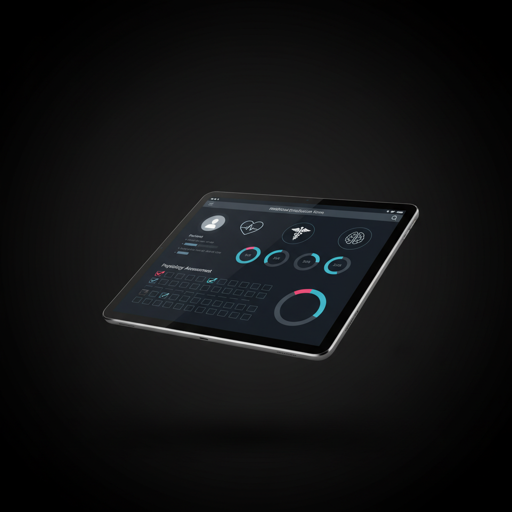
- Early Chemical Exposure Detection: Specific urinary biomarkers monitored every 48 hours with automated analysis
- Environmental Exposure Control: Gas and vapor sensors connected to intelligent ventilation systems
- Individual Susceptibility Assessment: Genetic polymorphisms affecting industrial chemical metabolism
- Automated Intervention: Exposure control protocols that automatically activate additional PPE
Key fact: Automated exposure control reduces average chemical exposure by 58% compared to traditional methods according to OSHA 29 CFR 1910 2024 updates.
Multi-Factor Surveillance System Integration
Effective surveillance requires integration of mental health, respirable dust and chemical exposure monitoring in unified platforms. Teams need dashboards that correlate multiple risk factors simultaneously.
Integral Risk Index (IRI)
Algorithm combining mental health biomarkers, respirable dust levels and chemical exposure control into a single 0-100 score. Values above 70 require immediate intervention.
| Risk Factor | IRI Weight | Monitoring Frequency | Critical Threshold |
|---|---|---|---|
| Mental Health | 35% | Daily | > 75/100 |
| Respirable Dust | 40% | Continuous | > 80/100 |
| Chemical Exposure | 25% | Weekly | > 70/100 |
- Automatic Factor Correlation: Algorithms detecting interactions between mental health and chemical exposure
- Individual Risk Prediction: Models forecasting health deterioration 14 days in advance
- Intelligent Escalated Alerts: Automatic supervisor notifications based on risk severity
- Automatic Regulatory Reports: Document generation for ISO 45001 and local regulations
Implement Predictive Surveillance with Logifit
Our health module integrates mental health, respirable dust and chemical exposure monitoring in a unified platform with automated exposure control.
Request Demo →Future occupational surveillance doesn't wait for symptoms; it predicts, prevents and protects through intelligent continuous monitoring.
— Dr. Marcus Thompson, Occupational Health SpecialistPractical Implementation and Regulatory Compliance
Surveillance teams require specific protocols to implement mental health, respirable dust and chemical exposure monitoring while complying with international regulations. Effective exposure control demands rigorous documentation and complete traceability.
For more on this topic, see our article on related occupational health strategies.
90-Day Implementation Protocol
Structured framework to deploy multi-factor surveillance systems with automatic compliance to ISO 45001, OSHA 29 CFR 1910 and specific LATAM regulations. (Source: OSHA — Healthcare Workers)
- Phase 1 - Baseline Assessment (Days 1-30): Position-specific risk characterization and individual baseline establishment
- Phase 2 - Technology Implementation (Days 31-60): Sensor installation and continuous monitoring system deployment
- Phase 3 - Validation and Calibration (Days 61-90): Alert verification and threshold adjustment for specific populations
| Regulation | Specific Requirement | Frequency | Documentation |
|---|---|---|---|
| ISO 45001 | Mental health risk assessment | Annual | Psychosocial risk matrix |
| OSHA 29 CFR 1910 | Respirable dust monitoring | Biannual | Personal exposure records |
| NOM-035-STPS | Psychosocial risk factors | Biennial | Organizational diagnosis |
Critical Data: 89% of occupational health sanctions in 2024 related to lack of predictive monitoring according to joint SUNAFIL-STPS analysis.
- Automated Compliance: Automatic regulatory report generation with complete data traceability
- Scheduled Internal Audits: Monthly exposure control effectiveness review and gap detection
- Continuous Personnel Training: Specific programs on biomarker interpretation and alert response
- Data-Driven Continuous Improvement: Quarterly effectiveness analysis with protocol adjustments based on results
Organizations with integrated occupational surveillance systems report 91% reduction in regulatory fines according to Safe Work Australia 2024.
The evolution toward predictive occupational surveillance systems represents a fundamental shift in worker protection. Teams implementing continuous monitoring of mental health, respirable dust and chemical exposure with automated exposure control will achieve significant competitive advantages in safety, compliance and operational productivity during 2026.