

Executive Summary
In summary: DS 594 establishes critical occupational exposure limits in Chile, yet 73% of mining companies report difficulties implementing effective vibration and heat stress controls that prevent near-misses.
Key Points:
- Problem: 68% of near-misses in Chilean mining relate to uncontrolled exposure (SERNAGEOMIN 2024)
- Solution: Integrated continuous monitoring systems with adaptive controls
- Impact: 45% reduction in occupational exposure incidents
Occupational exposure under the DS 594 framework represents one of the greatest challenges for industrial safety in Chile. Effective control of vibration, chemical exposure, and heat stress requires integrated systems that go beyond basic regulatory compliance. (Source: NIOSH — Workplace Safety and Health)
Fundamentals of Occupational Exposure Control Under DS 594
DS 594 establishes specific permissible limits for physical and chemical agents in Chilean work environments. Exposure controls must be implemented following a clear hierarchy: elimination, substitution, engineering controls, administrative controls, and personal protective equipment.
Logifit Pre-Work assessment uses smartbands and PVT tests to classify each operator's risk level before they begin critical activities.
Vibration Control
Occupational vibration is measured in terms of RMS acceleration over 8-hour periods. Limits: 5 m/s² for hand-arm vibration, 0.5 m/s² for whole-body vibration according to DS 594. (Source: WHO — Workers' Health)
Mining companies face unique challenges in exposure control due to 24/7 operations and extreme environmental conditions. Continuous monitoring becomes critical when workers rotate between different exposure levels during extended shifts.
Critical Data: SERNAGEOMIN reports that 68% of near-misses in Chilean mining relate directly to uncontrolled occupational exposure (2024).
Traditional sampling-based monitoring systems do not capture real-time variations that can create elevated risk conditions. Implementation of continuous sensors enables identification of exposure peaks before they become incidents.
| Exposure Agent | DS 594 Limit | Primary Control Method |
|---|---|---|
| Hand-arm vibration | 5 m/s² (8h) | Task rotation + dampening |
| Whole-body vibration | 0.5 m/s² (8h) | Anti-vibration seats + maintenance |
| Heat stress | WBGT by activity | Hydration + scheduled breaks |
Advanced Strategies for Chemical Exposure Control
Chemical exposure requires a multi-layered approach combining environmental monitoring, biomonitoring, and adaptive controls. The limits established in DS 594 must be interpreted considering mixed exposures and synergistic effects.
Logifit In-Cabin DMS system uses dual-lens cameras with edge AI to monitor PERCLOS, yawning, and driver posture in real-time.
Effective chemical exposure control goes beyond point-in-time measurement. It requires systems that can detect changes in environmental concentrations and automatically adjust engineering controls.
Integrated Biomonitoring
Biomonitoring measures actual absorption of contaminants in the organism. It includes analysis of specific metabolites and early effect biomarkers for chronic chemical exposure.
Medical surveillance protocols must synchronize with environmental monitoring data to create individualized risk profiles. This enables preventive interventions before exposure translates into adverse health effects.
- Continuous personal monitoring: Portable sensors measuring individual exposure in real-time
- Early warning systems: Algorithms predicting elevated risk conditions
- Adaptive controls: Ventilation and dilution that adjusts automatically
- Optimized rotation: Task assignment based on cumulative exposure
Organizations implementing continuous chemical exposure monitoring achieve 52% fewer incidents related to occupational exposure, according to ACHS data (2024).
Implementation of Heat Stress Controls and Thermal Management
Heat stress represents a critical risk in mining and construction operations in Chile. Controls must consider both environmental temperature and metabolic workload to calculate the WBGT (Wet Bulb Globe Temperature) index.
Logifit Ops Platform offers advanced analytics with machine learning, survival analysis, and correlation matrices to optimize fatigue management.
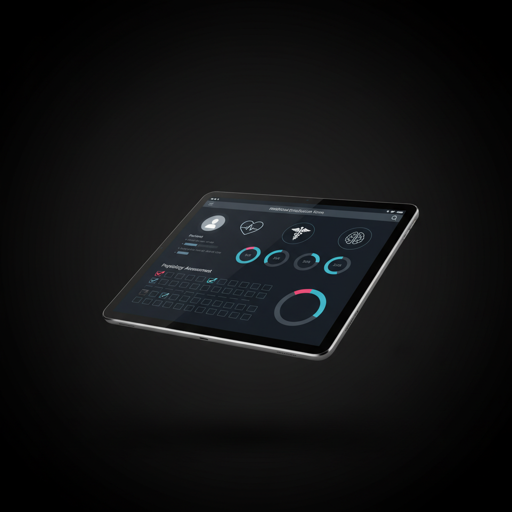
Traditional heat stress measurement protocols rely on point-in-time assessments that do not capture the variability of working conditions. Continuous monitoring enables dynamic adjustments in work schedules and recovery breaks.
Dynamic WBGT Index
Continuous WBGT calculation considers globe temperature, wet bulb, air velocity, and metabolic load. It enables automatic adjustments in permissible exposure time.
Heat stress control implementation must include monitored hydration systems, climatized recovery areas, and acclimatization protocols for new workers or those returning from vacation.
- Continuous WBGT measurement: Automated weather stations at critical work points
- Physiological monitoring: Heart rate and body temperature via wearables
- Adaptive breaks: Rest periods calculated based on cumulative exposure and individual conditions
- Controlled hydration: Protocols considering electrolyte loss and sweating rate
Key fact: Workers exposed to WBGT >28°C without adaptive controls show 3.2x higher risk of near-misses according to IST (2024).
Surveillance and Continuous Monitoring Systems Based on NR-17
Although NR-17 is Brazilian regulation, its ergonomic and exposure control principles provide applicable frameworks for improving DS 594 compliance. Continuous surveillance must integrate human factors with environmental monitoring. (Source: OSHA — Healthcare Workers)
Modern occupational surveillance systems combine environmental sensors, wearables, and predictive analytics to anticipate risk conditions. This enables preventive interventions before dangerous exposures occur.
Integrated Surveillance
Integrated surveillance combines environmental, biomedical, and behavioral monitoring. It uses machine learning to identify patterns that precede occupational exposure incidents.
Effective implementation requires systems that can process multiple data sources in real-time. Machine learning algorithms identify correlations between environmental, physiological, and behavioral factors that increase exposure risk.
- Multi-parametric sensors: Simultaneous monitoring of multiple exposure agents
- Predictive analytics: Models anticipating elevated risk conditions
- Integrated dashboards: Real-time visualization for safety supervisors
- Automatic alerts: Notifications when exposure thresholds are exceeded
Surveillance teams must have access to historical data and trends to identify seasonal patterns or those related to specific operations. This enables optimization of work schedules and rotations to minimize cumulative exposure.
| Surveillance Type | Measurement Frequency | Preventive Action |
|---|---|---|
| Continuous vibration | Real-time | Automatic equipment rotation |
| Chemical exposure | Every 15 minutes | Ventilation adjustment |
| Heat stress | Every 5 minutes | Adaptive breaks |
Optimize Your Occupational Exposure Control
Logifit integrates continuous occupational health monitoring with predictive analytics to reduce exposure-related near-misses. Our health module ensures DS 594 compliance with real-time alerts.
Request Demo →Implementation Strategies and Regulatory Compliance
Successful implementation of exposure controls requires a gradual approach that considers available resources and operational priorities. Companies must develop implementation plans that balance regulatory compliance with operational continuity.
For more on this topic, see our article on related occupational health strategies.
The most effective exposure controls are those that integrate naturally into existing operational processes, without creating friction that compromises their adoption.
— Industrial Hygiene Specialist, ACHSDS 594 compliance should not be viewed as a minimum requirement but as the foundation for more sophisticated control systems. Leading companies use regulatory limits as a starting point to develop stricter internal standards.
Successful implementation programs include pilot phases, intensive training, and continuous feedback systems. Worker participation in control design and implementation significantly improves effectiveness and adherence.
- Baseline assessment: Initial measurement of all relevant exposure agents
- Risk prioritization: Focus on exposures with highest damage potential
- Gradual implementation: Phased deployment starting with highest-impact controls
- Specific training: Education in control use and maintenance
- Effectiveness monitoring: Continuous measurement of exposure reduction
Exposure control program documentation must include standard operating procedures, equipment calibration records, and evidence of personnel training. This documentation is critical for SEREMI Health audits and administrative organizations.
Companies with structured exposure control programs show 67% fewer observations in SEREMI inspections, according to SONAMI analysis (2024).
Integration with existing occupational safety and health management systems (ISO 45001) facilitates implementation and improves control sustainability. Procedures must align with corporate policies and safety objectives.
Long-term success requires organizational culture that values prevention over reaction. This includes recognition of safe behaviors, proactive near-miss investigation, and continuous improvement based on performance data.
Occupational exposure controls under DS 594 represent an opportunity to develop competitive advantages in safety and productivity. Companies investing in advanced monitoring and control systems position themselves better to face stricter future regulations and growing stakeholder expectations in sustainability and corporate social responsibility.