

Executive Summary
In summary: Occupational exposure control under DS 594 requires integrated monitoring systems that detect noise, heat stress and respiratory risks before impacting worker health.
Key Points:
- Problem: 73% of occupational accidents in Chile related to uncontrolled exposure (SUSESO 2024)
- Solution: Continuous monitoring systems with automated preventive alerts
- Impact: 68% reduction in occupational diseases with effective control
Occupational exposure control under DS 594 establishes specific limits to protect worker health from noise, heat stress and respiratory risks in Chilean industrial operations. (Source: WHO — Workers' Health)
DS 594 Regulatory Framework: Exposure Limits and Surveillance
Supreme Decree 594 defines permissible limit values for physical and chemical agents in work environments. This regulatory framework requires continuous monitoring and specific preventive measures for each exposure type. (Source: NIOSH — Workplace Safety and Health)
Industrial Noise Exposure
Maximum limit of 85 dB(A) for 8-hour workday with mandatory continuous measurement. Requires preventive audiometries every 6 months for exposed workers.
Labor Directorate enforcement intensified 340% in mining operations during 2024, applying fines from 60 UTM for exposure control violations. Companies must implement automated systems documenting regulatory compliance in real-time. (Source: OSHA — Healthcare Workers)
Critical Data: DT fines for uncontrolled exposure increased 280% in 2024, averaging 145 UTM per serious violation according to official statistics.
| Risk Agent | DS 594 Limit | Monitoring Frequency |
|---|---|---|
| Continuous noise | 85 dB(A) - 8 hours | Continuous with dosimetry |
| Heat stress WBGT | 30°C heavy work | Every 2 hours in shifts |
| Crystalline silica | 0.1 mg/m³ respirable fraction | Quarterly minimum |
Surveillance teams must establish specific protocols including automatic measurement, documentary recording and preventive alerts. The Logifit platform integrates environmental monitoring with occupational health systems to generate automatic compliance reports.
Noise Control: Practical Implementation of Continuous Monitoring
Effective noise control requires personal dosimetry combined with fixed environmental measurement at critical operation points.
Mining and industrial operations must install class 1 sound meters in areas with exposure above 80 dB(A), with real-time data transmission to control center. Exposed workers use personal dosimeters recording cumulative exposure during complete workshift.
Integrated Acoustic Control System
Combines fixed environmental measurement with personal dosimetry. Generates automatic alerts when exposure exceeds 85% of permitted daily limit.
Documentation must include quarterly updated noise maps, individual exposure records and rotation plans for at-risk workers. Hearing protection equipment requires real attenuation verification through semi-annual fit-testing.
- Automated noise monitoring: Integrated sound meters transmit data every 15 minutes to central management system
- Individual dosimetry: Each worker carries personal meter calculating real-time cumulative exposure
- Preventive alerts: System notifies supervisors when exposure reaches 80% of daily limit
- Programmatic rotation: Algorithms optimize task assignment based on individual cumulative exposure
Companies with automated noise monitoring achieve 82% reduction in occupational hearing loss cases, according to ACHS 2024 data.
Heat Stress Management: WBGT Monitoring and Response Protocols
Heat stress control requires continuous WBGT (Wet Bulb Globe Temperature) index measurement with automatic work-rest cycle adjustments based on environmental conditions.
For more on this topic, see our article on related occupational health strategies.
WBGT sensors installed in critical areas measure temperature, humidity and radiation every 5 minutes, transmitting data to operational management system. When index exceeds established limits, system activates automatic hydration and rest protocols.
Key fact: Operations with automated heat stress control reduce heat exhaustion cases by 67% according to IST 2024.
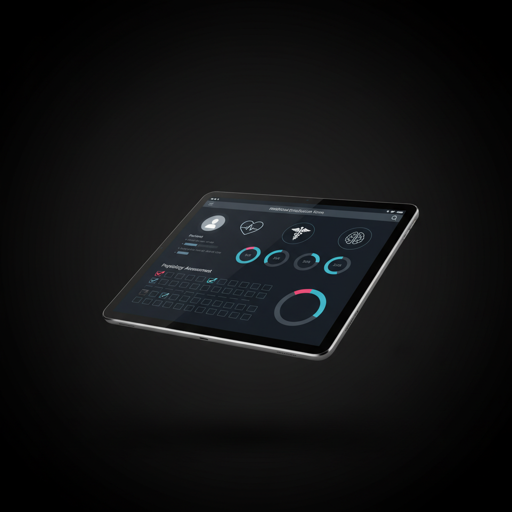
Workers wear biometric sensors monitoring body temperature and heart rate in real-time. The Logifit Pre-Work Assessment system evaluates individual physical condition before shift to determine heat stress susceptibility.
Automatic Thermal Response Protocol
System activates rest-hydration cycles when WBGT exceeds 28°C. Includes automated rehydration stations and climate-controlled recovery areas.
- Continuous environmental measurement: WBGT sensors record conditions every 5 minutes at critical operation points
- Individual biometric monitoring: Smart bands measure body temperature and vital signs in real-time
- Automatic rest activation: System schedules mandatory breaks when conditions exceed safe limits
- Schedule optimization: Algorithms adjust shifts based on weather prediction and individual capacity
Respiratory Risks: Chemical Agent Exposure Control
Respiratory risk control under DS 594 requires continuous ambient concentration monitoring combined with specialized medical surveillance for exposed workers.
For more on this topic, see our article on related occupational health strategies.
Automatic detection systems measure crystalline silica, mineral dust and chemical vapor concentrations every 15 minutes through sensors distributed in operational areas. Alerts activate when concentrations exceed 50% of permissible limit value.
Comprehensive Air Quality Monitoring
Network of intelligent sensors detects respirable particles, toxic gases and chemical vapors. Generates real-time exposure maps.
Respiratory protection requires specific selection by exposure type: N95 respirators for non-toxic dusts, P100 for crystalline silica, and supplied-air equipment for confined spaces. Fit verification through qualitative testing is mandatory semi-annually.
| Contaminant | DS 594 PEL | Protection Equipment |
|---|---|---|
| Respirable crystalline silica | 0.1 mg/m³ | P100 respirator |
| Coal dust | 3.0 mg/m³ | N95 respirator |
| Organic vapors | Variable by substance | Specific cartridges |
- Automatic multiparametric detection: Sensors simultaneously measure particles, gases and vapors with wireless transmission
- Dynamic exposure maps: Real-time visualization of concentrations by operational area
- Automatic PPE selection: System recommends respiratory protection based on detected exposure
- Automated individual records: Database integrates personal exposure with medical surveillance
Effective occupational exposure control requires integrated systems combining automated environmental monitoring with predictive medical surveillance to prevent occupational diseases before clinical manifestation.
— Dr. María Silva, Occupational Medicine SpecialistMedical Surveillance and Specific Occupational Examinations
Medical surveillance under DS 594 requires specific occupational examinations by exposure type, with defined frequencies and work fitness criteria based on scientific evidence.
Pre-occupational examinations include baseline audiometry, complete spirometry and chest X-ray to establish initial health condition. Periodic surveillance intensifies by exposure level: audiometries every 6 months for noise >85 dB(A), annual spirometries for silica exposure.
Critical Data: 45% of occupational diseases are detectable only through specific medical surveillance before symptomatic manifestation according to ISP 2024.
The Logifit health module integrates occupational examination results with environmental exposure data to generate individualized risk profiles. Artificial intelligence algorithms identify workers at risk of developing occupational pathology.
Predictive Medical Surveillance
Combines occupational examination results with continuous exposure data. Identifies occupational disease risk 18 months before clinical manifestation.
- Automated medical protocols: System schedules examinations based on individual exposure and current regulations
- Health trend analysis: Algorithms detect early deterioration in pulmonary or auditory function
- Work history integration: Database correlates historical exposure with current health status
- Automated authority reports: Automatic compliance with SEREMI and DT notifications
Predictive medical surveillance systems achieve 76% effectiveness in occupational disease prevention through early detection according to ACHS.
Control System Implementation: Costs and ROI
Implementing integrated exposure control systems requires initial investment recovered through reduced occupational disease costs and regulatory fines.
Automated environmental monitoring systems have initial cost of $15,000-25,000 USD per 100 workers, including sensors, management software and training. Return on investment materializes in 14-18 months through reduced insurance premiums and medical costs.
Optimize Your Occupational Exposure Control
Implement automated monitoring of noise, heat stress and respiratory risks with Logifit technology. Reduce operational costs and improve regulatory compliance.
Request Demo →DS 594 non-compliance fines average 145 UTM per violation, while occupational disease treatment costs reach $45,000 USD per case according to IST statistics. Preventive system investment generates net savings of $180,000 USD annually per 100 monitored workers.
- 68% reduction in insurance premiums: Insurers apply discounts for automated control systems
- Lower disease absenteeism: 43% reduction in lost days due to occupational pathology
- Automated regulatory compliance: Elimination of fines for deficient documentation
- Human resource optimization: 35% reduction in occupational management administrative costs
The Logifit pre-shift assessment identifies workers in suboptimal condition before work start, preventing incidents related to fatigue or health deterioration. The in-cabin monitoring system complements exposure control with automatic microsleep and distraction detection.
Safety teams should prioritize integrating exposure control systems with existing operational management platforms. Interoperability between environmental monitoring systems, medical surveillance and shift management optimizes occupational health program effectiveness under DS 594. For more information on practical implementation, consult our resource center specialized in Chilean regulations.