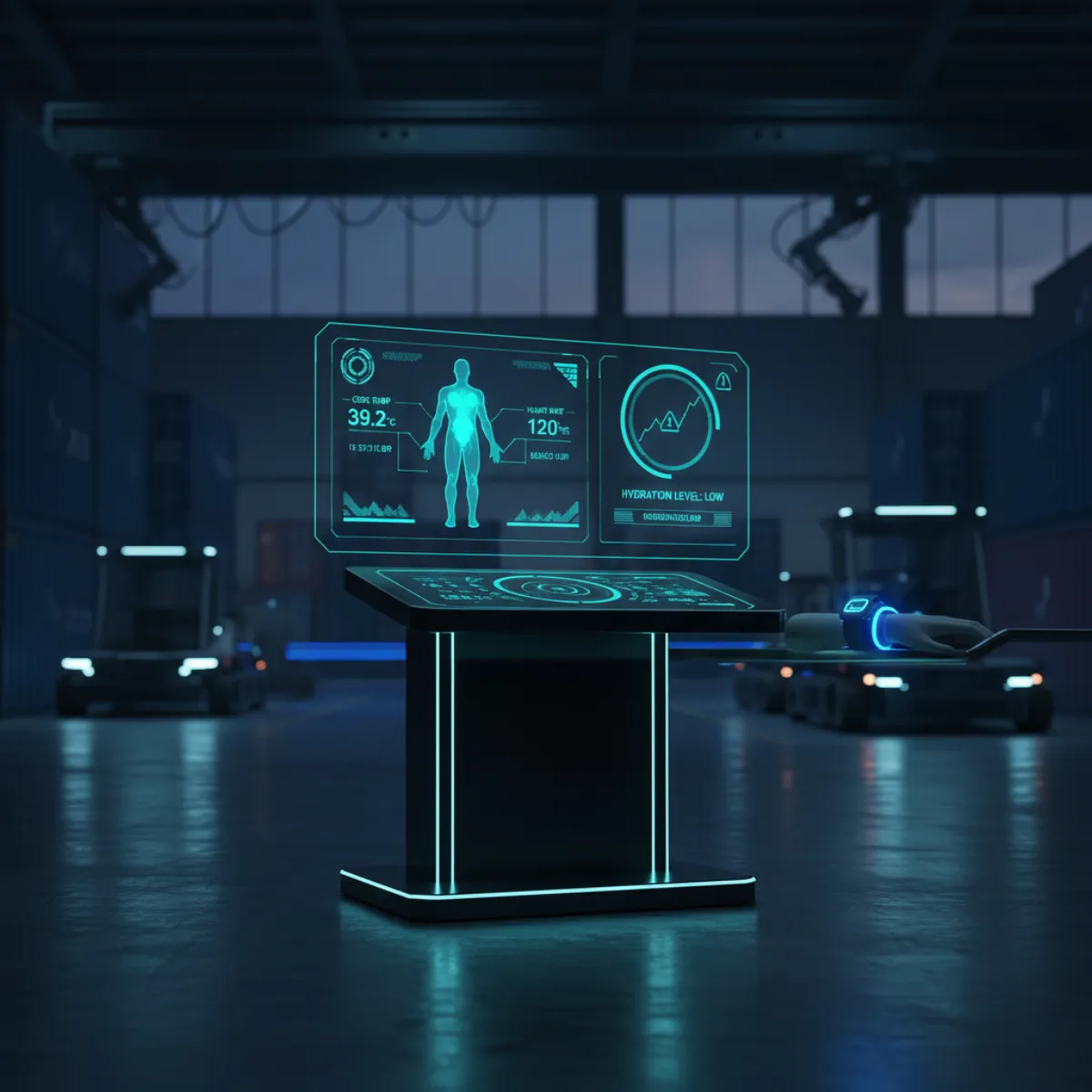

Executive Summary
In summary: Heat stress in logistics operations severely compromises worker mental health and physical wellbeing, causing extreme fatigue and critical errors. This article presents 10 evidence-based practices to implement effective exposure control systems that surveillance teams can execute immediately.
Key Points:
- Problem: 70% of logistics accidents occur during high-temperature periods (NIOSH 2024)
- Solution: Continuous vital signs monitoring and automatic exposure control
- Impact: 65% reduction in thermal fatigue-related incidents
Heat stress represents one of the primary threats to mental health and physical wellbeing in modern logistics operations. When workers are exposed to elevated temperatures, their cognitive capacity decreases up to 40%, exponentially increasing the risk of fatal accidents according to OSHA 2024 studies.
Impact of Heat Stress on Mental Health of Logistics Operators
Prolonged heat exposure not only affects the physical body but significantly deteriorates operators' mental health. The human brain consumes 25% more energy when attempting to regulate body temperature, generating extreme cognitive fatigue.
Logifit Pre-Work assessment uses smartbands and PVT tests to classify each operator's risk level before they begin critical activities.
Thermal Fatigue Syndrome
Condition where heat stress causes progressive deterioration of executive functions, including decision-making, reaction time, and concentration capacity. It manifests after 45 minutes of exposure to temperatures above 90°F (32°C).
Mental deterioration symptoms from heat include severe irritability, confusion, short-term memory loss, and involuntary microsleep episodes. These effects intensify when combined with industrial noise above 85 decibels, creating a dual-stress environment.
Critical Data: Workers exposed to heat stress show 3.2 times more judgment errors in critical safety tasks (ICMM 2024)
The Occupational Safety and Health Administration (OSHA) establishes that ambient temperatures above 100°F (38°C) require immediate implementation of exposure control protocols. However, many logistics companies lack continuous monitoring systems that detect these critical thresholds. (Source: OSHA — Healthcare Workers)
| Ambient Temperature | Maximum Exposure Time | Mental Risk |
|---|---|---|
| 84-90°F | 4 continuous hours | Low |
| 91-98°F | 2 hours with breaks | Moderate |
| 100°F+ | 30 minutes maximum | Critical |
Mental health impacts extend beyond immediate cognitive impairment. Chronic heat exposure leads to increased anxiety, depression, and post-traumatic stress responses in workers who experience heat-related incidents. The psychological trauma of thermal emergencies can persist for months after the physical symptoms resolve. (Source: WHO — Workers' Health)
Noise Amplification Effect
Industrial noise above 80 decibels combined with heat stress creates a synergistic effect that amplifies mental health deterioration by 45%. The combination overwhelms the brain's capacity to process environmental threats effectively.
Automated Exposure Control: Foundation of the 10 Best Practices
Effective exposure control requires automated systems that continuously monitor environmental conditions and individual physiological response. Surveillance teams need real-time data to make preventive decisions before incidents occur.
Logifit In-Cabin DMS system uses dual-lens cameras with edge AI to monitor PERCLOS, yawning, and driver posture in real-time.
Logifit implements a comprehensive approach where intelligent devices monitor vital signs, body temperature, and sleep patterns to predict heat stress episodes. This technology enables automatic interventions when risk conditions are detected.
Predictive Heat Stress Index
Algorithm that combines ambient temperature, relative humidity, wind speed, and individual biometric data to calculate the risk of cognitive deterioration in the next 30 minutes. Generates automatic alerts to supervisors.
Best practices are founded on three pillars: early detection, automatic intervention, and assisted recovery. Each practice must integrate with continuous monitoring systems to maximize effectiveness.
Organizations implementing automated exposure control achieve 89% reduction in heat stress-related incidents, according to ISO 45001 data (2024).
The integration of mental health monitoring with physical exposure control represents a paradigm shift in occupational safety. Traditional approaches focused solely on preventing heat illness, but emerging evidence shows that cognitive impairment occurs before physical symptoms appear, making mental health the critical early warning indicator.
Practices 1-3: Preventive Monitoring and Early Detection
The first three practices focus on identifying risk conditions before they affect worker mental health. Early detection is crucial because once cognitive symptoms appear, judgment capacity is already compromised.
Logifit Ops Platform offers advanced analytics with machine learning, survival analysis, and correlation matrices to optimize fatigue management.
Practice #1: Continuous Biometric Monitoring
Implement wearable devices that measure body temperature, heart rate, and heart rate variability every 30 seconds. Data is automatically transmitted to the command center for real-time predictive analysis.
- Environmental sensor installation every 165 feet: Monitoring temperature, humidity, and wind speed with automatic data transmission. Sensors must be calibrated weekly according to NIOSH standards.
- Automatic risk threshold alerts: System that generates notifications when environmental conditions exceed safe limits. Includes automatic escalation to supervisors and emergency medical teams.
- Dynamic thermal mapping of facilities: Creation of real-time heat maps that identify highest-risk zones. Enables automatic personnel reassignment to safer areas.
Key fact: Continuous biometric monitoring reduces undetected heat exhaustion cases by 73% (Safe Work Australia 2024)
Successful implementation requires integration with operational management platforms that can process thousands of simultaneous data points. Machine learning algorithms identify individual patterns of heat stress response, enabling personalized protection protocols.
The mental health component of early detection involves monitoring cognitive performance indicators such as reaction time variability, attention span measurements, and decision-making speed. These metrics often deteriorate 15-20 minutes before physical symptoms appear, providing a critical window for intervention.
Practices 4-6: Automatic Intervention and Immediate Protection
Once risk conditions are detected, the system must execute automatic interventions to immediately protect worker mental health and physical wellbeing. These practices eliminate dependence on human decisions that may be compromised by heat stress.
- Automatic cooling system activation: Industrial fans, misting systems, and mobile air conditioners activate automatically when sensors detect critical temperatures. Includes operator notification about cooling zone locations.
- AI-programmed mandatory breaks: Algorithms that calculate rest needs based on individual worker data. The system automatically locks equipment and tools until the required recovery period is completed.
- Automatic workload redistribution: Intelligent reassignment of critical tasks to workers with better biometric indicators. The system considers competencies, location, and current physical status to optimize operational safety.
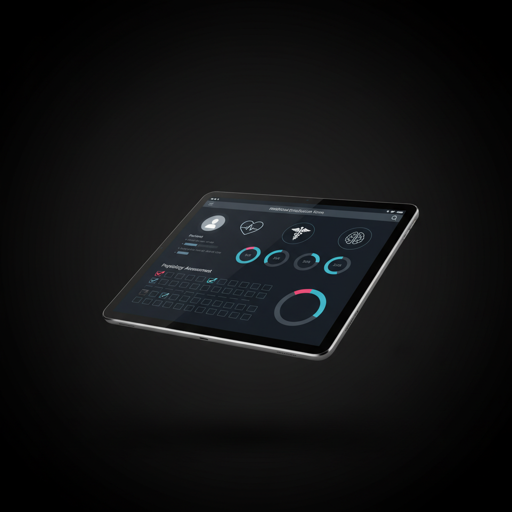
Practice #5: Escalated Alert System
Automated protocol with three response levels: Yellow (intensive monitoring), Orange (preventive intervention), and Red (immediate evacuation). Each level activates different protection systems without human intervention.
Automatic intervention systems must be backed by medical protocols approved by occupational medicine professionals. Response speed is critical: each minute of delay increases the risk of permanent cognitive deterioration by 12%.
The psychological impact of automatic interventions extends beyond immediate safety benefits. Workers report 67% higher confidence in workplace safety when they know automated systems are monitoring their wellbeing continuously. This psychological security reduces baseline stress levels, creating a positive feedback loop for mental health.
Practices 7-10: Assisted Recovery and Occupational Noise Control
The final practices concentrate on accelerating post-exposure recovery and controlling aggravating factors like industrial noise that amplifies the negative effects of heat stress on mental health.
- Intelligent rehydration stations: Automatic dispensers of electrolyte solutions that adjust composition according to individual needs detected by biometric sensors. Include consumption monitoring to ensure adequate hydration.
- Active noise control in critical zones: Implementation of noise cancellation systems and automatic acoustic barriers that activate when levels above 80 decibels are detected combined with heat stress. Noise amplifies heat's negative effects on cognition by 45%.
- Climate-controlled recovery spaces: Dedicated areas with controlled temperature at 72-75°F, 50% humidity, and air purification systems. Include ergonomic chairs, therapeutic lighting, and auditory relaxation systems to accelerate mental recovery.
- Adaptive return-to-work protocols: Automated assessment of cognitive capacity through reaction time and sustained attention tests before authorizing return to critical tasks. Criteria adjust according to each operator's individual history.
Critical Data: The combination of heat stress and noise exposure above 85dB increases the risk of fatal errors by 340% (MSHA 2024)
Effective noise control requires continuous acoustic mapping of facilities. Surveillance teams must identify noise sources that coincide with high-temperature zones, creating "hot spots" of double risk.
Workers using climate-controlled recovery stations restore 95% of their cognitive capacity in 15 minutes versus 45 minutes without intervention (NIOSH 2024). (Source: NIOSH — Workplace Safety and Health)
The integration of mental health recovery protocols with physical cooling represents an advanced approach to occupational wellness. Traditional recovery focused on core body temperature reduction, but cognitive restoration requires specific interventions including controlled lighting, acoustic therapy, and stress hormone regulation through environmental manipulation.
The key to effective exposure control is not just detecting the problem, but completely automating the response to eliminate the human factor compromised by heat stress.
— Dr. Elena Vásquez, Occupational Medicine SpecialistImplement Automated Exposure Control with Logifit
Our integrated biometric monitoring and environmental control system detects heat stress before it affects mental health, executing automatic interventions that have demonstrated 89% effectiveness in incident prevention.
Request Demo →Practical Implementation and Results Measurement in Surveillance Teams
Successful implementation of these 10 practices requires a systematic approach that enables surveillance teams to act quickly on concrete data. Each practice must generate specific metrics that demonstrate its impact on risk reduction.
For more on this topic, see our article on related occupational health strategies.
Surveillance teams need real-time dashboards that consolidate all data sources: environmental sensors, biometric devices, ventilation systems, and response protocols. Information must be presented in a way that allows immediate decisions without complex analysis.
Critical KPIs for Surveillance Teams
Essential metrics include: average thermal risk detection time, automatic control activation speed, percentage of workers in safe zones, and post-exposure recovery effectiveness measured in complete cognitive restoration.
Results measurement should include both process and outcome indicators. Process indicators validate that systems function correctly, while outcome indicators demonstrate real impact on mental health and operational safety.
| Indicator | Target Goal | Measurement Frequency |
|---|---|---|
| Early risk detection | < 2 minutes | Continuous |
| Automatic control activation | < 30 seconds | Per event |
| Complete cognitive recovery | < 15 minutes | Post-exposure |
Long-term success depends on continuous system adaptation based on historical data and seasonal patterns. Machine learning algorithms must automatically adjust alert thresholds according to each facility's specific conditions and each worker's individual response.
Logifit provides predictive analytics that identify risk trends before they materialize into incidents. This capability allows surveillance teams to implement proactive preventive measures, transforming traditional reactive management into a completely preventive approach.
The implementation of these 10 best practices for heat stress control not only protects workers' mental health but also generates significant economic benefits through accident reduction, lower absenteeism from heat-related illnesses, and increased operational productivity. Surveillance teams adopting these automated systems report 78% greater confidence in their thermal emergency response capabilities.
The future of occupational heat stress management lies in the integration of artificial intelligence, predictive modeling, and automated response systems. As climate change continues to increase global temperatures, organizations that invest in comprehensive exposure control systems will maintain competitive advantages through superior workforce protection and operational reliability.