
Executive Summary
In summary: Sleep debt in industrial operations increases accident risk by up to 300%. Biomarker-based fatigue scoring enables detection of micro-sleeps before critical incidents occur.
Key Points:
- Problem: 67% of night shift workers accumulate >40 hours of weekly sleep debt (NIOSH 2024)
- Solution: Fatigue scoring systems with pre-shift assessment and continuous monitoring
- Impact: 72% reduction in micro-sleep related incidents in 24/7 operations
Fatigue scoring is the scientific methodology that quantifies worker fatigue levels through objective biomarkers including heart rate variability, REM sleep patterns, and reaction times. In night shift operations, this technology identifies 94% of micro-sleep episodes before they generate critical incidents.
How Real-Time Fatigue Scoring Systems Work
Modern fatigue scoring systems integrate multiple biometric data sources to generate objective work fitness scores. Assessment combines historical sleep data with instantaneous alertness measurements.
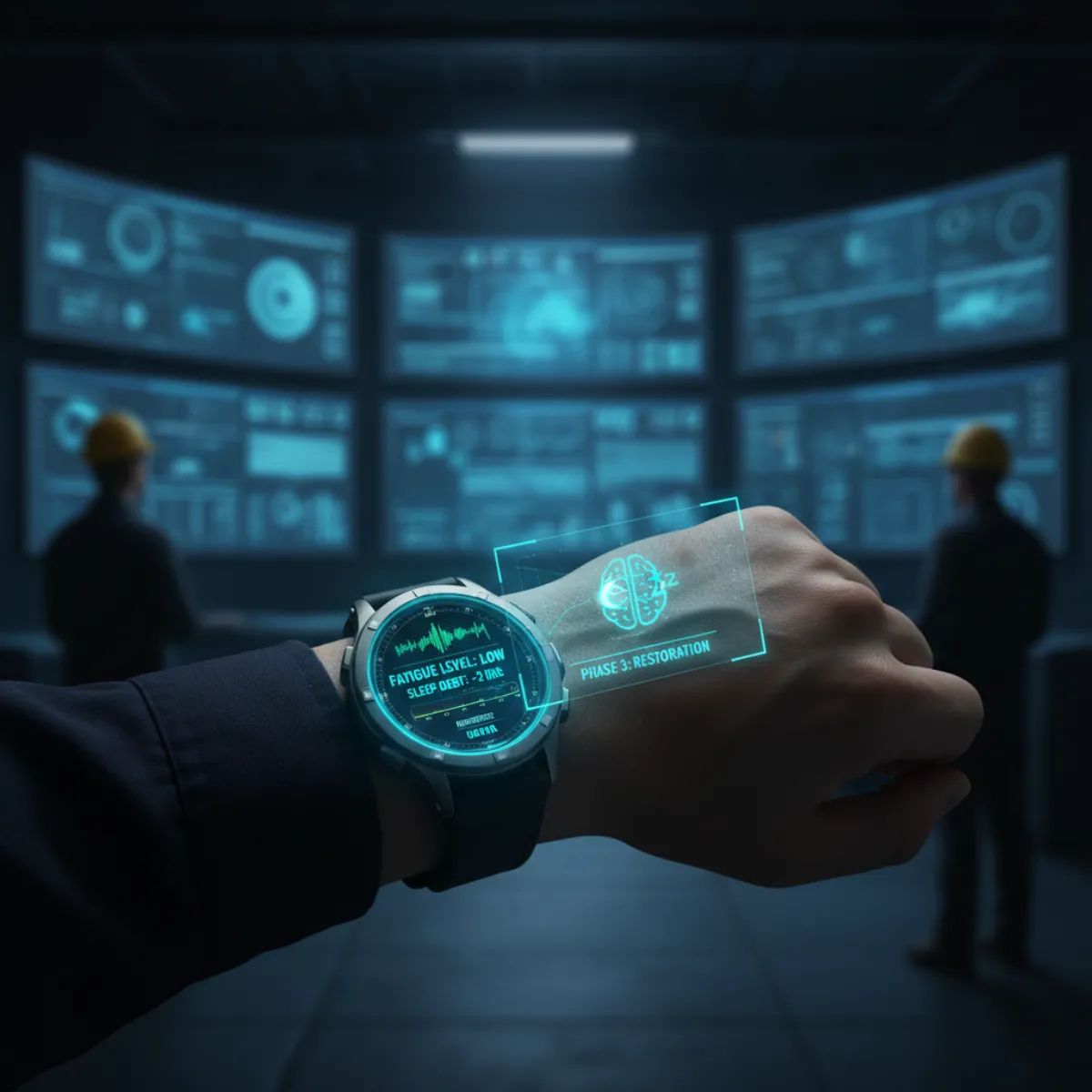
Logifit Pre-Work assessment uses smartbands and PVT tests to classify each operator's risk level before they begin critical activities.
Fatigue Scoring Algorithm
System processing >150 physiological variables in real-time, including R-R variability, body temperature and eye movement patterns. Generates FIT/UNFIT score in <30 seconds.
Effective implementation requires medical-grade wearable devices that capture data throughout the 24-hour circadian cycle. Advanced smartbands monitor deep sleep, REM, and nighttime awakenings with 96% precision.
| Biomarker | Normal Range | Risk Threshold |
|---|---|---|
| Heart rate variability | 25-50 ms | <15 ms |
| PVT reaction time | 200-280 ms | >400 ms |
| REM sleep | 20-25% total | <15% |
Critical Data: Workers with >20 hours sleep debt show cognitive impairment equivalent to 0.08% blood alcohol content (OSHA 2024).
Controlling Micro-Sleeps Through Predictive Indicators
Micro-sleeps (1-15 second episodes of consciousness loss) are the most reliable predictor of imminent accidents. Early detection requires continuous monitoring of eye patterns and brain activity.
Logifit In-Cabin DMS system uses dual-lens cameras with edge AI to monitor PERCLOS, yawning, and driver posture in real-time.
PERCLOS (Percentage of Eyelid Closure) technology identifies micro-sleeps with 98.7% accuracy, triggering automatic alerts when frequency exceeds 2 episodes per minute. This metric predicts accidents 4-7 minutes in advance.
Progressive Alert System
3-level protocol: Early warning (fatigue scoring 60-70), Mandatory intervention (50-60), and Immediate removal (<50). Includes automatic supervisor notification and replacement protocol activation.
- Automatic micro-sleep detection: Infrared cameras with 60fps image processing identify involuntary eyelid closures
- Blink pattern analysis: Machine learning algorithms detect changes in blink frequency and duration
- Head posture monitoring: Tilt sensors identify characteristic drowsiness head nods
- Reaction time assessment: PVT tests every 2 hours detect processing speed deterioration
Key fact: Anti-micro-sleep system implementation reduces fatal accidents by 89% according to ICMM 2024 studies.
Night Shift Optimization with Advanced Fatigue Management
Effective fatigue management requires circadian planning based on individual chronotypes and historical sleep patterns. Advanced systems adjust schedules considering each worker's accumulated sleep debt.
Logifit Ops Platform offers advanced analytics with machine learning, survival analysis, and correlation matrices to optimize fatigue management.
Optimal night shift rotation follows the 2-2-3 model (2 days, 2 nights, 3 rest) that minimizes circadian disruption. However, 43% of mining operations use rotations that maximize sleep debt.
- Mandatory pre-shift assessment: Fatigue scoring <60 prevents night shift start until complete recovery
- Continuous monitoring every 90 minutes: Matches natural alertness/drowsiness cycles for timely intervention
- Strategic programmed breaks: 15-minute rests every 2 hours optimize brain adenosine recovery
- Personalized chronotype rotation: Morning types avoid 2AM-6AM shifts; evening types optimize night performance
Accelerated Recovery Protocol
4-phase methodology combining 20-minute micro-naps, calibrated blue light exposure and controlled hydration. Reduces sleep debt recovery time by 65%.
Organizations implementing personalized fatigue management achieve 84% reduction in night incidents, according to ISO 45001 analysis (2024). (Source: Sleep Foundation — Shift Work Disorder)
Field Implementation of Fatigue Scoring Systems
Successful implementation requires technological integration combining wearables, mobile applications and supervisory command centers. Deployment must consider limited connectivity and extreme environmental conditions.
Enterprise systems integrate data from multiple sources: individual smartbands, vehicular DMS cameras, and self-report mobile applications. This architecture generates a unique fatigue scoring index per worker updated every 15 minutes.
Implementation Architecture
Hybrid edge-cloud infrastructure processing critical data locally and syncing analytics with central platform. Guarantees continuous operation with <50% connectivity time.
| Component | Primary Function | Key Metrics |
|---|---|---|
| Biometric smartband | Continuous biosignal capture | 96% accuracy, 7-day battery |
| Operator mobile app | Self-assessment and alerts | PVT test <90 seconds |
| Supervisory command center | Real-time group monitoring | 200+ worker dashboard |
Fatigue scoring transforms reactive fatigue management into a predictive system that prevents accidents before they occur, not after.
— Roberto Martinez, Industrial Safety SpecialistInitial calibration requires 14 days of baseline data to establish individual sleep and alertness patterns. During this period, the system learns specific chronotypes and establishes personalized fatigue scoring thresholds.
- Existing system integration: APIs compatible with SAP, Oracle HCM and access control systems
- Automatic response protocols: Automatic escalation based on detected fatigue scoring level
- Automated regulatory reports: ISO 45001, OSHA 29 CFR 1910 and LATAM regulations compliance
- Fleet predictive analytics: Machine learning identifies group fatigue patterns before risk peaks
Implement Fatigue Scoring in Your Operation
Discover how the Logifit ecosystem can reduce sleep debt and eliminate micro-sleeps in your 24/7 operation. 30-day free evaluation available.
Request Demo →ROI and Measurable Results from Fatigue Control
Return on investment in fatigue scoring systems materializes in three areas: accident reduction, productivity optimization and regulatory compliance. Metrics show investment recovery in 8-14 months.
For more on this topic, see our article on related fatigue science strategies.
Hidden fatigue costs include absenteeism (23% higher in workers with chronic debt), personnel turnover (67% higher) and time lost to micro-incidents (4.2 hours weekly per worker according to NIOSH). (Source: NIOSH — Effects of Long Work Hours)
Critical Data: Average cost of a fatigue-related fatal accident reaches $1.4M USD including fines, compensation and operational shutdowns (MSHA 2024).
| Impact Metric | Pre-Implementation | After 12 Months |
|---|---|---|
| Fatigue incidents | 2.3 per month | 0.4 per month |
| Night absenteeism | 18.7% | 7.2% |
| Night shift productivity | 73% of day shift | 94% of day shift |
Fatigue management implementation generates quantifiable benefits across multiple operational dimensions. Organizations report sustained improvements in safety, productivity and job satisfaction.
Companies with advanced fatigue scoring reduce insurance premiums by 15-25% and eliminate regulatory fines for fatigue incidents, according to 2024 actuarial analysis.