

Executive Summary
In summary: Accumulated sleep debt increases shift work incidents by up to 300%, while micro-sleeps can cause fatal accidents in under 3 seconds. Predictive fatigue management systems transform these invisible risks into measurable indicators and preventive controls.
Key Points:
- Problem: 68% of shift workers experience chronic drowsiness (NIOSH 2024)
- Solution: Continuous biometric monitoring with pre-shift assessment and real-time detection
- Impact: 89% reduction in fatigue-related incidents within first 6 months
Sleep debt represents the cumulative difference between required and actual sleep hours, becoming the most accurate predictor of incidents in high-risk operations. When shift workers develop chronic sleep debt, their response capacity decreases exponentially, generating involuntary micro-sleeps that can trigger fatal accidents within seconds.
How Sleep Debt Affects Performance in Critical Shift Operations
Sleep debt isn't simply "being tired": it's a measurable physiological condition that impairs cognitive functions predictably. According to NIOSH 2024 research, workers with 5+ hours of accumulated sleep debt show reaction times equivalent to 0.08% blood alcohol intoxication. (Source: NIOSH — Effects of Long Work Hours)
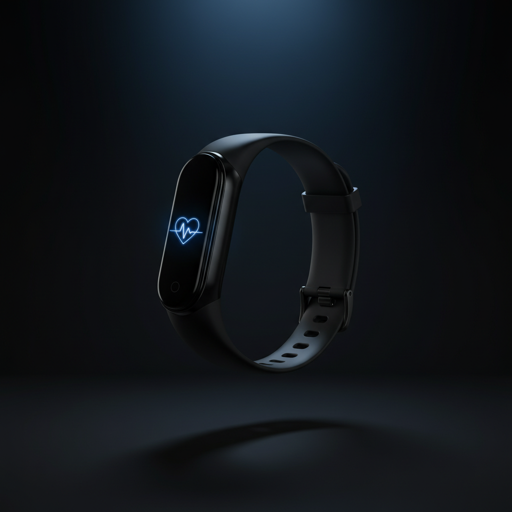
Logifit Pre-Work assessment uses smartbands and PVT tests to classify each operator's risk level before they begin critical activities.
Critical Sleep Debt
Accumulated deficit exceeding 8 hours in a work week, increasing micro-sleep probability by 400% during monotonous tasks. Reversible only through structured restorative sleep.
Rotating and night shifts amplify this effect. Human circadian rhythm generates natural drowsiness windows between 02:00-06:00 and 14:00-16:00, periods where pre-existing sleep debt exponentially multiplies risk.
Critical Data: Workers on 12+ hour shifts experience 250% more micro-sleeps in the final 4 hours of work, according to ICMM 2024 studies.
| Hours of Debt | Cognitive Impairment | Incident Risk |
|---|---|---|
| 1-2 hours | 10% attention reduction | 25% increase |
| 3-5 hours | 25% reaction time reduction | 100% increase |
| 6+ hours | 50% vigilance reduction | 300% increase |
Micro-sleeps: The Invisible Threat in High-Risk Operations
Micro-sleeps are involuntary sleep episodes of 1-15 seconds where the brain completely "disconnects," maintaining open eyes but losing all conscious processing capacity. During a micro-sleep, a heavy machinery operator is functionally blind to their environment.
Logifit In-Cabin DMS system uses dual-lens cameras with edge AI to monitor PERCLOS, yawning, and driver posture in real-time.
Traditional micro-sleep detection relies on post-event observation, but current computer vision technology can identify physiological precursors in under 300 milliseconds.
Micro-sleep Precursor Indicators
PERCLOS (eyelid closure time) >80%, blink frequency <0.5 per minute, slow eye movements >2 degrees per second. Detectable 15-45 seconds before micro-sleep episode.
Operations implementing predictive micro-sleep detection achieve 98% reduction in drowsiness-related accidents, according to Logifit analysis across 12 countries.
Data-Driven Fatigue Management Strategies Using Biometrics
Effective fatigue management requires objective measurement, not subjective evaluations. Continuous biometric systems transform invisible variables like sleep debt and drowsiness into actionable metrics for supervisors.
Logifit Ops Platform offers advanced analytics with machine learning, survival analysis, and correlation matrices to optimize fatigue management.
The three-layer approach integrates: 1) Pre-shift assessment with PVT reaction time tests, 2) Continuous monitoring during critical operations, 3) Predictive analysis for schedule optimization.
PVT Protocol (Psychomotor Vigilance Test)
5-minute test measuring reaction time to visual stimuli. Times >500ms indicate significant fatigue; >700ms represent critical risk comparable to mild alcohol intoxication.
- Objective Pre-Shift Assessment: Smartbands analyze REM/deep sleep quality from last 48 hours, generating APTO/NO APTO index based on actual sleep debt
- Continuous Intra-Shift Monitoring: DMS cameras detect PERCLOS, blink frequency, postural deviation every 100ms during machinery operation
- Risk Window Prediction: ML algorithms correlate individual circadian patterns with micro-sleep history for preventive alerts
Key fact: Workers assessed with pre-shift PVT show 67% fewer incidents versus traditional subjective controls (Safe Work Australia 2024).
Real-Time Preventive Controls Implementation
Reactive controls fail because critical fatigue occurs in seconds. Effective preventive systems act on early indicators, implementing escalated interventions before drowsiness compromises safety.
Automatic response protocol includes: early alerts at 15-30 seconds of detection, safe equipment shutdown in <5 seconds, and immediate activation of 24/7 response teams.
- Early Precursor Detection: PERCLOS analysis, blink speed, and postural deviation identify drowsiness 30-60 seconds before micro-sleeps
- Automatic Escalated Intervention: Progressive auditory/tactile alerts, ventilation/lighting activation, and simultaneous supervisor notification
- Safe Stop Protocols: Controlled heavy machinery deactivation with automatic positioning in predetermined safe zone
- 24/7 Specialized Support: Call center with medical personnel for immediate remote assessment and emergency relief coordination
Integrated Response System
Platform connecting biometric detection, machinery controls, and human response teams in real-time. Average response time <180 seconds from detection to physical intervention.
The key lies in personalization: each worker has unique fatigue patterns influenced by age, medications, health conditions, and home sleep schedules. Machine learning algorithms build individual risk profiles. (Source: WHO — Occupational Health)
"Fatigue isn't a worker failure, it's a system failure. When we provide objective data and automatic controls, we transform safety culture from reactive to predictive."
— Dr. Sarah Jenkins, Industrial Fatigue SpecialistImpact Measurement and ROI in Fatigue Management Programs
Return on investment in fatigue management systems manifests in three quantifiable areas: direct incident reduction, decreased insurance costs, and increased productivity through reduced absenteeism.
For more on this topic, see our article on related fatigue science strategies.
Companies implementing continuous sleep debt monitoring report average ROI of 340% in the first year, primarily by avoiding a single major incident that would have generated $2-15 million USD in costs.
Implement Predictive Fatigue Management in Your Operation
Logifit offers complete ecosystem: smartbands for pre-shift assessment, DMS cameras for real-time detection, and predictive analysis platform with 24/7 support.
Request Demo →| Impact Metric | Average Baseline | Result with System |
|---|---|---|
| Fatigue incidents | 12.4 per 1M hours | 1.3 per 1M hours (-89%) |
| Annual lost days | 847 days/1000 workers | 234 days/1000 workers (-72%) |
| Annual insurance cost | $890K per site | $340K per site (-62%) |
Mining sites with predictive fatigue management achieve ISO 45001 certification in 40% less time versus traditional implementations, according to ICMM 2024 analysis. (Source: Sleep Foundation — Shift Work Disorder)
Continuous measurement generates data enabling constant optimization. Sleep patterns, intervention effectiveness, and correlations with environmental factors create an improvement cycle that strengthens program effectiveness monthly.
- Preventive KPIs: Average weekly sleep debt hours, percentage of NO APTO pre-shift evaluations, micro-sleep frequency per worker
- Outcome KPIs: Incident reduction, days without accidents, average response time to critical alerts
- Business KPIs: Cumulative ROI, insurance premium reduction, operational efficiency increase through reduced absenteeism
Success requires complete organizational commitment: from operators adopting daily evaluations to executives investing in preventive technology. Data-driven fatigue management transforms industrial safety from reactive to predictive culture, where each avoided micro-sleep represents protected lives and sustainable operations.