

Executive Summary
In summary: Sleep debt accumulated during night shifts is the most underestimated risk factor in industrial transport safety. This article translates circadian rhythm science into field-ready controls with measurable leading indicators that allow supervisors to anticipate incidents before they occur—not after.
Key Points:
- Problem: Drivers with 5 hours or less of sleep are 4.3 times more likely to have an accident, according to the AAA Foundation for Traffic Safety (2024).
- Solution: Fatigue scoring based on circadian rhythm and objective—not self-reported—sleep quality enables accurate risk classification before a shift begins.
- Impact: Organizations with integrated fatigue management systems reduce sleep-related accidents by up to 68%, per ISO 45001 benchmarks from 2024.
Sleep debt in industrial transport is not a motivation or discipline problem—it is a biological vulnerability that the circadian rhythm determines independently of any driver's willpower. Night shifts place operators in the window of maximum physiological drowsiness precisely when their driving responsibilities are most critical. Effective fatigue management begins by measuring this sleep debt with objective instruments—not self-reports—and translates that measurement into actionable leading indicators supervisors can act on before the driver ever takes the wheel.
What Is Sleep Debt and Why It Threatens Industrial Transport Safety
Sleep debt is the accumulated deficit between the sleep the body requires and the sleep it actually receives. Unlike financial debt, it cannot be repaid in a single day: it requires multiple complete sleep cycles to partially reverse, and its cognitive effects persist up to 72 hours after severe deprivation.
Sleep Debt: Definition and Mechanism
Sleep debt is the cumulative gap between sleep hours needed (7-9h for adults, per the National Sleep Foundation) and hours actually slept. Its effect on reaction time is linear: each hour of deficit below 7 hours increases reaction time by approximately 12ms. For a driver at 90 km/h, 60ms of additional latency means traveling 1.5 meters further before braking begins.
In industrial transport—mining, heavy logistics, construction—rotating shifts prevent the body from establishing a stable sleep cycle. Rotation of 8 to 12 hours every 4-7 days is the norm in LATAM extractive industries, and each rotation restarts the circadian adaptation process that takes 3 to 21 days to complete.
Critical Data: According to NIOSH, rotating shift workers accumulate on average 1.5 hours of sleep debt per working day. After one week of night shifts, the accumulated deficit is cognitively equivalent to 24 hours without sleep—the clinical threshold for impairment comparable to a 0.10% blood alcohol level.
The direct impact on industrial road safety is documented and quantifiable. The AAA Foundation for Traffic Safety (2024) establishes the following risk progression based on hours slept the night before a shift:
| Sleep Hours | Relative Accident Risk | Cognitive Equivalent | Fatigue Management Decision |
|---|---|---|---|
| 7+ hours | 1.0x (baseline) | Full capacity | Normal shift |
| 6-7 hours | 1.3x | Mild attentional impairment | Active monitoring |
| 5-6 hours | 1.9x | Sustained moderate impairment | Supervised evaluation |
| <5 hours | 4.3x | Severe impairment, microsleep risk | Shift restriction |
How Circadian Rhythm Creates Peak Risk Windows During Night Shifts
Circadian rhythm is the internal biological clock that regulates the sleep-wake cycle over an approximately 24-hour period. In industrial transport, its most critical impact is creating two windows of high physiological drowsiness that coincide exactly with the highest-exposure shifts.
The Two Critical Circadian Risk Windows
The circadian rhythm generates maximum physiological drowsiness in two daily periods: the primary window between 2:00 AM and 5:00 AM (known as the "circadian danger zone"), and a secondary window between 2:00 PM and 4:00 PM. Night shift work in transport and extractive industries places drivers in the primary danger zone during peak operational load hours.
This negative synchrony—maximum operational load plus minimum biological capacity—explains why night shift accidents are systematically more severe than day shift accidents, not merely more frequent. NIOSH documents that night accidents produce injuries 37% more severe, because delayed reaction time allows greater impact speed.
Effective fatigue scoring must incorporate the operator's current circadian phase—not just total sleep hours. A driver who sleeps 7 hours during the day (night shift pattern) but starts a shift at 11 PM operates with the full biological handicap of the circadian cycle, regardless of sleep quantity. Next-generation fatigue management systems calculate the score factoring in both variables simultaneously.
Key fact: 57% of freight transport accidents in LATAM occur between 12:00 AM and 6:00 AM, according to the International Transport Council (2025). This window coincides exactly with the circadian maximum risk period, confirming that fatigue—not speeding—is the primary causal factor in these incidents.
Fatigue Leading Indicators: From Sleep Science to Field Controls
Fatigue leading indicators are metrics that predict a future incident, as opposed to lagging indicators (accidents, near-misses) that only document one after it occurs. Effective fatigue management operates exclusively on leading indicators.
The 3-Tier Classification System for Fatigue Leading Indicators
Fatigue leading indicators classify into three tiers based on their anticipation window: Tier 1 — Previous night (sleep debt, wearable sleep quality, REM phases, total hours): 8-12 hour window. Tier 2 — Pre-shift (PVT score, pre-work assessment alerts, 7-day history): 2-4 hour window. Tier 3 — During shift (real-time PERCLOS, lane deviation, speed pattern): 0-30 minute window. The strongest fatigue management systems operate across all three tiers simultaneously.
The Psychomotor Vigilance Test (PVT) is the most scientifically validated pre-shift indicator for detecting acute sleep debt. The PVT measures reaction time to visual stimuli over 10 minutes and detects cognitive impairment with over 90% accuracy—even when the operator believes they are in normal condition. This is the "you don't know what you don't know" effect that characterizes moderate sleep deprivation.
Logifit incorporates the PVT into its pre-shift assessment module, integrated with wearable data from the previous night. This combination—objective sleep quality plus validated reaction testing—generates the most accurate fatigue score available for a pre-shift decision, eliminating reliance on self-reports that drivers have incentives to falsify.
- Insufficient REM sleep (<90 min/night): Indicator of procedural memory impairment. Drivers with REM deficit make more errors in known maneuver tasks—not new tasks, but routines that should be automatic.
- Deep Sleep <15% of total: Indicator of incomplete physical recovery. Manifests as slow reaction time in the first 2 hours of a shift and muscle fatigue in long-haul operations.
- Sleep fragmentation (>5 awakenings/night): More predictive than total hours. A driver with 7 fragmented hours performs worse cognitively than one with 6 continuous hours, per the Journal of Sleep Research (2024).
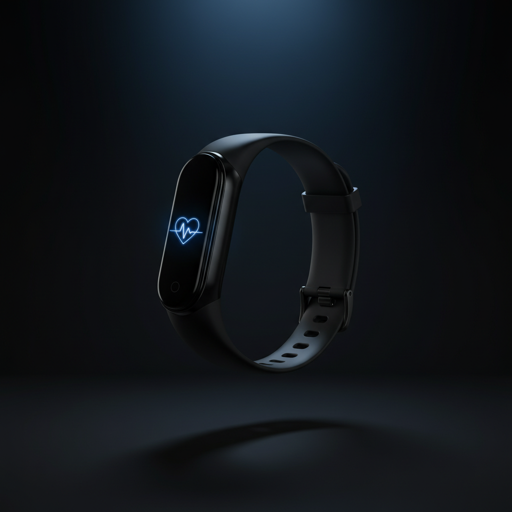
- 7-day cumulative debt (>8 hours weekly deficit): The most important chronic risk indicator for monthly rotation operators. Modern fatigue management smartbands calculate this indicator automatically.
Transport companies implementing fatigue scoring based on objective wearable data—rather than self-reports—detect 3.7 times more operators in actual risk states before their shift begins, according to Safe Work Australia (2024).
Field-Ready Fatigue Controls: Implementation in 4 Weeks
Fatigue control protocols fail when they remain theoretical. Effective controls in industrial transport are simple, executable in 2 minutes or less, and generate documentable evidence automatically. This section presents field-validated controls from mining and transport operations across LATAM and OECD markets.
The 5-Minute Pre-Shift Intervention Protocol
The most effective pre-shift control is not a subjective interview—it is a three-step objective verification sequence: (1) wearable data from the previous night (automatic score in app), (2) 3-minute PVT on tablet (measured reaction time), (3) supervisor confirmation in central dashboard. If two of three indicators are in the red zone, the driver does not operate until medical evaluation. This protocol eliminates supervisor discretion and driver self-perception—the two greatest failure sources in traditional fatigue management systems.
- Week 1 — Baseline establishment: Distribute wearables to all rotation drivers. Configure sleep thresholds per company policy (6h minimum recommended by ISO 45001). The system begins building each operator's individual sleep profile, required to detect deviations from their personal pattern.
- Week 2 — Pre-shift PVT activation: Implement the reaction test in the dispatch room before shifts. The score generates automatically in the supervisor app. Train supervisors this week on interpreting the three risk levels (high/moderate/low) and the intervention protocol for each.
- Week 3 — Dispatching integration: Configure automatic alerts in the Ops Platform so dispatchers receive each driver's fatigue score before assigning routes. Drivers in the red zone do not receive route assignments until their status is resolved.
- Week 4 — In-cabin monitoring: Activate the in-cabin monitoring module on highest-exposure vehicles. The system correlates pre-shift scores with in-route behavior, validating the predictive accuracy of fatigue scoring and automatically refining thresholds over time.
This protocol simultaneously complies with ISO 45001 (documented risk management), OSHA 29 CFR 1910 (work condition records), Chile's DS 594 (sanitary conditions for night work), and Mexico's NOM-035-STPS in its psychosocial risk component for extended work hours.
"The difference between a fatigue management program that works and one that only complies on paper comes down to a single variable: whether the fatigue indicator is generated before the driver takes the wheel or after the incident occurs. Everything else follows from that measurement moment."
— Roberto Martinez, Industrial Road Safety SpecialistImplement Science-Based Fatigue Scoring Across Your Fleet
Logifit combines sleep measurement wearables, pre-shift PVT, and in-cabin monitoring in a unified fatigue management platform with automatic compliance for ISO 45001, NOM-035, and DS 594.
Request Free Demo →Long-Term Fatigue Management: Building Organizational Resilience
Shift controls address acute risk, but sustainable fatigue management requires building organizational resilience. This means the system improves over time—that today's fatigue data makes tomorrow's predictions more accurate.
Logifit's pre-shift assessment module incorporates recurrence analysis: it automatically identifies operators presenting chronic sleep debt (more than 3 UNFIT episodes in 30 days) and activates the clinical module for evaluation by Occupational Psychology and Medicine. This circuit closes the gap between operational control and clinical health—the gap where most traditional fatigue management programs fail.
The Ops Platform health module includes the Yoshitake clinical test (30-item fatigue) and STOP-BANG screening (sleep apnea detection). Undiagnosed sleep apnea is the most frequent medical cause of chronic sleep debt in industrial drivers—present in 28% of truck drivers according to FMCSA 2024—and is completely invisible to standard behavioral controls. Only systematic screening detects it.
Effective fatigue management in 2026 is not a policy or a procedure: it is a continuous measurement system that converts sleep data, circadian rhythm, and pre-shift reaction into real-time assignment decisions, backed by clinical evaluation for cases that require it. This is the standard that separates world-class transport organizations from those that wait for fatigue to manage itself.