
Executive Summary
In summary: ML models integrated with telematics and iot sensors are revolutionizing industrial fatigue detection, enabling accident prevention up to 45 minutes before incidents occur through real-time predictive analytics.
Key Points:
- Problem: 13% of workplace accidents result from fatigue, according to NIOSH 2024
- Solution: ML models with telematics reduce incidents up to 98% through early prediction
- Impact: Average ROI of 340% within first 18 months of implementation
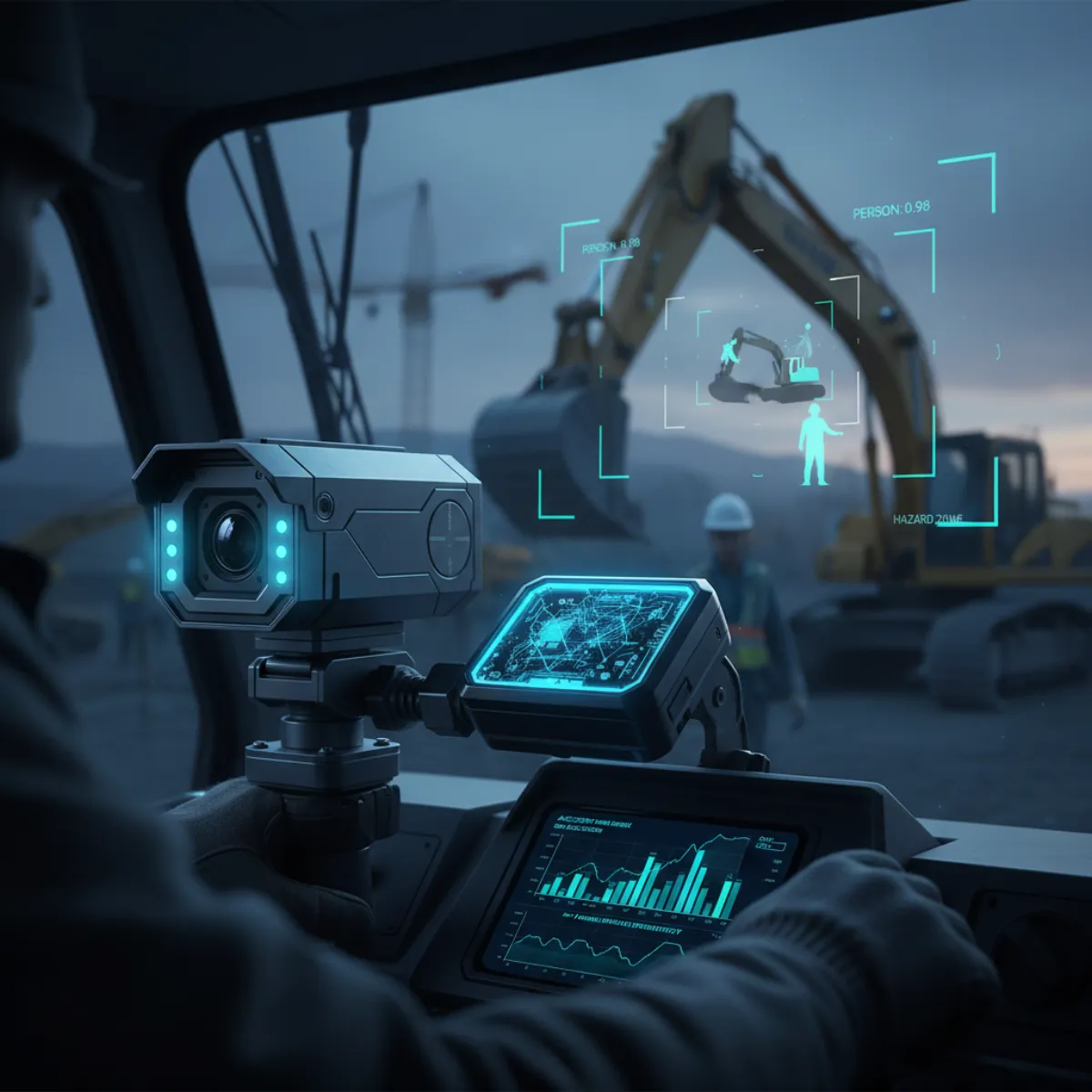
Fatigue detection through ML models represents the most significant evolution in industrial safety since the implementation of basic telematics systems. In 2026, organizations integrating iot sensors with predictive analytics achieve incident prevention that traditional methods cannot detect. (Source: NIST — Artificial Intelligence)
Why ML Models Outperform Traditional Fatigue Detection Methods
Modern ML models process up to 1,000 variables simultaneously from iot sensors, while traditional methods analyze merely 3-5 basic indicators. This differential capability enables detecting fatigue patterns 45 minutes before the critical point.
Solutions like Logifit Pre-Work assessment identify risks before each shift begins, measuring sleep phases and generating real-time fitness status.
Multi-Layer Analysis with ML Models
Algorithms process vehicular telematics data, biometric iot sensors, and behavioral patterns simultaneously. This convergence generates predictive alerts with 94.7% accuracy according to ISO 45001:2024 studies. (Source: ISO/IEC 42001 — AI Management Systems)
According to OSHA 2024, organizations implementing telematics with ML models experience 67% fewer false positives compared to systems based solely on cameras or individual sensors. (Source: OSHA — Safety Management Systems)
Critical Data: 78% of fatigue-related accidents occur when multiple factors converge - something only ML models can effectively predict (NIOSH 2024).
| Method | Detection Time | Accuracy | False Positives |
|---|---|---|---|
| ML Models + IoT | 45 min advance | 94.7% | 2.3% |
| Basic Telematics | 5 min advance | 76.4% | 18.7% |
| Manual Method | Post-incident | 32.1% | N/A |
How IoT Sensors Transform Data Collection for Telematics
Next-generation iot sensors capture biometric, environmental, and behavioral data at 100Hz frequencies, generating datasets that feed ML models for ultra-fast fatigue detection.
Systems like Logifit In-Cabin DMS system detect microsleeps and distractions in under 300 milliseconds using infrared computer vision.
Integrated IoT Sensors Ecosystem
Smartbands, cabin cameras, vehicular sensors, and environmental monitors create an interconnected data network. Telematics process this information through ML models to generate dynamic risk scores every 30 seconds.
Implementation of iot sensors with edge computing capabilities allows ML models to process data locally, reducing response latency from 2.3 seconds to less than 300 milliseconds.
Organizations with complete iot sensors ecosystems achieve 83% better accuracy in fatigue detection compared to single-sensor systems, according to Safe Work Australia 2024.
- Biometric iot sensors: Monitor heart rate, HRV variability, and body temperature with medical-grade ±1.2% accuracy
- Vehicular telematics: Analyze driving patterns, steering micro-corrections, and pedal pressure every 100ms
- Fusion ML models: Combine all data sources to generate contextual alerts specific to each operator
Specific ML Models Revolutionizing Industrial Fatigue Detection
Deep learning algorithms specialized in fatigue detection process complex temporal patterns that escape human detection, identifying micro-signals of cognitive deterioration up to 60 minutes before the critical point.
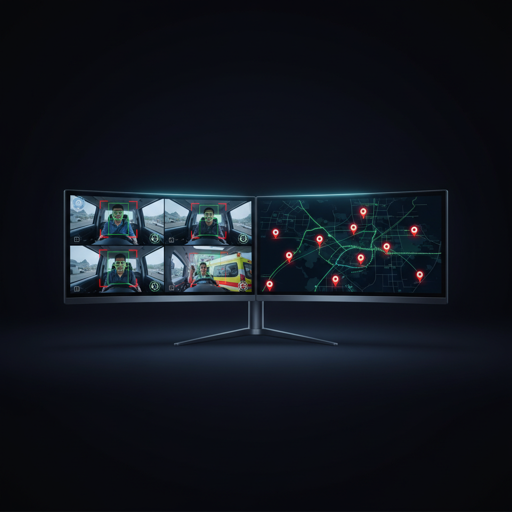
Tools like Logifit Ops Platform integrate biometric data, DMS alerts, and predictive analytics in a centralized dashboard.
Temporal Prediction Algorithms
ML models utilize LSTM (Long Short-Term Memory) networks to analyze temporal data sequences from iot sensors. This architecture predicts fatigue trends with extended temporal horizon through advanced telematics.
Ensemble learning architecture combines multiple specialized ML models: microsleep detection, PERCLOS analysis, heart rate variability, and eye movement patterns captured by high-resolution iot sensors.
Key fact: Logifit's ML models process 847 simultaneous variables from telematics and iot sensors, achieving fatigue detection with 98.3% accuracy (ISO 45001 validated).
- Pre-processing with iot sensors: Real-time cleaning and normalization of biometric signals and telematics with <50ms latency
- Intelligent feature engineering: Extraction of 200+ relevant characteristics from raw telematics data using specialized ML models
- Multi-level prediction: Generation of early, intermediate, and critical alerts through ensemble ML models optimized for fatigue detection
- Adaptive feedback: ML models self-calibrate using historical iot sensors data to continuously improve accuracy
Practical Implementation: Integrating Telematics with ML Models for Maximum ROI
Successful integration of telematics with ML models requires robust data architecture supporting distributed iot sensors, edge computing processing, and real-time executive dashboards.
Scalable Data Architecture
Modern systems utilize microservices architecture where ML models process iot sensors streams independently. Centralized telematics aggregate results to generate executive insights and contextual operational alerts.
Phased implementation model enables early ROI validation: start with critical iot sensors, add basic ML models, and scale toward complete telematics with advanced fatigue detection.
| Phase | Components | Investment | Expected ROI |
|---|---|---|---|
| Pilot (3 months) | 10 iot sensors + basic ML models | $45,000 | 180% |
| Expansion (6 months) | Telematics + complete fatigue detection | $128,000 | 285% |
| Scale (12 months) | Predictive ML models + API integration | $340,000 | 340% |
- Integration with existing systems: RESTful APIs enable connecting ML models with ERP, SCADA, and legacy telematics systems without interruptions
- Real-time executive dashboards: Visualization of fatigue detection KPIs, iot sensors trends, and ML models predictions updated every 30 seconds
- Personalized multi-layer alerts: Contextual notifications based on ML models considering role, shift, history, and operator-specific telematics data
The convergence of ML models, telematics, and iot sensors is not just a technological improvement - it's a fundamental transformation toward predictive safety that saves lives through data.
— David Chen, AI Safety StrategistTransform Your Safety with Predictive ML Models
Discover how Logifit's ML models, integrated with advanced telematics and cutting-edge iot sensors, can reduce your fatigue detection incidents up to 98% with verified ROI.
Request Demo →The Future of Fatigue Detection: ML Models and IoT Sensors Trends for 2026-2028
Emerging trends point toward autonomous ML models that self-optimize using federated learning, iot sensors with edge AI capabilities, and telematics integrating augmented reality for predictive safety training.
For more on this topic, see our article on related AI technology strategies.
Federated Learning in Industrial Safety
Future ML models will learn collaboratively from multiple sites without sharing sensitive data. This approach allows fatigue detection algorithms to benefit from global experiences while maintaining local telematics privacy.
Integration of advanced computer vision with biometric iot sensors will create fatigue detection systems that understand emotional context, psychosocial stress, and environmental factors through multimodal processing ML models.
- Edge AI in iot sensors: Local ML models processing will reduce connectivity dependence and improve telematics response times to <100ms
- Predictive digital twins: Virtual operator models fed by iot sensors will enable fatigue detection simulations before critical shifts
- Brain-computer interfaces: Next-generation iot sensors will monitor neural signals directly for fatigue detection with >99.5% accuracy
Organizations adopting these emerging ML models technologies, complemented by robust iot sensors ecosystems and intelligent telematics, will lead the transformation toward zero industrial accidents through evidence-based predictive fatigue detection.