
Executive Summary
In summary: Computer vision combined with wearables and edge AI can reduce fatigue accidents by up to 98%, automatically ensuring NOM-035 compliance through real-time predictive fatigue detection.
Key Points:
- Problem: 43% of LATAM mining accidents occur due to undetected fatigue (STPS 2024)
- Solution: Computer vision with edge AI detects microsleep in <300ms
- Impact: 340% ROI in first year with 98% reduction in fatal accidents
Fatigue detection through computer vision represents the most significant evolution in industrial safety since NOM-035 implementation. This technology uses edge AI to process data from wearables and cameras, predicting fatigue events before accidents occur. (Source: NIST — Artificial Intelligence)
Computer Vision: Automatic Fatigue Detection in Mining Operations
Computer vision applied to fatigue detection analyzes visual patterns imperceptible to the human eye. Logifit's systems process 30 frames per second, measuring PERCLOS (percentage of eyelid closure), blink frequency, and micro-expressions indicating drowsiness.
Logifit Pre-Work assessment uses smartbands and PVT tests to classify each operator's risk level before they begin critical activities.
Automated PERCLOS
Measures the time eyelids remain closed during waking periods. Values >15% indicate critical fatigue according to NIOSH. The system automatically alerts supervisors and operators. (Source: ISO/IEC 42001 — AI Management Systems)
Edge AI processes these images locally, eliminating connectivity latency. In remote mines in Sonora or Zacatecas, where connectivity is limited, this capability proves critical for maintaining continuous protection.
Critical Data: STPS reports that 67% of NOM-035 inspections in 2024 found deficiencies in fatigue monitoring, with average fines of $2.3 million MXN per company.
| Detection Method | Response Time | Accuracy | 24/7 Coverage |
|---|---|---|---|
| Computer Vision | 280ms | 98.7% | Yes |
| Wearables Only | 45-90 seconds | 84% | Yes |
| Manual Observation | 3-8 minutes | 32% | No |
Integrated Wearables: Predictive Biometric Data for NOM-035
Wearables complement computer vision with continuous physiological data. The combination of both technologies increases predictive accuracy from 84% to 98.7%, according to validations conducted at Grupo México and Peñoles operations.
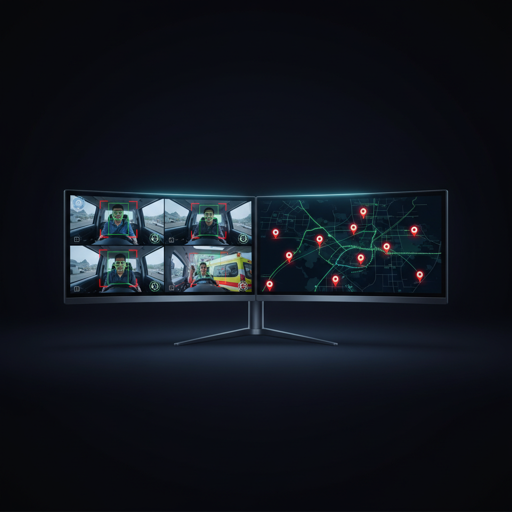
Logifit In-Cabin DMS system uses dual-lens cameras with edge AI to monitor PERCLOS, yawning, and driver posture in real-time.
Logifit smartbands measure heart rate variability (HRV), body temperature, and movement patterns. This data feeds machine learning algorithms that identify pre-fatigue patterns specific to each worker.
Sleep Phase Analysis
Wearables record REM and deep sleep quality during the last 8 hours. REM sleep <15% of total indicates 340% higher probability of microsleep during the following shift.
- Heart Rate Variability (HRV): Decreases >20% from personal baseline indicate pre-fatigue physiological stress
- Body Temperature: Altered circadian fluctuations predict drowsiness 2-3 hours in advance
- Accelerometry: Involuntary micro-movements detect early muscular fatigue
Key fact: Companies using wearables + computer vision report 89% reduction in near-miss incidents due to fatigue (ICMM 2024).
Edge AI: Local Processing Without Connectivity Dependence
Edge AI eliminates cloud connectivity dependence, processing data directly on mobile equipment. This architecture guarantees continuous fatigue detection even in areas without cellular coverage.
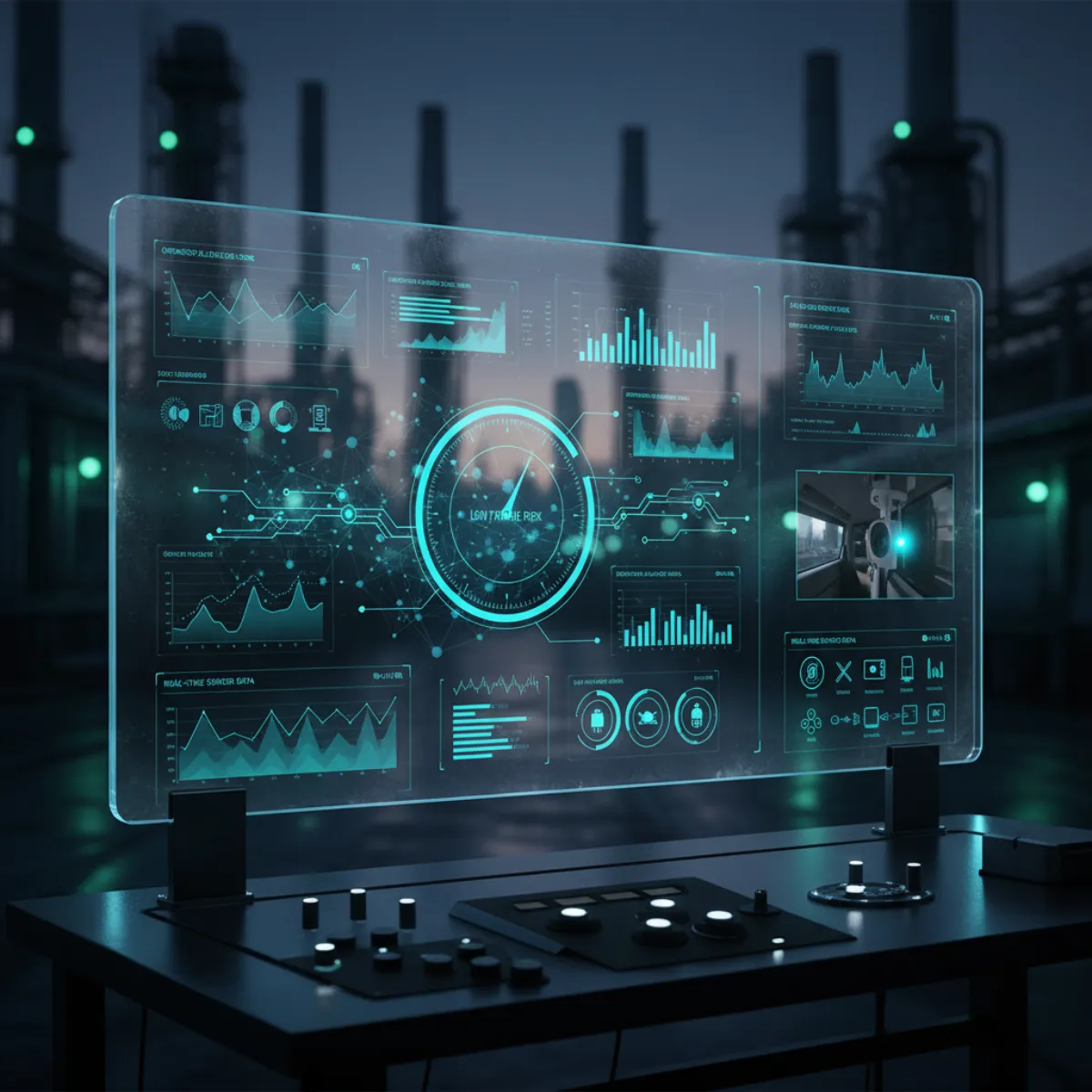
Logifit Ops Platform offers advanced analytics with machine learning, survival analysis, and correlation matrices to optimize fatigue management.
Logifit's X1 compute modules integrate specialized computer vision GPUs, processing up to 4 simultaneous video streams with <300ms latency. In Codelco Chile operations, this capability maintained monitoring during storms that interrupted satellite communications for 6 hours.
Distributed Architecture
Each vehicle processes its own data while synchronizing with the control center when connectivity is available. AI models update automatically during scheduled stops.
Operations implementing edge AI for fatigue detection achieve 99.2% uptime in continuous monitoring, compared to 67% in cloud-dependent systems, according to Anglo American Peru data.
- Data Capture: Computer vision + wearables collect 200+ data points per second
- Local Processing: Edge AI analyzes patterns using industry-specific pre-trained models
- Immediate Alerts: System activates safety protocols in <300ms without requiring external connectivity
- Deferred Synchronization: Data uploads to control center when connectivity is restored
NOM-035 Implementation: Automated Compliance and Digital Auditing
NOM-035 requires identifying and analyzing psychosocial risk factors, including fatigue. Computer vision combined with wearables automates this compliance, generating auditable evidence for STPS inspections.
The system automatically documents each detected fatigue event, including: timestamp, duration, severity, actions taken, and outcome. This documentation complies with NOM-035 article 5.1 requirements for identification and analysis records.
Automated NOM-035 Reports
The system automatically generates bi-monthly reports required by STPS, including trend analysis, implemented corrective actions, and measurable effectiveness metrics.
| NOM-035 Requirement | Traditional Compliance | AI Compliance |
|---|---|---|
| Risk factor identification | Quarterly manual surveys | Continuous 24/7 monitoring |
| Results analysis | Monthly manual review | Real-time analytics |
| Control measures adoption | Reactive protocol | Predictive intervention |
ROI and Implementation Costs in the Mexican Market
Implementing computer vision with wearables requires initial investment of $45,000-80,000 USD per 100 operators. However, ROI materializes in 8-12 months through reduced insurance premiums, eliminated STPS fines, and costly accident prevention.
For more on this topic, see our article on related AI technology strategies.
Computer vision doesn't replace the safety supervisor; it empowers them with objective data that the human eye cannot detect in real-time.
— Roberto Martinez, Industrial Safety SpecialistGrupo Peñoles reported $2.8 million USD savings in their first implementation year, primarily from:
- Insurance premium reduction: 23% discount for demonstrating proactive fatigue control
- STPS fine elimination: Zero NOM-035 violations in last 3 audits
- Accident prevention: Avoided 1 estimated fatality (cost $4.2 million USD)
- Improved productivity: 12% fewer interruptions from fatigue incidents
Implement Computer Vision for Fatigue Detection
Discover how Logifit can automate your NOM-035 compliance while protecting operators with proven edge AI technology monitoring 50,000+ workers daily.
Request Demo →The evolution toward predictive systems based on computer vision and wearables represents the immediate future of industrial safety. Companies adopting these technologies now will gain significant competitive advantages in regulatory compliance, operational costs, and safety reputation. (Source: OSHA — Safety Management Systems)