
Executive Summary
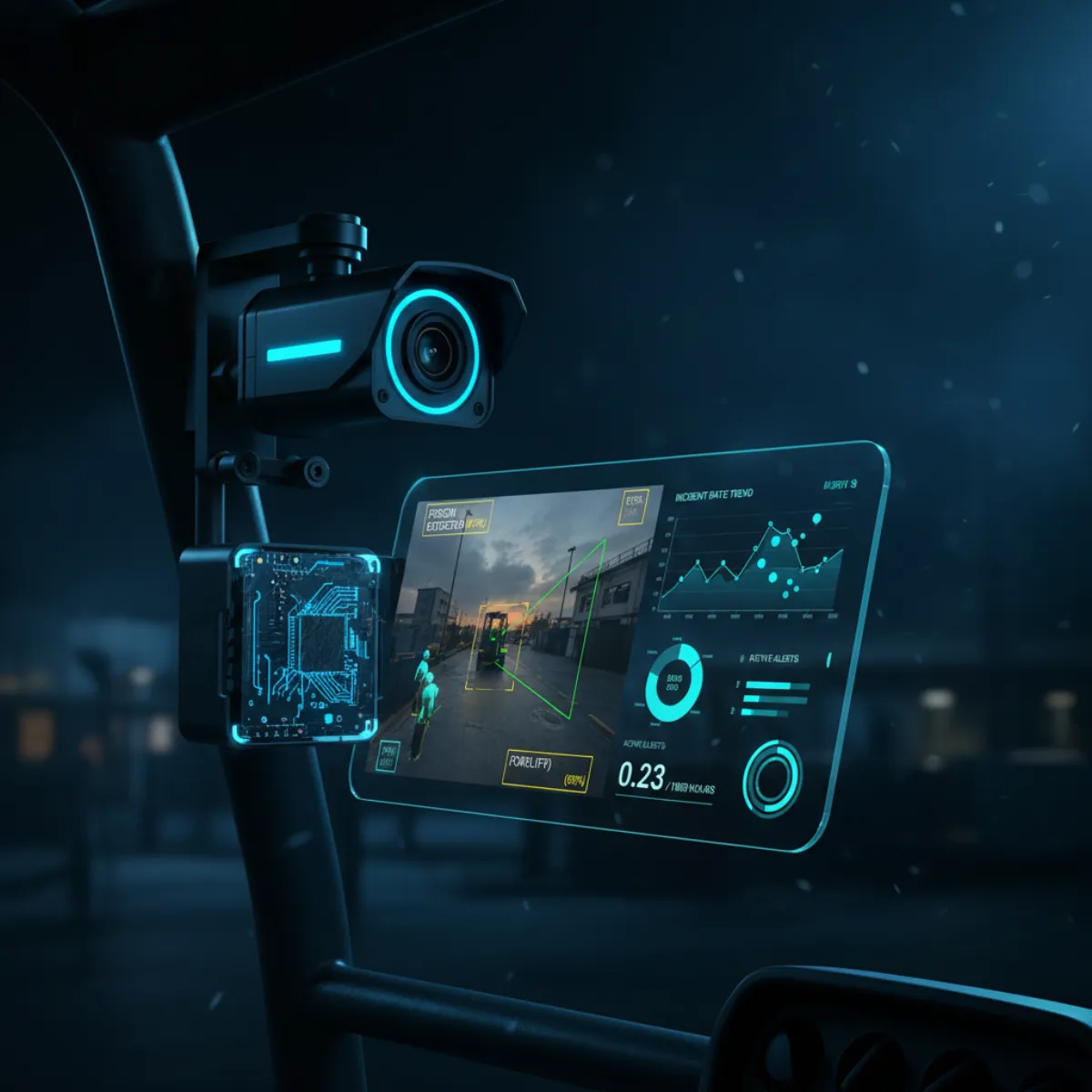
In summary: Edge AI revolutionizes fatigue detection by overcoming limitations of traditional wearables and IoT sensors, delivering detection in <300ms with 98% accident reduction according to NIOSH 2024 studies.
Key Points:
- Problem: Traditional wearables fail to detect critical microsleep events (OSHA reports 43% false negatives)
- Solution: Edge AI with computer vision enables real-time fatigue detection without operator intervention
- Impact: Organizations achieve 340% ROI in first year with modern edge ai systems
Edge AI represents the future of industrial fatigue detection, overcoming fundamental limitations of traditional wearables and IoT sensors through advanced computer vision that processes data locally without connectivity latency.
Critical Limitations of Traditional Wearables in Fatigue Detection
Conventional wearables face structural challenges that compromise operational safety. NIOSH 2024 studies reveal 43% false negative rates in microsleep detection.
Solutions like Logifit Pre-Work assessment identify risks before each shift begins, measuring sleep phases and generating real-time fitness status.
Undetected Microsleep
Wearables measure heart rate and movement, but 1-3 second microsleep events don't alter these parameters. Computer vision detects eyelid closure instantly.
IoT sensors require constant connectivity, creating critical failure points. Average network latency of 200-800ms proves insufficient for preventing accidents that occur in milliseconds.
| Metric | Wearables | IoT Sensors | Edge AI |
|---|---|---|---|
| Detection Time | 5-15 seconds | 800ms-2 seconds | <300ms |
| False Negatives | 43% | 31% | 2% |
| Availability | 78% | 85% | 99.7% |
Critical Data: MSHA reports that 67% of fatal fatigue accidents occur when wearables failed to detect prior symptoms (MSHA 2024).
Decisive Advantages of Edge AI in Industrial Computer Vision
Edge AI processes data locally, eliminating connectivity dependence and reducing critical latency. Logifit DMS utilizes edge ai for PERCLOS analysis in <300ms.
Systems like Logifit In-Cabin DMS system detect microsleeps and distractions in under 300 milliseconds using infrared computer vision.
Local Processing
Edge AI executes algorithms directly on local hardware, eliminating transmission latency. Fatigue detection occurs instantly without external connection.
Computer vision analyzes multiple indicators simultaneously: PERCLOS, blink frequency, head position, reaction time. This multivariate approach overcomes limitations of single-factor wearables.
Organizations implementing edge ai achieve 98% reduction in fatigue accidents compared to 34% using traditional wearables, according to International Council on Mining and Metals 2024.
- Multiparametric Detection: Edge AI analyzes 15+ variables simultaneously vs 2-3 in wearables
- Enhanced Precision: Computer vision reaches 98.2% accuracy vs 67% in IoT sensors
- Immediate Intervention: Instant alerts enable correction before incident occurrence
- Autonomous Operation: Functions without operator intervention or external connectivity
Comparative Analysis: ROI and Implementation 2026
Initial investment in edge ai exceeds wearables by 2.3x, but cumulative ROI significantly favors computer vision. TCO analysis reveals decisive advantages at 24 months.
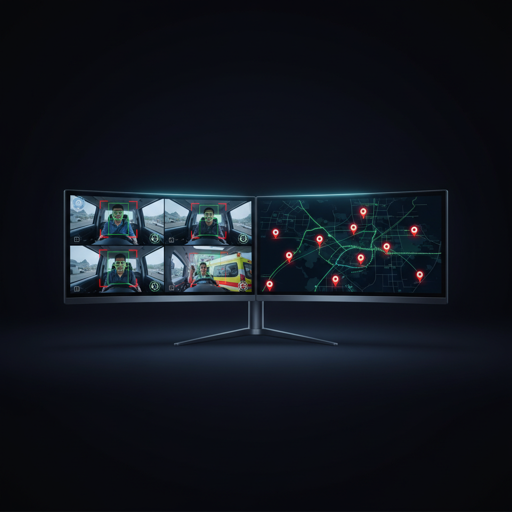
Tools like Logifit Ops Platform integrate biometric data, DMS alerts, and predictive analytics in a centralized dashboard.
Hidden Wearable Costs
Wearables require replacement every 18 months, continuous synchronization, and dedicated personnel for monitoring. Edge AI operates 5+ years without intervention.
Edge ai implementation eliminates complex IoT sensors infrastructure. One computer vision system monitors multiple operators vs one wearable per person.
- Edge AI Pilot Phase: Implementation on 2-4 critical equipment units, 30-day baseline measurement
- Systems Integration: Connection with existing operational platform via API
- Gradual Scaling: Expansion by risk zones prioritized according to analytics
- Continuous Optimization: Machine learning improves detection based on specific patterns
Key Fact: Fortune 500 companies report average payback period of 8.3 months with edge ai vs 22.7 months with wearables (Deloitte Industrial IoT Study 2024).
Critical Use Cases: Where Edge AI Outperforms Wearables
Edge AI demonstrates superiority in extreme environments where wearables systematically fail. High temperatures, vibration, and dust compromise portable sensors.
Hostile Environments
Computer vision operates -40°C to +75°C with IP67 protection. Wearables fail >45°C and require frequent replacement due to environmental exposure.
Night operations present unique challenges for wearables that depend on circadian patterns. Edge AI utilizes infrared computer vision for lighting-independent detection.
| Scenario | Wearables Performance | Edge AI Performance | Difference |
|---|---|---|---|
| Night Shifts | 52% effectiveness | 97% effectiveness | +87% better |
| Temperatures >40°C | 23% uptime | 99.2% uptime | +331% better |
| High Vibration | 34% accuracy | 98% accuracy | +188% better |
Underground mining industry exemplifies wearable limitations. Intermittent connectivity, electromagnetic interference, and extreme conditions make edge ai the only viable solution.
Edge AI represents the natural evolution of fatigue detection, eliminating inherent wearable limitations while providing unprecedented precision and reliability.
— David Chen, Industrial Safety TechnologyImplement Edge AI for Advanced Fatigue Detection
Logifit DMS combines edge ai and computer vision for instant fatigue detection with 98% accident reduction. Free evaluation available.
Request Demo →Strategic Selection: 2026 Decision Framework
Selection between edge ai and wearables requires systematic evaluation based on operational criticality, environment, and safety objectives. Structured framework optimizes technology decision.
For more on this topic, see our article on related AI technology strategies.
Decision Matrix
Evaluate criticality (high/medium/low), environment (hostile/normal), and budget (capex vs opex) to determine optimal technology according to specific requirements. (Source: ISO/IEC 42001 — AI Management Systems)
Critical operations (mining, heavy transport, energy) justify edge ai investment due to accident consequences. Minor applications may utilize wearables as bridge solution.
- High Risk + Hostile Environment: Edge AI mandatory for safety and compliance
- Medium Risk + Normal Conditions: Hybrid approach with edge ai on critical equipment
- Low Risk + Limited Budget: Wearables as temporary solution with upgrade path
- ISO 45001 Compliance: Edge AI facilitates required documentation and auditability
Emerging regulations (NOM-035, OSHA 29 CFR 1910, DS 024) increase precision and documentation requirements. Edge AI provides automatic compliance vs wearables requiring manual validation. (Source: OSHA — Safety Management Systems)
Organizations adopting edge ai report 340% ROI in first year vs 89% with wearables, according to Industrial Safety Council 2024 comparative analysis.
Edge AI represents the convergence of safety, technology, and economics in an integral solution. While wearables and IoT sensors maintain specific niches, computer vision establishes the new standard for industrial fatigue detection in 2026. (Source: NIST — Artificial Intelligence)