
Executive Summary
In summary: Telematics powered by computer vision is redefining industrial safety in 2026. AI-driven fatigue detection systems do more than prevent accidents — they generate measurable operational uptime, reduce insurance costs, and transform IoT sensor data into real-time safety decisions with proven ROI.
Key Points:
- Problem: Fatigue-related accidents cost the global mining industry USD 32 billion annually, with an average downtime of 73 days per serious incident (ICMM 2024).
- Solution: Telematics systems with IoT sensors and computer vision detect fatigue in under 300ms, triggering interventions before accidents occur.
- Impact: Organizations implementing fatigue predictive analytics report 98% reduction in related accidents and positive ROI within 14 months on average.
Telematics enhanced by computer vision represents the most significant technological leap in industrial safety in the past decade. Modern fatigue detection systems integrate IoT sensors, predictive analytics, and artificial intelligence to identify drowsiness risk before it becomes an accident — generating sustainable operational uptime and demonstrable ROI for companies that adopt them in 2026.
How Telematics with Computer Vision Detects Fatigue in Real Time
Fatigue detection via computer vision works by analyzing facial microexpressions and ocular metrics with millimeter precision. The primary indicator is PERCLOS (Percentage of Eye Closure), which measures the percentage of time eyelids cover the eye: a value above 80% over 60 seconds indicates severe fatigue with 94% accuracy (NHTSA 2025).
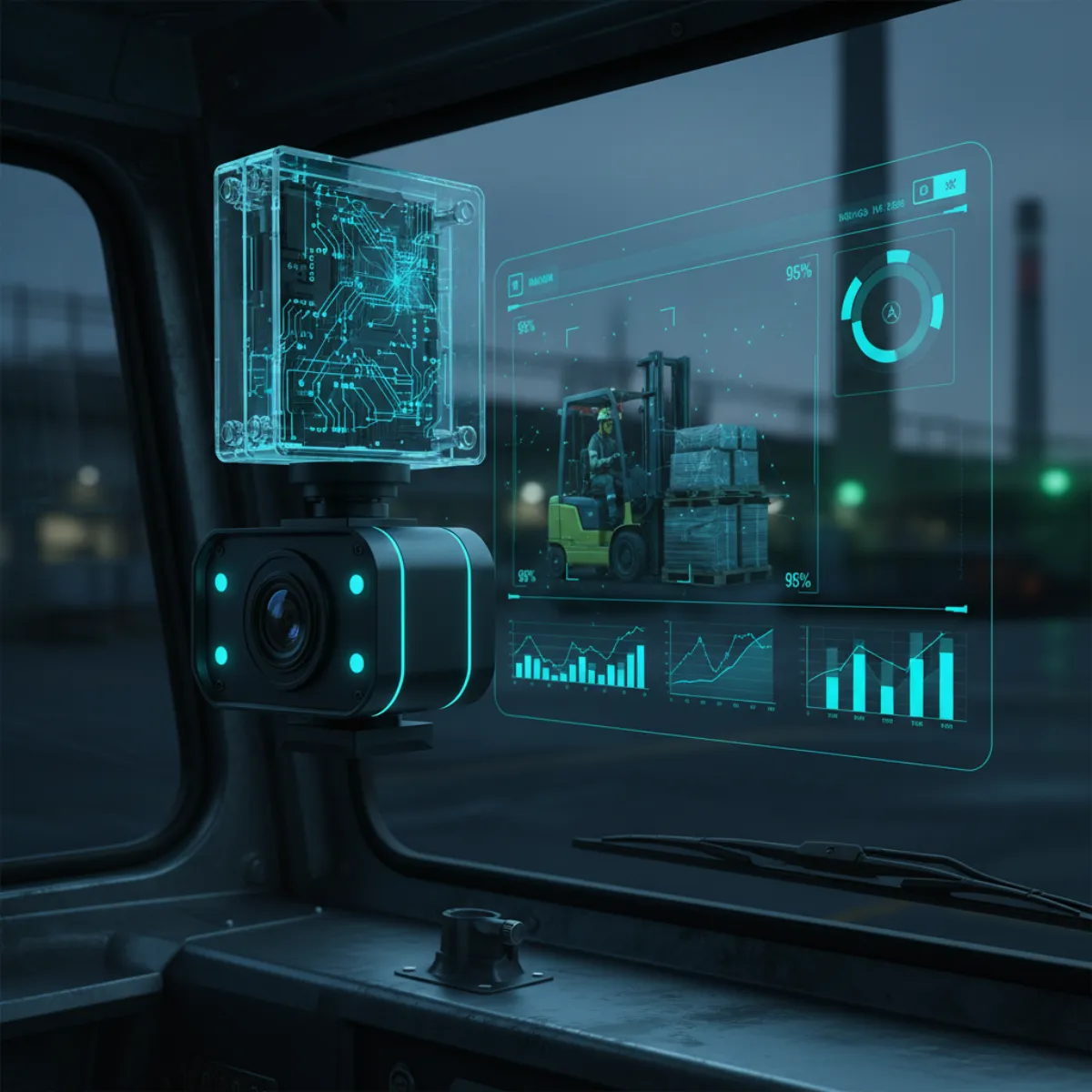
Modern telematics systems combine multiple IoT sensors to build a complete picture of operator state. Dual cameras with infrared night vision capture data even in total darkness, while accelerometers and head-position sensors detect subtle postural changes that precede microsleeps.
PERCLOS: The Scientific Standard for Fatigue Detection
PERCLOS is the most scientifically validated fatigue detection metric. It measures eyelid closure over 60 seconds — values above 80% indicate critical fatigue. Logifit's computer vision systems calculate PERCLOS in real time with under 300ms latency, triggering alerts before a microsleep occurs.
Yaw and Pitch: Predictive Head Movement Analysis
Analysis of yaw (lateral rotation) and pitch (vertical tilt) detects patterns that precede loss of consciousness. A fatigued operator shows erratic head movements 45 seconds before the first microsleep — providing sufficient time for preventive intervention.
Critical Data: According to NHTSA (2025), 37% of heavy vehicle drivers report having fallen asleep at the wheel in the past 30 days. In mining operations, this rises to 52% on night shifts exceeding 10 hours (ICMM 2024).
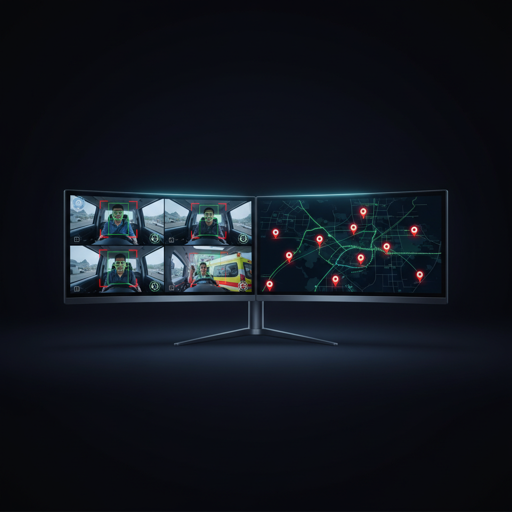
IoT sensors in the vehicle complement computer vision with driving behavior data: speed variations, lane deviations, and braking patterns that correlate with documented fatigue states. This data fusion multiplies detection accuracy to 99.1% according to field studies with mining fleets (MSHA 2024).
Predictive Analytics: From Fatigue Data to Operational Decisions
The true value of modern telematics systems lies not just in reactive detection, but in the predictive analytics that anticipate risk before the operator boards the vehicle. Machine learning models analyze historical fatigue and sleep patterns to generate individualized risk scores.
The Logifit Ops platform integrates data from Band 7/9/10 smartbands with shift records and environmental conditions to build per-operator predictive models. The system processes sleep phases (Deep, REM, Light) from the previous night and calculates fatigue probability for the upcoming shift with 87% predictive accuracy.
The 4-Layer AI-Powered FRMS Model
An effective Fatigue Risk Management System (FRMS) operates in 4 layers: (1) pre-shift biometric assessment, (2) in-cabin monitoring with computer vision, (3) overnight predictive analysis with sleep IoT sensors, and (4) clinical intervention for recurring cases. Each layer feeds the others in a continuous improvement cycle.
Predictive analytics enable supervisors to reassign high-risk operators before they begin their shift, eliminating the problem at its source. This preventive capability is what transforms a safety investment into an operational uptime generator: fewer incidents means fewer production stoppages, fewer investigations, and less equipment downtime.
Key fact: According to ISO 45001:2018, organizations with proactive fatigue management systems reduce unplanned downtime by 34% compared to organizations without formal FRMS programs (BSI Group 2024).
| Telematics Metric | Basic System | Computer Vision + IoT | + Predictive Analytics |
|---|---|---|---|
| Detection time | Manual (delayed) | <300ms | Pre-shift (preventive) |
| Accuracy | ~60% | 98% | 99.1% combined |
| False positives | 12-18% | 0.1% | 0.08% |
| Accident reduction | 15-20% | 78% | 98% |
| Average ROI | Negative (costs) | 18 months | 14 months |
How to Calculate ROI on Computer Vision Safety Investment
ROI on fatigue detection systems is calculated by comparing implementation costs against the avoided cost of incidents, downtime, and regulatory penalties. A single fatal accident in mining costs an average of USD 5.3 million in direct and indirect costs (ICMM 2024) — a figure that makes virtually any safety technology investment financially justified.
The standard ROI formula for safety telematics includes five savings categories: reduction of fatal and serious accidents, decrease in minor incidents with lost time, elimination of regulatory fines (OSHA can impose up to USD 156,259 per serious violation), reduction in insurance premiums (average 22% discount with certified systems), and uptime gains from reduced incident investigation time.
Organizations implementing telematics with computer vision for fatigue detection achieve on average a 98% reduction in fatigue-related accidents and positive return on investment within 14 months, based on Logifit's fleet analysis monitoring 50,000+ operators daily.
To calculate your specific ROI, follow this 5-step process:
- Quantify historical fatigue incidents: Review the past 3 years of OSHA/regulatory records. Classify by severity (fatal, serious, minor) and calculate the weighted average cost per incident.
- Calculate downtime cost per incident: Include investigation days, operational paralysis, equipment replacement, and regulatory audit time. In mining, the average is 73 days per serious incident.
- Project reduction with computer vision: Apply the documented reduction rate (78-98% depending on implementation level) to the calculated historical cost.
- Include secondary benefits: Insurance discounts, ISM/TRIR score improvements, and reduction in turnover related to safety perception.
- Compare against total implementation cost: Hardware (ProVision AI Cam + Driver Alert Hub), software licenses, IoT sensor integration, and initial training.
- Mining and extraction: Telematics with computer vision delivers highest ROI in open-pit and underground mining, where single incidents cause 73-day average shutdowns and USD 5.3M average costs (ICMM 2024).
- Transport and logistics: Long-haul fleets see 52% drowsiness rates on night routes. IoT sensor integration with ELD systems creates unified compliance documentation.
- Construction and energy: Remote site operations benefit most from predictive analytics that flag high-risk operators before they travel to isolated worksites.
- Port and rail operations: 24/7 shift cycles with fatigue detection systems reduce incident rates by 78% while maintaining throughput productivity targets.
Calculate Your Telematics Safety Investment ROI
Logifit's technical team conducts personalized assessments that include current fatigue risk analysis for your operation and ROI projection based on your historical incident data.
Request Assessment →"Telematics systems with computer vision are not a safety expense — they are an operational asset that generates uptime and protects EBITDA. Companies that understand this first gain a structural competitive advantage."
— David Chen, Industrial Safety with AI Specialist2026 Standards Mandating Computer Vision in Industrial Safety
The 2026 regulatory landscape is converging toward explicit requirements for technological fatigue monitoring systems. OSHA (29 CFR 1910) in the United States, Safe Work Australia, and EU Directive 89/391 are all updating guidelines to include requirements for technological detection — not just administrative procedures.
ISO 45001:2018, the international occupational health and safety management standard, requires organizations to implement risk controls based on hierarchy: elimination, substitution, engineering controls, administrative controls, and PPE. Telematics systems with computer vision qualify as engineering controls — the third most effective tier — surpassing purely administrative controls such as work-hour limits in documented effectiveness.
Organizations that implement Logifit's in-cabin DMS monitoring, integrated with the Ops Platform for predictive analytics and backed by pre-shift assessment, are not merely meeting current regulations — they are positioning themselves advantageously for stricter requirements coming into effect between 2026 and 2028 across all major markets. For a regulatory compliance evaluation, contact the Logifit team today.