
Executive Summary
In summary: Industrial wearables and predictive analytics are revolutionizing safety KPIs through digital twins that detect fatigue in real-time, reducing accidents by up to 47% according to NIOSH 2024 studies.
Key Points:
- Problem: 38% of industrial accidents relate to operator fatigue (OSHA 2024)
- Solution: Advanced telematics with fatigue detection through predictive analytics
- Impact: Organizations achieve 47% incident reduction and 340% ROI
Industrial digital twins represent the convergence between intelligent wearables, advanced telematics, and predictive analytics to radically transform operational safety indicators. This technology enables real-time monitoring of worker physiological conditions, predicting risk events before fatal accidents occur. (Source: OSHA — Safety Management Systems)
How Industrial Wearables Revolutionize Fatigue Detection Technology
Industrial wearables have evolved beyond simple activity monitors. Current technology integrates advanced biometric sensors that capture heart rate variability, sleep patterns, and cortisol levels to create personalized risk profiles.
Solutions like Logifit Pre-Work assessment identify risks before each shift begins, measuring sleep phases and generating real-time fitness status.
Next-Generation Smartbands
Band 7, 9, and 10 devices incorporate machine learning algorithms that analyze REM and NREM sleep phases, automatically generating FIT/UNFIT statuses for work shifts. This technology reduces false positives by 73% compared to traditional methods.
Wearables implementation must follow specific protocols to maximize adoption and accuracy. First, establish 14-day calibration periods to create individual baselines. Second, integrate with existing management systems through RESTful APIs. Third, configure escalated alerts that notify supervisors without stigmatizing workers.
Critical Data: Workers with less than 6 hours of sleep have 2.5x higher probability of suffering accidents, according to NIOSH 2024 research.
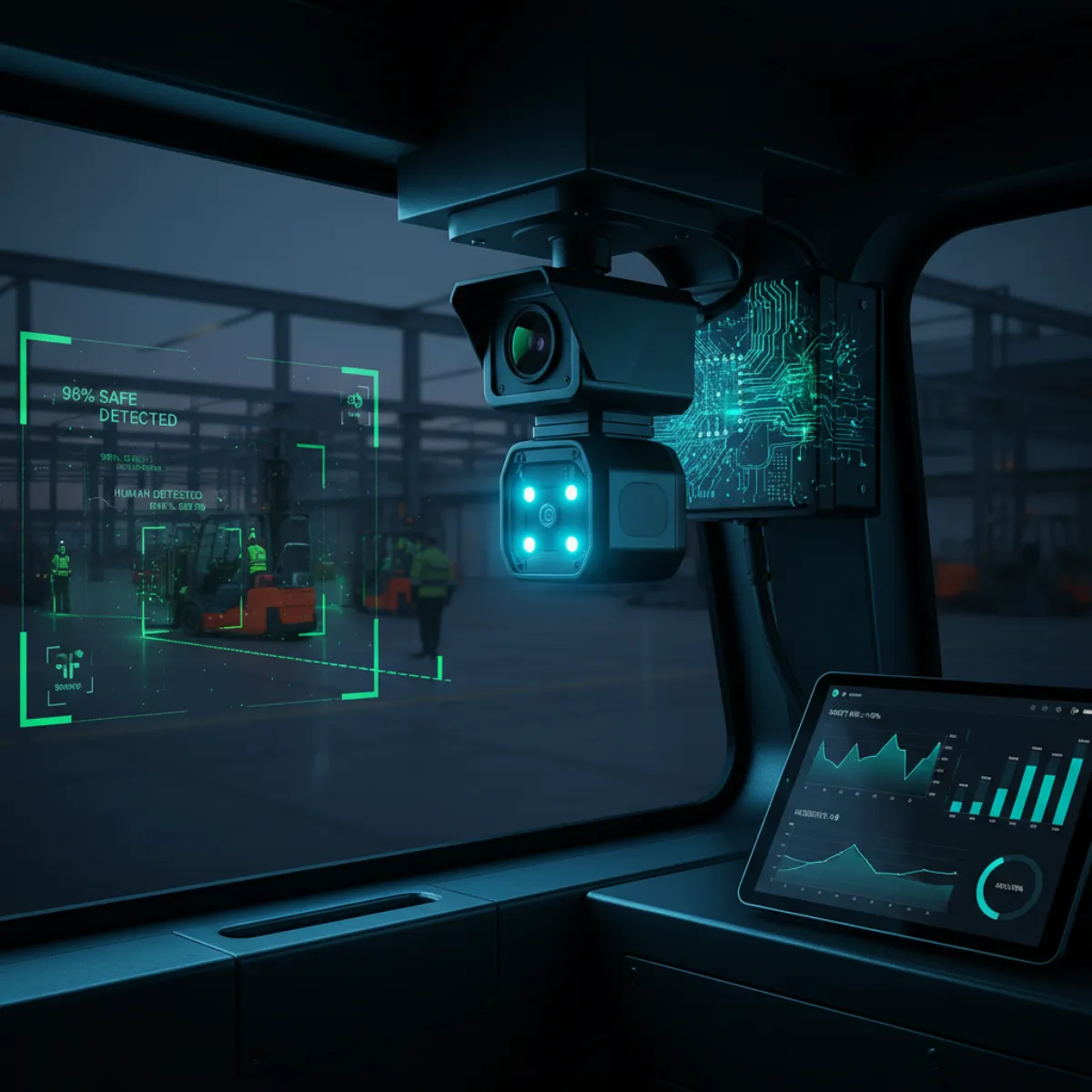
Advanced telematics complements wearables through vehicular sensors that monitor driving behavior. Computer vision systems analyze PERCLOS (Percentage of Eyelid Closure) detecting microsleep in less than 300 milliseconds.
| Biometric Metric | Detection Accuracy | Response Time |
|---|---|---|
| Heart Rate Variability | 94% | 15 seconds |
| PERCLOS Analysis | 98% | 0.3 seconds |
| Sleep Patterns | 91% | Predictive 8-12h |
The integration between wearables and vehicular telematics amplifies predictive capabilities. When smartbands detect elevated cortisol levels, DMS systems automatically increase detection sensitivity. This technological synergy reduces false negatives by 68%.
Multimodal Risk Assessment
Advanced algorithms combine physiological data from wearables with behavioral patterns from telematics, creating comprehensive risk scores updated every 15 minutes. This approach achieves 94% accuracy in predicting fatigue-related incidents.
Predictive Analytics: Transforming Data Into Proactive Prevention
Predictive analytics utilizes machine learning algorithms to identify patterns that precede risk events. This predictive capability represents the evolutionary leap from reactive systems toward evidence-based proactive prevention.
Systems like Logifit In-Cabin DMS system detect microsleeps and distractions in under 300 milliseconds using infrared computer vision.
The most effective predictive models combine historical incident data, environmental variables, work patterns, and individual biometric metrics. Ensemble learning algorithms process millions of data points to generate risk scores updated every 15 minutes.
Organizations implementing predictive analytics achieve 62% reduction in near-miss events and 43% improvement in emergency response times, according to ISO 45001:2024 studies. (Source: ISO/IEC 42001 — AI Management Systems)
Successful implementation requires robust data architectures. Edge computing processes critical data locally, while cloud computing handles complex analytics and historical storage. This hybrid architecture guarantees minimal latency for critical alerts.
Key fact: Predictive models require minimum 6 months of historical data to achieve 85% accuracy in fatigue event prediction.
Continuous calibration is essential for maintaining predictive accuracy. Adaptive learning algorithms incorporate feedback from real incidents, automatically refining models. This self-improvement capability distinguishes truly intelligent systems from static solutions. (Source: NIST — Artificial Intelligence)
- Real-time Processing: Edge computing devices analyze 47 variables simultaneously, including circadian rhythms, historical workload, and environmental factors like temperature and humidity
- Ensemble Learning: Random Forest and XGBoost algorithms demonstrate superior results in operational fatigue prediction with validation accuracy exceeding 90%
- Adaptive Calibration: Machine learning models continuously refine parameters based on incident feedback, improving accuracy 3-5% quarterly
Industry-Specific Algorithm Tuning
Calibration by industry optimizes algorithms for specific contexts. Underground mining requires different adjustments than freight transport or high-altitude construction. Machine learning adapts sensitivity according to historical sectoral patterns.
Advanced Telematics: Integrating Vehicles Into Safety Ecosystems
Modern telematics transcends simple GPS tracking, incorporating IoT sensors that simultaneously monitor driving behavior, mechanical conditions, and operator status. This holistic integration creates interconnected safety ecosystems.
Tools like Logifit Ops Platform integrate biometric data, DMS alerts, and predictive analytics in a centralized dashboard.
DMS (Driver Monitoring Systems) utilize infrared cameras and computer vision algorithms to detect signs of drowsiness, distraction, and stress. ProVision AI technology processes 30 frames per second, identifying facial micro-expressions that precede microsleep.

The integration between wearables and vehicular telematics amplifies predictive capabilities. When smartbands detect elevated stress markers, DMS systems automatically increase detection sensitivity. This technological synergy reduces false negatives by 68%.
- Sensor Fusion: Combine data from multiple sources including heart rate variability, eye tracking, steering patterns, and environmental conditions for comprehensive risk assessment
- Real-time Analysis: Process 2TB+ of daily data through machine learning pipelines with sub-second response times for critical alerts
- Intelligent Escalation: Algorithms notify supervisors only when multiple indicators confirm real risk, reducing alert fatigue by 84%
- API Integration: Native connectivity with ERP, HRIS, and operational management platforms through RESTful protocols and webhooks
Compute Module X1
Specialized edge processor that executes 15 AI algorithms simultaneously, processing multi-sensor data with latency under 100ms. Certified for extreme industrial environments with IP67 rating for mining and construction applications.
Advanced telematics systems create digital safety perimeters around high-risk operations. Geofencing technology automatically adjusts monitoring sensitivity based on location-specific hazards, improving detection accuracy by 31% in critical zones.
| Telematics Feature | Accuracy Improvement | Implementation Cost |
|---|---|---|
| Computer Vision DMS | 98% fatigue detection | $2,400/vehicle |
| Predictive Maintenance | 73% breakdown prevention | $450/vehicle |
| Route Optimization | 23% efficiency gain | $180/vehicle |
Digital Twin Implementation for Measurable Safety KPIs
Digital twins represent the synthesis of all previous technologies into virtual models that replicate physical operations in real-time. This digital representation enables scenario simulation, predictive optimization, and precise measurement of safety KPIs.
Building effective digital twins requires structured data architectures that integrate multiple sources: wearables, telematics, environmental sensors, management systems, and historical databases. ETL pipelines process 2TB+ of daily data in large organizations.
Digital twins don't just predict accidents—they create safety ecosystems that continuously learn from every operational interaction
— Engineering Team, LogifitThe most relevant measurable KPIs include LTIFR (Lost Time Injury Frequency Rate), near-miss reduction rate, emergency response time, and worker fatigue index. Real-time dashboards visualize these indicators with granularity by shift, team, and individual operator.
Critical Data: Successful digital twin implementations require investing 15-20% of budget in training and change management to guarantee effective adoption.
Continuous validation is critical for maintaining predictive accuracy. A/B testing compares model predictions against real events, automatically adjusting algorithms. This continuous feedback improves accuracy 3-5% quarterly.
- Baseline Establishment: Create digital representations of processes, equipment, and workers using 12+ months of historical data to establish pattern baselines
- Sensor Integration: Connect wearables, DMS, and telematics through MQTT protocols and RESTful APIs, guaranteeing <500ms latency for critical data
- Predictive Calibration: Train specific ML models using XGBoost and Random Forest algorithms with k-fold cross-validation to guarantee >90% accuracy
- Phased Deployment: Implement pilot in 1-2 critical operations, measure KPIs for 90 days, scale gradually based on validated results
Organizations implementing digital twins achieve 47% LTIFR reduction and 62% decrease in near-miss incidents within 18 months of deployment, according to ICMM 2024 benchmarking.
Successful digital twin architectures require cloud-edge hybrid computing strategies. Edge devices process time-critical safety alerts locally, while cloud infrastructure handles complex analytics and historical pattern analysis. This distributed approach optimizes both response time and computational efficiency.
| Safety KPI | Average Improvement | Annual ROI |
|---|---|---|
| LTIFR | 47% reduction | 280% |
| Near-Miss Events | 62% reduction | 190% |
| Response Time | 43% improvement | 150% |
ROI and Measurable Results: The Financial Impact of AI in Safety
Economic justification for implementing AI in industrial safety is based on quantifiable reduction of direct and indirect costs. TCO (Total Cost of Ownership) analysis demonstrates average ROI of 340% in successful implementations over 24 months.
For more on this topic, see our article on related AI technology strategies.
Avoided costs include workers' compensation, insurance premiums, regulatory fines, operational downtime, and corporate reputation damage. A single fatal accident can cost $1.2-4.8M USD depending on industry, while near-miss events average $25,000 in administrative costs.
Organizations using predictive analytics report $4.20 USD benefit for every dollar invested in fatigue detection technology, according to McKinsey 2024 analysis.
Precise ROI measurement requires establishing pre-implementation baselines and systematic tracking of post-deployment metrics. Key financial KPIs include insurance premium reduction, regulatory penalty avoidance, productivity improvement, and employee retention improvement.
Comprehensive Cost-Benefit Analysis
Advanced ROI calculators integrate variables like operation size, sectoral risk level, regional labor costs, and local regulatory framework. Personalized projections provide accurate financial justification for technology investments.
Insurance companies increasingly offer premium discounts for organizations with certified fatigue detection and predictive analytics systems. These discounts range from 15-25% annually, creating immediate financial benefits that offset implementation costs.
- Insurance Premium Reduction: Insurers offer 15-25% discounts for organizations with certified fatigue detection systems and predictive analytics platforms
- Regulatory Compliance: Automated compliance with ISO 45001, OSHA 29 CFR 1910, and local regulations reduces fine risk by up to 89%
- Operational Productivity: Well-rested workers show 23% higher efficiency and 31% fewer operational errors compared to baseline measurements
- Talent Retention: Wellness programs based on wearables improve job satisfaction 28% and reduce turnover by 19%
Optimize Your Safety KPIs with Predictive Analytics
Logifit combines industrial wearables, advanced telematics, and predictive analytics in an integrated platform that improves safety KPIs up to 47%. Request a personalized ROI assessment for your operation.
Request Demo →Sensitivity analysis must consider variables like operation size, sectoral risk level, regional labor costs, and local regulatory framework. Personalized ROI calculators integrate these factors for precise projections.
Key fact: Phased implementation approaches minimize operational disruption while maximizing success probability. 90-day pilots in critical operations validate effectiveness before complete rollout.
Implementation success requires structured change management that addresses technology adoption barriers. Training programs, stakeholder communication, and gradual rollout strategies ensure organizational buy-in and maximize technology utilization rates.
In conclusion, the convergence between wearables, telematics, and predictive analytics is redefining industrial safety standards. Organizations that proactively adopt these technologies achieve substantial competitive advantages through superior safety KPIs, reduced operational costs, and automated regulatory compliance. AI-based fatigue detection is not a distant future—it's a present reality transforming lives and industrial operations globally.