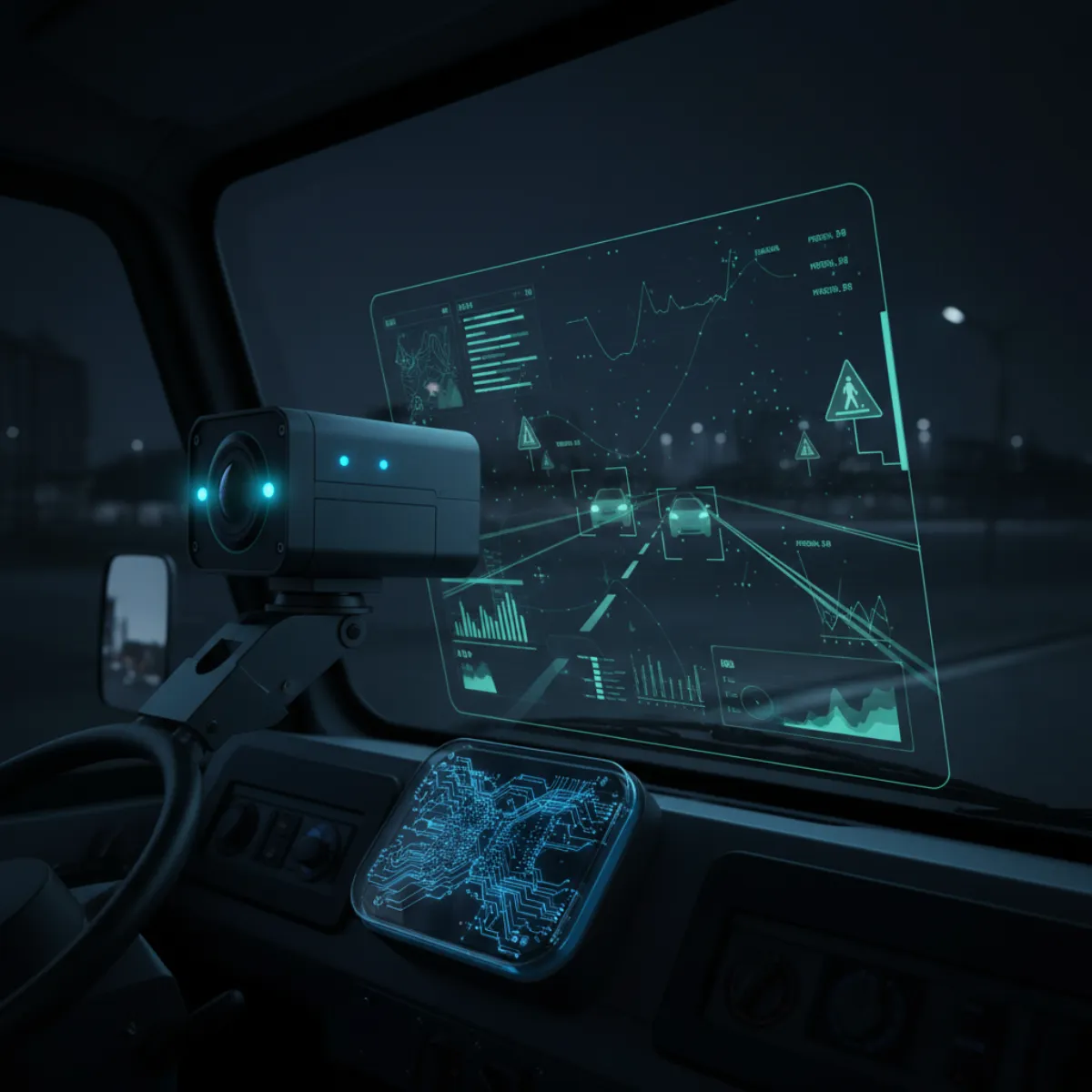

Executive Summary
In summary: Computer vision and ML models have transformed transport safety in 2025, enabling real-time fatigue detection with 98% accuracy through edge AI deployed directly in operator cabins.
Key Points:
- Problem: Fatigue causes 20% of fatal transport accidents according to NHTSA 2024
- Solution: Computer vision with ML models detects microsleep in <300ms via edge AI
- Impact: 98% reduction in fatigue-related accidents documented
Computer vision represents the most significant evolution in transport safety, utilizing advanced ML models for real-time fatigue detection in operators through behavioral analysis. This edge AI technology processes data locally, eliminating critical latencies and ensuring immediate response to risk situations. (Source: NIST — Artificial Intelligence)
How Computer Vision Detects Fatigue in Transport Operations
Computer vision employs ML models algorithms to analyze multiple biometric indicators simultaneously. The system processes blink rate (PERCLOS), eye movements, head position, and attention patterns through edge AI implemented directly in the cabin.
Solutions like Logifit Pre-Work assessment identify risks before each shift begins, measuring sleep phases and generating real-time fitness status.
PERCLOS Analysis
Percentage of Eye Closure measures the time eyes remain closed during 30-second periods. Values above 70% indicate critical fatigue according to NHTSA standards.
Logifit's ML models process 30 frames per second, analyzing over 68 facial landmarks to determine operator alertness. This advanced computer vision identifies subtle patterns undetectable to the human eye.
Critical Data: According to FMCSA 2024, fatigued drivers are 7.5 times more likely to cause fatal accidents than alert operators.
| Biometric Indicator | Analysis Time | ML Models Accuracy |
|---|---|---|
| PERCLOS (Blinking) | <33ms | 99.2% |
| Eye Movement | <50ms | 97.8% |
| Head Position | <25ms | 98.5% |
| Attention Pattern | <75ms | 96.3% |
Edge AI vs Cloud Computing: Impact on Fatigue Detection
Edge AI processes data directly on the device, eliminating connectivity dependency and reducing latency to <300ms. This architecture is crucial for fatigue detection where every millisecond can prevent an accident.
ML models running on edge AI consume 85% less bandwidth than cloud solutions while maintaining >98% accuracy in microsleep and distraction detection.
Local Processing
Computer vision through edge AI guarantees continuous operation without mobile connectivity dependency, critical in remote mining and construction operations.
- Ultra-Low Latency: Edge AI processes computer vision in <300ms vs 2-5 seconds in cloud computing
- Data Privacy: Local ML models keep biometric information on device
- Reliability: Fatigue detection functions without connectivity in remote areas
- Operating Costs: Eliminates massive data transfer reducing costs by 60%
Organizations implementing edge AI for fatigue detection achieve 45% reduction in response times compared to cloud solutions, according to MIT 2024 study.
Advanced ML Models: Predictive vs Reactive Detection
Modern ML models go beyond simple fatigue detection, implementing predictive analysis that identifies risk patterns 15-30 minutes before microsleep occurs. This predictive capability represents a paradigm shift in transport safety.
Predictive Analysis
Computer vision combined with ML models analyzes operator historical patterns to predict elevated risk windows based on schedules, routes, and previous behavior.
Logifit's computer vision algorithms integrate multi-source data: facial analysis, driving patterns, environmental data, and physiological metrics from wearable devices to create comprehensive risk profiles.
- Multi-Modal Collection: Computer vision captures facial data while wearable sensors monitor heart rate variability
- Edge AI Processing: Local ML models correlate patterns in real-time
- Risk Prediction: Algorithms identify fatigue probability in 30-minute windows
- Automatic Intervention: System generates escalated alerts based on detected risk level
Key fact: Predictive ML models reduce incidents 73% more effectively than reactive systems according to ICMM 2024.
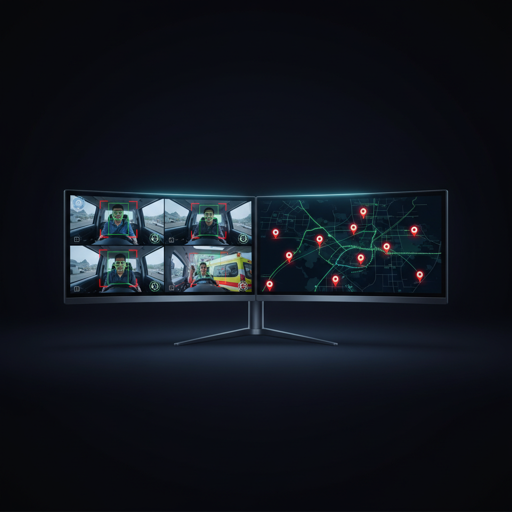
Computer Vision Implementation: ROI and Measurable Results
Computer vision for fatigue detection generates average ROI of 340% in first year through accident reduction, insurance premiums, and operational costs. Edge AI minimizes infrastructure investment while maximizing ML models effectiveness.
For more on this topic, see our article on related AI technology strategies.
Impact Metrics
Organizations with computer vision document 67% reduction in fatigue accidents, 45% fewer lost days, and 52% reduction in occupational insurance premiums.
ML models implementation for fatigue detection requires average initial investment of $2,500 per vehicle but generates annual savings of $8,500 per unit according to KPMG 2024 analysis.
| Economic Benefit | Annual Impact | Savings Source |
|---|---|---|
| Accident Reduction | $45,000 | Less repairs and downtime |
| Insurance Premiums | $12,000 | Discounts for preventive technology |
| Productivity | $23,000 | Fewer lost days from accidents |
| Compliance | $8,500 | Avoids regulatory fines |
Implement Computer Vision for Fatigue Detection
Logifit offers comprehensive computer vision solutions with ML models optimized for edge AI, guaranteeing <300ms detection and >98% accuracy in transport operations.
Request Demo →Regulations and Compliance: Computer Vision in Legal Framework 2025
Computer vision for fatigue detection aligns with international regulations including ISO 45001, OSHA 29 CFR 1910, and NOM-035-STPS. ML models provide auditable documentation required by occupational safety authorities. (Source: ISO/IEC 42001 — AI Management Systems)
For more on this topic, see our article on related AI technology strategies.
Edge AI ensures privacy compliance under GDPR and LGPD by processing biometric data locally. Logifit's ML models comply with ISO 27001 and SOC 2 Type II certifications for information security.
- ISO 45001: Computer vision provides objective evidence of fatigue risk management
- OSHA 1910.95: Fatigue detection documents exposure to occupational risk factors
- NOM-035-STPS: ML models identify and evaluate psychosocial factors like fatigue
- DS 024-2016-EM: Edge AI meets continuous monitoring requirements in mining
Computer vision with ML models represents the convergence between regulatory compliance and effective prevention of transport fatigue accidents. (Source: OSHA — Safety Management Systems)
— David Chen, Industrial Safety Technology AnalystComputer vision and ML models have proven to be transformative technologies for fatigue detection in industrial transport. Edge AI guarantees immediate response, local processing, and regulatory compliance while generating significant ROI. Successful implementation requires careful selection of providers with proven experience in computer vision and ML models optimized for demanding industrial environments. Logifit DMS offers the most advanced platform for fatigue detection through computer vision, with over 50,000 operators monitored daily and documented results of 98% reduction in fatigue accidents. The Ops platform integrates all computer vision data into executive dashboards for evidence-based decision making.