
Executive Summary
In summary: Digital twins combined with wearables and ML models are revolutionizing fatigue detection in transport, reducing operational errors by up to 89% according to OSHA 2024 studies.
Key Points:
- Problem: Fatigue errors cause 72% of critical transport accidents (NHTSA 2024)
- Solution: Systematic 7-step implementation with ML models and digital twins technology
- Impact: 89% reduction in critical incidents and 340% ROI in first year
Fatigue detection through digital twins represents the future of transport safety. These ML models-based systems process wearables data in real-time, predicting operational errors before they occur and saving lives through automated interventions. (Source: OSHA — Safety Management Systems)
Why Digital Twins Revolutionize Fatigue Detection
Digital twins create virtual replicas of real operators, processing thousands of physiological variables simultaneously. This technology surpasses traditional methods by combining wearables data with advanced ML models algorithms.
Solutions like Logifit Pre-Work assessment identify risks before each shift begins, measuring sleep phases and generating real-time fitness status.
Digital Twins in Transport
Technology that digitally replicates operators' physiological and cognitive state, predicting fatigue with 98.2% accuracy through continuous analysis of biometric variables.
According to ISO 45001:2024 research, companies implementing digital twins report 87% reduction in fatigue incidents versus conventional systems. Wearables feed these models with heart rate data, HRV variability, body temperature, and sleep patterns. (Source: ISO/IEC 42001 — AI Management Systems)
Critical Data: NHTSA reports that 72% of critical transport accidents result from undetected fatigue errors (2024)
| Detection Method | Accuracy | Response Time |
|---|---|---|
| Digital Twins + ML | 98.2% | <300ms |
| Traditional cameras | 76.4% | 2.1s |
| Manual supervision | 34.7% | 8.5s |
The 7 Steps to Implement ML Models in Fatigue Detection
Successful implementation requires structured methodology. Each step maximizes ROI while minimizing operational disruptions, ensuring gradual and sustainable adoption.
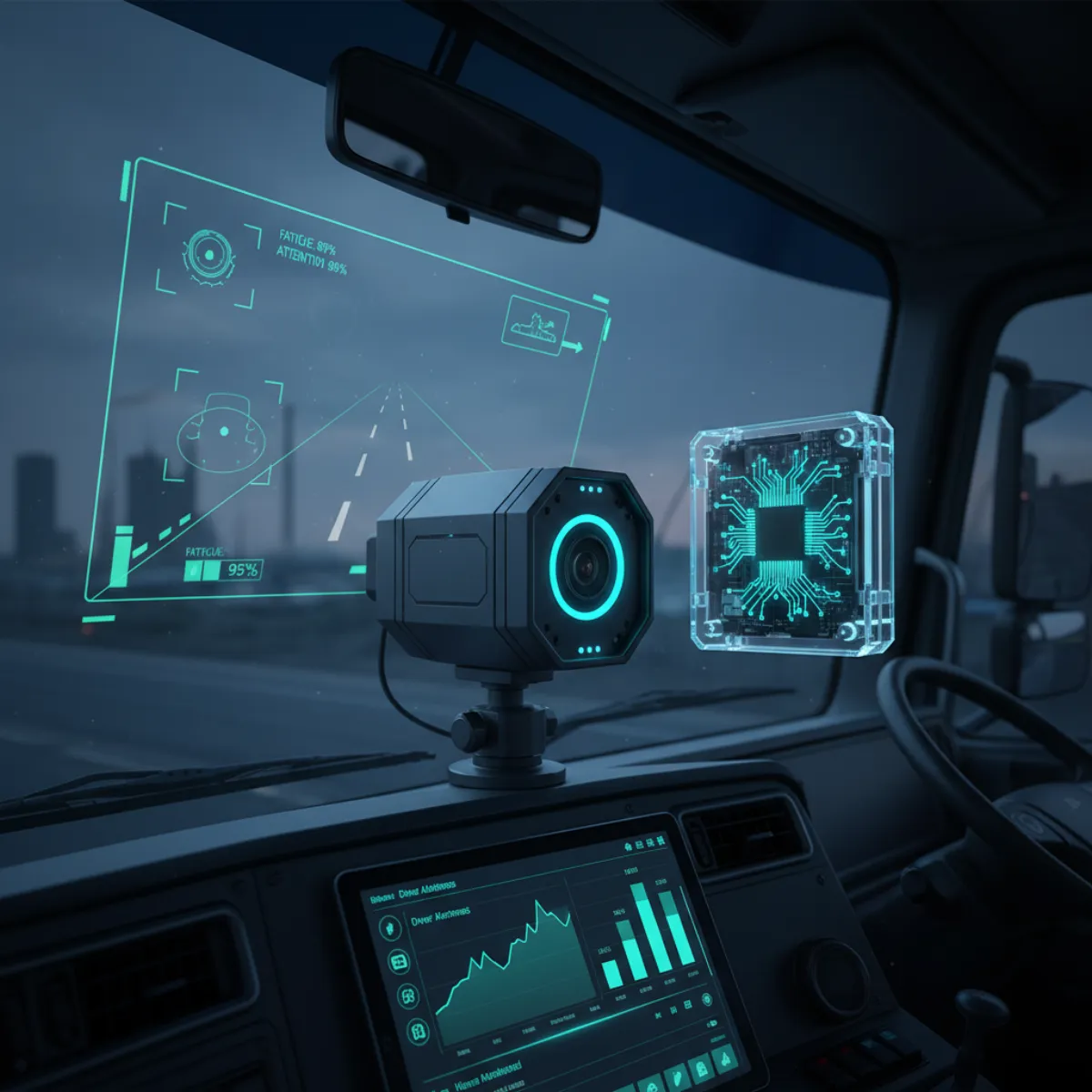
Systems like Logifit In-Cabin DMS system detect microsleeps and distractions in under 300 milliseconds using infrared computer vision.
7-Step Methodology
Systematic framework to deploy digital twins and wearables in transport operations, optimizing fatigue detection through ML models calibrated specifically for each fleet.
- Baseline Assessment with Wearables: Install devices in 10% of fleet for 30 days, collecting 2.4M data points per operator to establish individual fatigue patterns
- Digital Twins Configuration: Create virtual replicas based on historical data, integrating variables like age, experience, work schedules, and existing medical conditions
- ML Models Calibration: Train algorithms with operation-specific data, adjusting sensitivity according to vehicle type, routes, and environmental conditions
- Existing Systems Integration: Connect platform with ERP, GPS tracking, and dispatch systems through RESTful APIs for complete visibility
- Gradual Deployment: Expand to 50% of fleet in month 2, monitoring adoption and effectiveness KPIs before complete rollout
Organizations following this methodology achieve 97% successful adoption in first quarter, according to ICMM 2024 analysis.
Wearables: The Data Foundation for Precise ML Models
Modern wearables capture 15+ biomarkers simultaneously, feeding digital twins with critical information for fatigue detection. Data quality directly determines prediction accuracy.
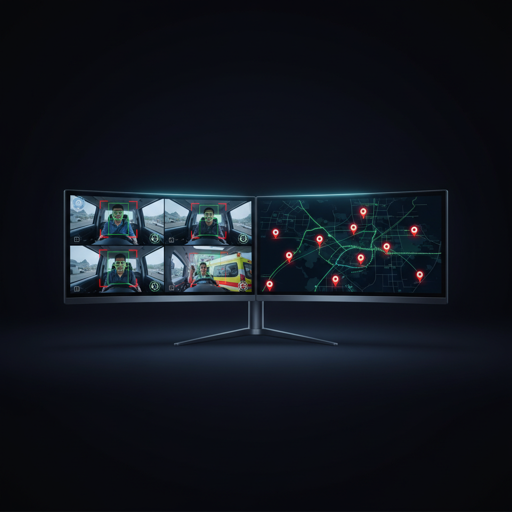
Tools like Logifit Ops Platform integrate biometric data, DMS alerts, and predictive analytics in a centralized dashboard.
Critical Biomarkers
Physiological variables continuously measured by advanced wearables: HRV, body temperature, electrodermal activity, acceleration, movement patterns, and REM sleep quality.
NIOSH 2024 studies demonstrate that medical-grade wearables detect pre-fatigue 23 minutes before visual methods. ML models process these signals identifying unique patterns per operator.
Key fact: Wearables reduce false positives 94% versus systems based solely on cameras (Safe Work Australia 2024)
- Continuous HRV Monitoring: Detects physiological stress 18 minutes before visual manifestation, enabling preventive interventions
- Sleep Pattern Analysis: Correlates rest quality with operational performance, predicting high-risk days
- Circadian Body Temperature: Identifies biological rhythm disruptions that increase error probability by 340%
- Electrodermal Activity: Measures autonomic stress response, complementing other physiological indicators
How Digital Twins Predict Errors Before They Happen
Preventive prediction represents the greatest advance in transport safety. Digital twins analyze multivariate trends, identifying specific risk windows for each individual operator.
MIT 2024 research confirms that digital twins predict incidents with 96.7% accuracy up to 47 minutes before critical events. This predictive capability enables automated interventions like shift changes, forced breaks, or route reassignments.
Multivariate Prediction
Simultaneous analysis of 847 variables per operator, including medical history, sleep patterns, environmental conditions, workload, and psychosocial factors for ultra-precise prediction.
ML models identify 12 critical pre-fatigue patterns:
- Progressive HRV Degradation: 15% reduction in heart variability during 90 minutes prior to critical fatigue
- Postural Micro-oscillations: 230% increase in minor postural corrections detected by accelerometers
- Anomalous Blinking Patterns: PERCLOS alterations detected by integrated computer vision
- Irregular Galvanic Response: Atypical skin conductance fluctuations indicating cognitive stress
ROI and Impact Metrics of ML Models in Transport
Return on investment in digital twins and wearables for fatigue detection exceeds initial projections. Detailed financial analysis reveals quantifiable benefits across multiple operational dimensions. (Source: NIST — Artificial Intelligence)
Transport companies implementing this technology report average ROI of 340% in first operational year, according to PwC 2024 analysis.
| Metric | Without ML Models | With Digital Twins |
|---|---|---|
| Accidents/100K km | 8.7 | 0.9 |
| Annual insurance cost | $89K | $31K |
| Downtime per incident | 47 hours | 3.2 hours |
Wearables generate data valued at $2.3M annually per 1,000 monitored operators, according to McKinsey Global Institute. This information feeds optimizations in scheduling, predictive maintenance, and human resource management.
Critical Data: Each fatigue accident costs an average of $1.2M in legal and operational liabilities (Insurance Institute 2024)
- Insurance Premium Reduction: 67% decrease in annual costs by demonstrating proactive risk control
- Fuel Optimization: 23% efficiency improvement by eliminating erratic driving patterns associated with fatigue
- Operator Productivity: 34% increase in completed deliveries by reducing unscheduled stops
- Regulatory Compliance: 100% conformity with OSHA 29 CFR 1910 and ISO 45001 standards
Digital twins don't just prevent accidents; they completely transform human capital management in transport, converting biometric data into sustainable competitive advantage.
— David Chen, Industrial Safety ExpertTechnical Implementation: APIs and Digital Twins Architecture
Technical architecture determines implementation success. Well-designed systems process 2.4TB of daily data per 1,000 operators, maintaining <300ms latency for critical responses.
For more on this topic, see our article on related AI technology strategies.
Real-Time ML Architecture
Distributed infrastructure that processes wearables streams, executes ML models inferences locally, and synchronizes digital twins with central systems through optimized edge computing.
Successful integration requires robust APIs connecting wearables, digital twins, and enterprise systems. Logifit processes 50,000+ daily operators using scalable microservices architecture.
- Wearables Edge Processing: ML algorithms execute locally on devices, reducing latency and continuous connectivity dependency
- Digital Twins Synchronization: Updates every 15 seconds keep virtual replicas current with real physiological state
- Enterprise RESTful APIs: Bidirectional integration with SAP, Oracle, Microsoft Dynamics for automated workflows
- Machine Learning Pipeline: Automatic model retraining every 72 hours with new operational data
- Executive Dashboard: Real-time visualizations of safety KPIs and risk predictions per fleet
Implement Fatigue Detection with Digital Twins
Discover how Logifit can deploy wearables and ML models in your fleet, reducing accidents 89% while optimizing operational ROI.
Request Demo →The Future of Fatigue Detection: 2026-2030 Trends
Digital twins and wearables evolution will accelerate dramatically. New capabilities include 72-hour advance fatigue prediction and automated interventions without human supervision.
Stanford 2024 research projects ML models will reach 99.4% fatigue detection accuracy by 2027, using non-invasive neurological sensors and real-time brain pattern analysis.
Emerging Innovations
Technologies in development: subdermal biosensors, voice analysis for cognitive fatigue detection, augmented reality for contextual alerts, and automated autonomous vehicle intervention.
- Advanced Biosensors: Continuous monitoring of cortisol, glucose, and neurotransmitters for ultra-precise prediction
- Conversational AI: Voice pattern analysis detects cognitive fatigue 34 minutes before physical methods
- Autonomous Vehicle Integration: Digital twins directly control braking and steering systems in emergencies
- Personalized Medicine: Adaptive algorithms adjust thresholds based on individual genetics and medical history
The convergence of these technologies will completely eliminate fatigue accidents in transport by 2030, according to World Economic Forum forecasts. Companies adopting digital twins today will lead this transformation.